Aluminum Gravity Casting & Gravity Cast Parts – A380, LM6, LM25 | Brass & Copper Parts India
Aluminum gravity casting (also called permanent mold casting or gravity die casting) is a casting process in which molten aluminum alloy is poured into a reusable steel or cast iron die under gravity, producing high-integrity, dimensionally accurate aluminum castings with better mechanical properties than sand castings and lower tooling costs than pressure die castings. Brass & Copper Parts India manufactures aluminum gravity cast parts from A380, LM6 (BS 1490), LM25, ADC12 (JIS), and ENAC-44300 alloys for USA electrical OEMs, power distribution equipment manufacturers, EPC contractors, industrial machinery producers, and transportation equipment suppliers. Gravity cast aluminum parts are preferred for medium-complexity, medium-volume castings (100–50,000 pieces/year) requiring dense, sound, pressure-tight castings with better surface finish and mechanical properties than sand castings.
Product Overview
In the gravity die casting process, a steel permanent mold (die) is pre-heated to 150–300°C, coated with a die release agent, and then filled with molten aluminum under gravity (no external pressure). The die is opened after solidification and the casting is ejected. Compared to sand casting, gravity casting produces castings with finer grain structure, better dimensional repeatability (tolerances ±0.5 mm on first-off), smoother as-cast surfaces (Ra 3.2–6.3 µm), and higher mechanical properties — because the metal chills rapidly against the steel die. Compared to pressure die casting, gravity casting has lower tooling cost, allows thicker sections, and produces castings with lower porosity risk for pressure-tight components such as pump housings, valve bodies, and electrical terminal boxes.
Key Features
- Pressure-Tight Castings: Gravity die casting produces denser castings with lower micro-porosity than sand casting — suitable for hydraulic, pneumatic, and electrical enclosure applications requiring pressure-tight walls.
- Multi-Alloy Capability: A380, LM6 (high-silicon, excellent fluidity), LM25 (heat-treatable, high strength), and LM24 alloys available for selection based on corrosion resistance, strength, pressure tightness, and machinability requirements.
- Better Surface Finish Than Sand Casting: As-cast surface finish Ra 3.2–6.3 µm from gravity die compared to Ra 6.3–12.5 µm from sand casting — reducing machining allowance and finishing costs.
- Reusable Steel Tooling: Permanent steel mold tooling typically produces 50,000–200,000 shots before major refurbishment — lower per-piece tooling amortization cost for medium and high-volume programs.
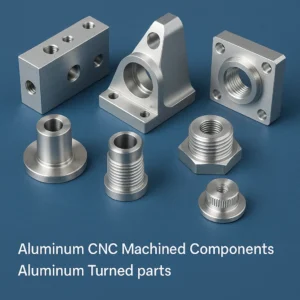
- Post-Cast Machining: CNC machining of critical interfaces, bore holes, and thread forms is performed in-house after casting, producing fully finished ready-to-assemble components from a single source.
- Heat Treatment Available: T5 (quench from die + artificial aging) and T6 (solution heat treat + quench + age) treatments available for LM25 castings to achieve maximum strength and hardness.
Technical Specifications
| Parameter | Specification |
|---|---|
| Alloys Available | A380 / ADC10, LM6 / A413, LM25 / A356, LM24 / ADC12 |
| Casting Weight Range | 0.1 kg to 25 kg per piece |
| Dimensional Tolerance | ±0.5 mm as-cast; ±0.1 mm post-machined |
| As-Cast Surface Finish | Ra 3.2–6.3 µm |
| Porosity Level | ASTM E505 Level 2 standard; Level 1 on request |
| Minimum Wall Thickness | 3.0 mm (standard); 2.0 mm (optimized tooling) |
| Mechanical Test (LM25-T6) | UTS ≥ 280 MPa, 0.2% PS ≥ 240 MPa, Elongation ≥ 2% |
| Heat Treatment | T5, T6 available for LM25 and A356 alloys |
| Post-Casting Operations | CNC machining, anodize, powder coat, impregnation |
Aluminum Casting Alloy International Grade Equivalents
| AA/ASTM (USA) | BS/EN (UK/EU) | IS (India) | DIN | JIS | Key Properties |
|---|---|---|---|---|---|
| A380 / ASTM B85 | EN AC-46000 | IS 617 Grade SG-A | AlSi8Cu3 / 3.2161 | ADC10 / JIS H5302 | Good castability, general purpose |
| A413 / ASTM B85 | LM6 / BS 1490 / EN AC-44300 | IS 617 Grade LM6 | AlSi12 / 3.2581 | ADC1 / JIS H5302 | Excellent fluidity, marine use |
| A356 / ASTM B26 | LM25 / BS 1490 / EN AC-42100 | IS 617 Grade LM25 | AlSi7Mg0.3 / 3.2371 | AC4C / JIS H5202 | Heat treatable, high strength |
| A360 / ASTM B85 | LM9 / EN AC-43300 | IS 617 Grade LM9 | AlSi10Mg / 3.2381 | ADC3 / JIS H5302 | Pressure tightness, corrosion |
Product Types and Variants
Aluminum Gravity Cast Electrical Terminal Boxes and Enclosures
LM6 and LM25 aluminum gravity cast terminal boxes and junction enclosures are used in industrial electrical installations, control panels, street lighting, and outdoor power distribution equipment where aluminum die casting provides an IP65/IP66-ratable enclosure with integral walls, mounting bosses, and cable entry provisions cast in one operation. The permanent mold process produces enclosures with tight dimensional repeatability (±0.5 mm) and smooth as-cast walls that accept gasketing for weatherproof sealing. Post-casting machining creates cable gland threads, mounting screw taps, and lid seating faces. These are supplied to USA electrical OEMs as cast-and-machined ready-to-assemble components.
Aluminum Gravity Cast Pump and Valve Housings
Pump volute casings, valve bodies, and manifold housings are frequently produced by aluminum gravity casting due to the process’s ability to produce dense, pressure-tight castings in LM25-T6 or A356-T6 alloy with wall thicknesses of 4–8 mm and complex internal flow passages. The permanent mold produces repeatable casting geometry that requires minimum machining allowance on flanged faces and bore surfaces. Post-cast CNC machining produces precision bore diameters (IT7 tolerance), gasket face flatness (≤ 0.05 mm per 100 mm), and threaded ports to NPT or BSP specification. Hydrostatic proof testing at 1.5× rated working pressure is performed on request.
Aluminum Gravity Cast Automotive and Transportation Parts
Gravity cast aluminum parts for automotive and transportation applications include wheel hubs, brake caliper bodies, steering gear housings, suspension brackets, and engine mount components — where the combination of high mechanical properties (LM25-T6: 280 MPa UTS), dimensional precision, and pressure tightness of gravity die casting meets the structural and functional requirements. These parts undergo T6 heat treatment post-casting and CNC machining of all critical interfaces. Radiographic inspection per ASTM E505 to Level 2 or Level 1 soundness is available for safety-critical automotive structural castings.
Aluminum Gravity Cast Heat Sinks and Thermal Management Parts
Aluminum gravity cast heat sinks — with integral fin arrays, pin fins, or ribbed surfaces for convection cooling — are produced for power electronics, motor drives, LED drivers, and industrial control equipment. The permanent mold process produces fin geometries that are impractical in sand casting and more flexible in fin thickness and array layout than extruded heat sinks. LM6 (A413) alloy provides excellent fluidity for thin fin sections (2.5 mm min fin thickness), and gravity casting supports heat sink sizes from 50 mm to 500 mm across — larger than typical PDC machines permit.
Aluminum Gravity Cast Structural and Connector Components
Structural connector nodes, cable tray support fittings, pipe saddle brackets, and architectural cladding brackets manufactured by aluminum gravity casting combine complex 3D geometry (impractical in sheet metal) with structural integrity and corrosion resistance. LM25-T6 is specified for structural components requiring certified mechanical properties. These parts are produced with cast-in ribs for stiffness, bosses for bolt connections, and tapered sections for draft-angle compatibility. Post-casting shot blasting and T6 heat treatment are standard operations before CNC machining of critical interface surfaces.
Applications by Industry
- Electrical and Power Distribution: Terminal box castings, junction box bodies, cable gland housings, and enclosure lids for industrial electrical installations, street lighting, and outdoor power distribution.
- Pump and Fluid Handling OEM: Pump casings, valve bodies, manifolds, and flow meter housings requiring pressure-tight walls, internal flow passages, and machined gasket surfaces.
- Industrial Machinery: Gearbox end covers, motor end shields, bearing housings, and machine frame castings in LM25-T6 for strength and dimensional stability.
- Automotive Aftermarket and Transportation: Wheel hubs, brake parts, suspension components, and engine accessories for automotive OEMs and racing equipment manufacturers.
- Renewable Energy: Solar tracker pivot housings, mounting system connector castings, and inverter chassis components for utility-scale solar installations.
Manufacturing Process
Gravity die casting tooling (steel or SG iron permanent molds) is designed using ProCAST simulation software for solidification analysis, shrinkage prediction, and vent placement optimization before machining tooling. Molten aluminum is prepared in oil-fired or induction furnaces with composition and temperature monitoring; degassing is performed with rotary degassing (nitrogen) to minimize hydrogen porosity. The pre-heated steel die is coated with die wash, filled with molten alloy under gravity, and held until solidified. Castings are ejected, shot-blasted, and inspected for visible defects. CNC machining of critical dimensions is performed on VMCs and CNC lathes. Heat treatment (T5/T6) and surface treatment (anodize, powder coat, impregnation) are completed per the customer’s specification before dimensional inspection and packaging.
Quality Standards and Certifications
- ISO 9001:2015 Certified
- Material conformance to ASTM B26 (A356), BS 1490 (LM series), EN 1706 with chemical analysis reports
- Mechanical property testing (tensile, hardness) per batch with test certificates
- Radiographic inspection per ASTM E505 available (Level 1 or 2) for safety-critical castings
- Pressure testing (hydrostatic) at 1.5× working pressure on request
- Third-party inspection (SGS, Bureau Veritas, Lloyds Register) available for project supply
Why Choose Brass & Copper Parts India
- Casting Simulation Technology: ProCAST solidification analysis for all new gravity die tooling programs ensures first-off casting soundness and minimizes development iteration cost.
- Cast-and-Machine Integrated Supply: Full casting and CNC machining from a single source — eliminates casting quality issues lost in translation to a separate machine shop, and provides single-point accountability.
- LM25-T6 Structural Capability: Full T6 heat treatment capability for LM25/A356 castings with mechanical property test certificates — required for structural, pressure, and safety-critical applications.
- Radiography Inspection: ASTM E505 radiographic inspection available for safety-critical castings — a differentiating capability for aerospace, automotive, and defense supply chains.
Frequently Asked Questions
What is the difference between gravity die casting and pressure die casting?
In gravity die casting, molten metal fills the die under its own weight (gravity) — producing denser castings, lower porosity, and suitability for heat treatment. In pressure die casting (PDC), metal is injected under high pressure (7–140 MPa) — producing thinner walls, faster cycle times, and better surface finish, but with higher porosity risk and incompatibility with post-cast heat treatment in most alloys.
Can gravity cast aluminum parts be pressure-tested?
Yes. Gravity die castings in LM25 or A380 alloys with proper gating and degassing practice are suitable for hydrostatic pressure testing. We routinely pressure-test pump housings and valve bodies at 1.5× rated working pressure with documentation. Vacuum impregnation (resin sealing) is available for castings that show minor porosity in pressure tests.
What alloy is recommended for marine aluminum castings?
LM6 (BS 1490 LM6 / EN AC-44300 / A413) with its high silicon content (10–13%) provides excellent seawater corrosion resistance and is the preferred alloy for marine gravity castings. It also has the best fluidity of common aluminum casting alloys for thin-wall and complex geometry castings.
What is the tooling cost for a new gravity die casting tool?
Gravity die casting tooling typically costs USD 2,000–8,000 for a single-cavity die depending on part size and complexity — significantly less than PDC tooling (USD 8,000–50,000) for equivalent parts. Tooling investment is recovered over 50,000–200,000 shots. Contact us for tooling cost estimates based on your part drawing.
What is the minimum order quantity for gravity cast aluminum parts?
Development orders: 50–100 pieces (tooling cost applies). Production MOQ: 200 pieces per run. High-volume programs: container-load pricing available for annual volumes exceeding 5,000 pieces. Tooling amortization can be spread over first production order.
Do you offer aluminum casting impregnation for leak-tight parts?
Yes. Vacuum pressure impregnation (VPI) with thermosetting resin is available for castings that contain micro-porosity in pressure-bearing walls. VPI seals interconnected microporosity permanently and is the standard remedy for castings that fail initial pressure test per ASTM B863 / SAE AMS 2680 processes.
Suggested Internal Links
- All Aluminum Parts
- Copper Bronze Brass Castings
- Aluminum Pressure Die Casting PDC Parts (related product)
- Aluminum Screw Machine Parts (related product)
Request a Quote for Aluminum Gravity Castings
Brass & Copper Parts India supplies aluminum gravity cast parts in LM6, LM25, A380, and A356 alloys to USA electrical OEMs, pump and valve manufacturers, industrial equipment producers, and EPC contractors. Submit your drawing, alloy specification, quantity, and machining/treatment requirements for a competitive cast-and-machine quotation. Get in touch today.
Product categories
Related Products
-

Aluminum Terminal Bars, Aluminum Neutral Bars-Links
Read more -
Aluminum PG Clamps, Aluminum Parallel Groove Clamps
Read more -
Aluminum Vise Connectors, Aluminum Vise Clamps
Read more -
Aluminum Alloy Stirrup Clamp Hotline Bail Clamp
Read more -
Aluminum Pressure Die Casting and Aluminum PDC Parts
Read more -
Aluminum Brackets, Aluminum Pipe Brackets (Pressed)
Read more -
Aluminum Screw Machine Parts
Read more -
Aluminum Washers, Pressed Aluminum Washers
Read more -
Aluminum Stamped Parts, Aluminum Stamping
Read more -
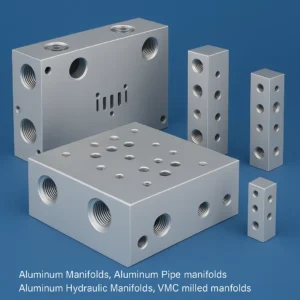
Aluminum Manifolds, Aluminum Hydraulic Manifolds
Read more -
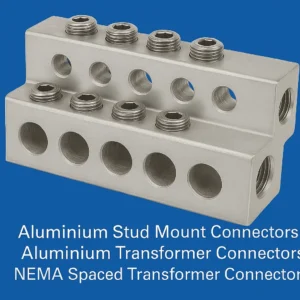
Aluminum Stud Mount Connectors, Aluminum Transformer Connectors,
Read more -
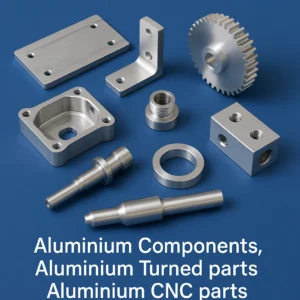
Aluminum Parts, Aluminum Turned Components
Read more -
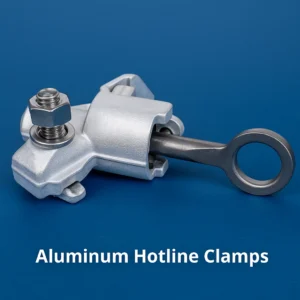
Aluminum Hotline Clamps
Read more -
Aluminum CNC machined Parts, Aluminum Components
Read more