Aluminum Pressure Die Casting (PDC) & Aluminum Die Cast Parts – ADC12, A380, LM24 | Brass & Copper Parts India
Aluminum pressure die casting (PDC) is a high-speed, high-pressure casting process in which molten aluminum alloy is injected into a hardened steel die at pressures of 7–140 MPa, producing high-volume, dimensionally precise aluminum parts with excellent surface finish, thin walls, and complex integral features. Brass & Copper Parts India manufactures aluminum PDC parts from ADC12 (JIS / A383), A380 (ASTM B85), LM24 (BS 1490), and LM2 alloys for USA electrical OEMs, power utility equipment manufacturers, automotive tier suppliers, telecom enclosure producers, consumer electronics OEMs, and industrial automation equipment manufacturers. Aluminum pressure die castings deliver net-shape or near-net-shape components with minimal post-cast machining, achieving cost-per-piece efficiencies that no other metalworking process can match at volumes above 5,000 pieces per year.
Product Overview
Aluminum PDC (also called high-pressure die casting or HPDC) uses a two-part hardened H13 steel die mounted in a die casting machine (cold chamber for aluminum). The injection plunger forces molten aluminum into the die cavity at high velocity and pressure, filling thin sections and complex geometry in milliseconds. Cycle times of 30–120 seconds per shot enable production of 500–2,000 pieces per shift on medium-to-large machines. Aluminum PDC parts achieve as-cast dimensional tolerances of ±0.1 mm on small features (better than gravity casting and far better than sand casting), as-cast surface finish Ra 1.6–3.2 µm, and minimum wall thickness of 1.0–1.5 mm. Tooling (dies) are more expensive than gravity casting tools but are amortized over 100,000–1,000,000+ shots depending on alloy and part geometry.
Key Features
- Thin Wall Capability: Minimum wall thickness 1.0–1.5 mm for aluminum PDC — enabling lightweight enclosures, heat sinks, and connector housings with integral features that are impractical in other processes.
- Net-Shape Precision: As-cast tolerances ±0.1 mm on small dimensions; ±0.2–0.3 mm on larger dimensions — significantly reducing post-cast machining requirements versus gravity or sand casting.
- High Production Rate: 500–2,000 shots per shift on cold-chamber machines — delivering competitive per-piece cost at production volumes from 5,000 to millions of pieces per year.
- Integral Feature Casting: Bosses, ribs, fins, threaded inserts, logos, draft angles, and complex undercuts (with slides/cores) are cast integral to the part — reducing assembly operations and component count.
- Excellent Surface Finish: As-cast Ra 1.6–3.2 µm enables direct painting, powder coating, or anodizing without extensive pre-treatment — ideal for visible cosmetic surfaces on enclosures and consumer-facing components.
- Cold Chamber Process for Aluminum: Cold-chamber die casting (distinguished from hot chamber used for zinc/magnesium) handles the higher-temperature aluminum alloys without degrading the injection system — essential for quality aluminum PDC.
Technical Specifications
| Parameter | Specification |
|---|---|
| Alloys Available | ADC12 / A383, A380 / ADC10, LM24 / ADC12, LM2, A360 / LM9 |
| Machine Capacity | 160 to 800 tonne cold-chamber die casting machines |
| Shot Weight Range | 0.05 kg to 8 kg per shot (per cavity) |
| As-Cast Tolerance | ±0.1 mm (small features); ±0.2–0.3 mm (large features) |
| Minimum Wall Thickness | 1.0–1.5 mm (alloy dependent) |
| As-Cast Surface Finish | Ra 1.6–3.2 µm |
| Production Rate | 500–2,000 shots/shift (machine size dependent) |
| Tooling Shots Life | 100,000–1,000,000+ shots (H13 steel dies) |
| Post-Cast Operations | Trimming, CNC machining, anodize, powder coat, e-coat |
Aluminum PDC Alloy International Grade Equivalents
| ASTM (USA) | JIS (Japan) | BS (UK) | EN/DIN (EU) | IS (India) | Key Properties |
|---|---|---|---|---|---|
| A380 / ASTM B85 | ADC10 / JIS H5302 | LM24 / BS 1490 | EN AC-46000 / AlSi8Cu3 | IS 617 SG-A | Best overall casting alloy |
| A383 / ASTM B85 | ADC12 / JIS H5302 | LM24 / BS 1490 | EN AC-46500 / AlSi9Cu3(Fe) | IS 617 | Best fluidity, thin walls |
| A360 / ASTM B85 | ADC3 / JIS H5302 | LM9 / BS 1490 | EN AC-43300 / AlSi10Mg | IS 617 LM9 | Corrosion resistance, pressure tight |
| A413 / ASTM B85 | ADC1 / JIS H5302 | LM6 / BS 1490 | EN AC-44300 / AlSi12 | IS 617 LM6 | Max fluidity, marine service |
Product Types and Variants
Aluminum PDC Electrical Enclosures and Junction Boxes
Aluminum pressure die cast enclosures and terminal boxes are produced for industrial electrical equipment, street lighting, EV charging stations, and outdoor power distribution applications requiring IP65/IP66 weatherproof rating with lightweight, corrosion-resistant aluminum construction. The PDC process casts integral cable gland bosses, hinge lugs, lid seating grooves, and mounting ears in one operation — eliminating the machining and assembly of these features that would be required on fabricated enclosures. Wall thicknesses of 2.5–4.0 mm provide structural rigidity and thermal mass. Post-casting CNC machining creates lid sealing face flatness (≤ 0.05 mm) and threaded cable entry ports.
Aluminum PDC Heat Sinks and Thermal Management Components
Pressure die cast aluminum heat sinks are produced with integral pin fin or plate fin arrays at very high fin densities (fin pitch 2.0–4.0 mm, fin height up to 40 mm) that are impractical by any other manufacturing process at high volume. A380 or ADC12 alloy provides good thermal conductivity (~96 W/m·K). PDC heat sinks are used in LED street lighting, power electronic inverters, motor drive amplifiers, telecom base station equipment, and EV battery management systems. Integral mounting holes, connector bosses, and surface-mount LED pads are all cast in, reducing assembly parts and cost.
Aluminum PDC Automotive and EV Components
High-pressure die cast aluminum parts for automotive and electric vehicle applications include motor housings, battery pack structural frames, power electronics housings, EV charger bodies, transmission end caps, and oil pan components. A380 (ADC10) is the primary alloy for automotive PDC due to its combination of fluidity, dimensional stability, and mechanical properties. Structural die casting (vacuum-assisted HPDC) enables wall thicknesses of 2.5–5.0 mm in body-in-white components requiring higher elongation. Post-casting T5 or T6 heat treatment for ADC12 vacuum castings produces mechanical properties approaching gravity cast LM25-T6.
Aluminum PDC Connector Bodies and Electrical Hardware
Precision die cast aluminum connector bodies, terminal housings, plug shells, and adaptor bodies are manufactured for electrical connector OEMs, industrial plug and socket manufacturers, and military connector producers. PDC enables complex internal locking features, integral threaded inserts, and precise mating interface dimensions to be cast in, with minimal post-cast machining. A380 or ADC12 alloys provide the combination of casting integrity, dimensional stability, and machinability required for tight-tolerance connector interfaces. Anodize or chemical film (Alodine) finishes provide conductivity continuity for EMI shielding applications.
Aluminum PDC Telecom and IT Infrastructure Hardware
Die cast aluminum enclosures, chassis covers, heat spreader plates, and SFP module cages for telecommunications and data center infrastructure equipment are among the highest-volume aluminum PDC applications globally. The ability to cast complex internal profiles, integrated fins, cable routing channels, and mounting features in one operation at Ra 1.6 µm as-cast surface finish makes aluminum PDC the process of choice for telecom OEM structural and thermal management hardware. We supply to USA and global telecom equipment OEMs with AS9100 or ISO 9001 quality systems and full production documentation packages.
Applications by Industry
- Electrical Equipment OEM: Junction box castings, terminal box lids, distribution board housings, and enclosure bodies for industrial and outdoor electrical equipment manufactured to IEC/UL standards.
- Automotive and EV: Motor housings, inverter enclosures, EVSE (EV charging station) enclosures, and structural body components for electric vehicle and hybrid powertrain systems.
- LED Lighting and Street Lighting: Heat sink castings with integral fin arrays and optical cavity profiles for commercial LED street lights, industrial high-bay fittings, and architectural lighting systems.
- Telecommunications: Network equipment chassis, cable entry housings, fiber optic enclosures, and base station equipment bodies for 5G and fixed network infrastructure.
- Industrial Automation: Robot arm housings, actuator end caps, pneumatic valve manifold bodies, and encoder housings for factory automation and robotic assembly equipment.
Manufacturing Process
PDC die tooling is designed in SolidWorks and simulated using MAGMA or FLOW-3D casting simulation before manufacturing from H13 hot-work tool steel (hardness 44–48 HRC) with shot capacity of 100,000–1,000,000+ shots. The cold-chamber die casting process pours molten aluminum into a shot sleeve, where the injection plunger pushes metal into the die at pressures of 40–100 MPa and die fill times of 20–80 ms. After solidification (5–30 seconds), the die opens and the casting is ejected using ejector pins. Gates and overflows are trimmed by CNC-controlled trim press. Parts proceed to shot blast, CNC machining (if required), and surface treatment. 100% visual inspection and sampling dimensional check per AQL 2.5 are performed before packing and shipment.
Quality Standards and Certifications
- ISO 9001:2015 Certified Quality Management System
- Material conformance to ASTM B85 (A380/A383/A360), JIS H5302 (ADC), BS 1490 (LM) with chemical analysis reports
- X-ray/CT inspection and dye penetrant testing for porosity-critical aerospace and automotive parts
- Pressure testing at rated WP for fluid-circuit castings (pump housings, valve bodies)
- PPAP (Production Part Approval Process) documents available for automotive OEM supply chains
- RoHS, REACH compliant; IATF 16949 quality system available for automotive supply
Why Choose Brass & Copper Parts India
- Casting Simulation Capability: MAGMA simulation for all new PDC tools predicts fill pattern, porosity risk, and shrinkage location before tooling is cut — reducing development cycles and scrap.
- Full PDC-to-Finish Supply: Die casting, trim pressing, CNC machining, surface treatment, assembly, and inspection from a single factory — single-source supply with full quality accountability.
- PPAP and Automotive Documentation: Production Part Approval Process (PPAP) documentation packages for automotive OEM supply chain qualification — design records, process flow, FMEA, control plans, capability studies.
- Competitive Indian Manufacturing: 30–50% cost advantage over North American and European PDC sources for equivalent quality, with international logistics experience including USA import compliance documentation.
Frequently Asked Questions
What is the difference between aluminum PDC and gravity die casting?
PDC (high pressure die casting) injects metal under 40–100 MPa pressure producing thin walls (1 mm+), high production rate, and better surface finish — but with higher porosity and not heat-treatable with conventional alloys. Gravity die casting pours under gravity, producing denser, lower-porosity castings that can be T6 heat treated for maximum strength — but with thicker minimum walls (3 mm) and slower cycle times. PDC is preferred for high-volume, thin-wall, net-shape parts; gravity casting for pressure-tight, heat-treatable, or medium-volume applications.
Can aluminum PDC parts be anodized?
Standard PDC alloys (A380, ADC12) containing high silicon and copper can be anodized but the result is darker grey/brown rather than bright silver. Functional anodize (Type II, Type III) is achievable for corrosion protection. For bright decorative anodize, lower-silicon alloys (A360, ADC3) or post-processing blasting followed by acid etching are used. Chemical film (Alodine/Iridite) per MIL-DTL-5541 is the preferred EMI shielding and corrosion protection treatment for PDC aluminum parts.
What is the minimum production volume to justify PDC tooling cost?
PDC tooling typically costs USD 5,000–50,000 depending on part size and number of cavities. For a single-cavity medium-size die (USD 10,000–15,000), break-even versus gravity casting typically occurs at 3,000–5,000 pieces/year. Above this volume, PDC offers lower per-piece cost and better dimensional consistency. For very high volumes (50,000+/year), multi-cavity dies reduce per-piece tooling amortization further.
What is the dimensional tolerance I can expect from aluminum PDC?
As-cast aluminum PDC: ±0.1 mm for dimensions up to 25 mm; ±0.2 mm for 25–150 mm; ±0.3 mm for 150–300 mm. These are consistent with NADCA (North American Die Casting Association) Product Design Standards. Tighter tolerances require post-cast CNC machining, which we perform in-house.
Can you supply aluminum PDC parts with threaded holes?
Yes. Threads in aluminum PDC are produced by: (a) cast-in threaded inserts (steel or brass, over-cast during die casting); (b) post-cast CNC tapping; (c) self-tapping screws without pre-threading. For precision metric and NPT/BSP threads, post-cast CNC tapping is preferred. Cast-in steel inserts are used for high-cycle assembly operations where thread wear is a concern.
What machine tonnage range do you operate for aluminum PDC?
We operate cold-chamber die casting machines from 160 tonnes to 800 tonnes clamp force — covering aluminum PDC parts from 50 grams to 8 kg per shot. Parts requiring more than 800 tonnes can be produced by partner facilities under our quality oversight. Please submit your part drawing for machine selection and quotation.
Suggested Internal Links
- All Aluminum Parts
- Aluminum Gravity Casting (related product)
- Aluminum Screw Machine Parts (related product)
- Aluminum Stamped Parts (related product)
Request a Quote for Aluminum Pressure Die Castings
Brass & Copper Parts India manufactures aluminum pressure die cast parts in ADC12, A380, A360, and LM alloys for USA electrical OEMs, automotive tier suppliers, LED lighting manufacturers, and telecom equipment producers. Submit your drawing, alloy, annual volume, and quality requirements for a PPAP-ready quotation. Request a quote now.
Product categories
Related Products
-

Aluminum Terminal Bars, Aluminum Neutral Bars-Links
Read more -
Aluminum PG Clamps, Aluminum Parallel Groove Clamps
Read more -
Aluminum Vise Connectors, Aluminum Vise Clamps
Read more -
Aluminum Alloy Stirrup Clamp Hotline Bail Clamp
Read more -
Aluminum Gravity Casting and Gravity Cast Parts
Read more -
Aluminum Brackets, Aluminum Pipe Brackets (Pressed)
Read more -
Aluminum Screw Machine Parts
Read more -
Aluminum Washers, Pressed Aluminum Washers
Read more -
Aluminum Stamped Parts, Aluminum Stamping
Read more -
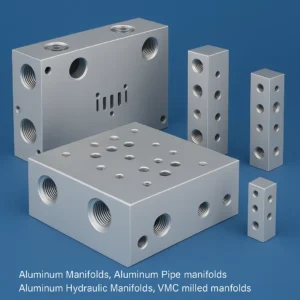
Aluminum Manifolds, Aluminum Hydraulic Manifolds
Read more -
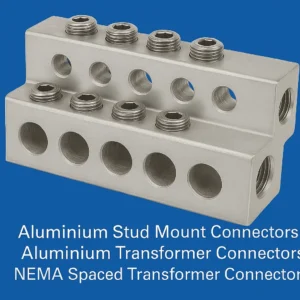
Aluminum Stud Mount Connectors, Aluminum Transformer Connectors,
Read more -
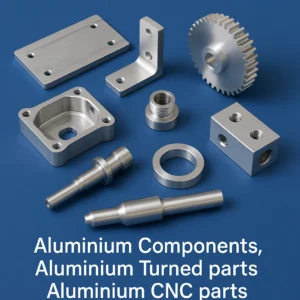
Aluminum Parts, Aluminum Turned Components
Read more -
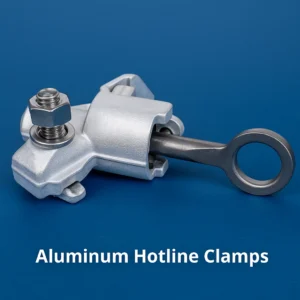
Aluminum Hotline Clamps
Read more -
Aluminum CNC machined Parts, Aluminum Components
Read more