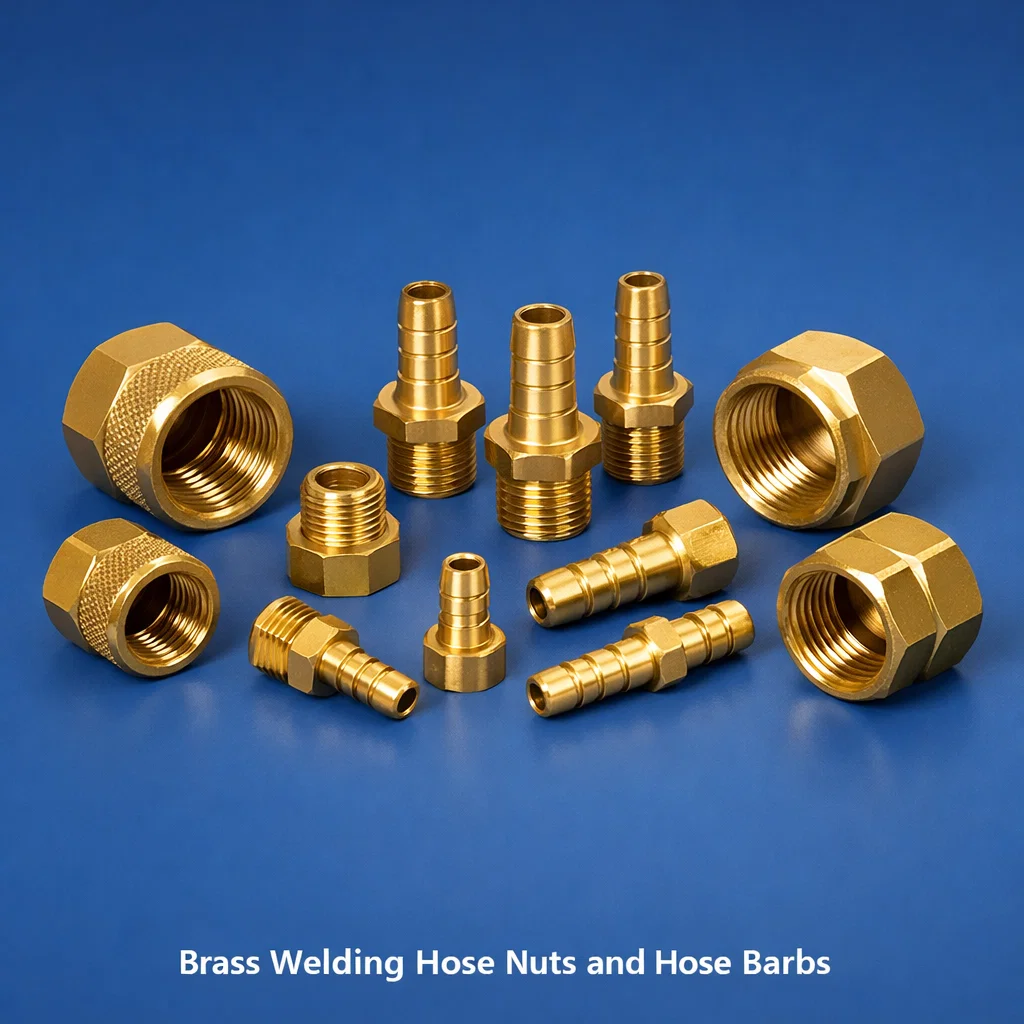
Brass Welding Hose Nuts and Hose Barbs – Oxy-Fuel & Gas Welding Fittings | Brass & Copper Parts India
Brass welding hose nuts and hose barbs are precision-machined connectors used to attach oxy-fuel welding hoses, cutting hoses, and gas supply hoses to welding torches, blowpipes, regulators, and manifold connections. Brass & Copper Parts India manufactures welding hose fittings to BS 5120, EN 559, CGA (Compressed Gas Association), and ISO 3821 standards — supplying USA welding equipment distributors, oxy-fuel torch OEMs, EPC contractors, and industrial gas companies. Our welding hose nuts are available in fuel gas (LH – Left Hand thread) and oxygen (RH – Right Hand thread) configurations to comply with mandatory color-coding and thread direction safety standards that prevent accidental gas cross-connection.
Product Overview
Welding hose nuts are union nuts that secure the hose end barb to the welding equipment connection point. The barb is inserted into the hose bore and the nut is threaded onto the torch or regulator nipple to create a gas-tight, pressure-rated assembly. The internationally adopted convention of left-hand threads for fuel gases (acetylene, propane, LPG) and right-hand threads for oxygen ensures fail-safe identification and connection. Brass is the universally specified material for welding gas fittings because it does not spark when struck (non-sparking property), does not react with oxygen at working pressures, and offers excellent machinability for high-thread-quality production.
Key Features
- Left-Hand (LH) and Right-Hand (RH) Thread Options: Fuel gas hose nuts are LH (left-hand) threaded per international convention (EN 559 / BS 5120) to prevent cross-connection with oxygen lines — a mandatory safety requirement.
- Non-Sparking Brass Material: IS 319 / ASTM B16 free-cutting brass is inherently non-sparking, making it safe for use in oxygen-enriched and flammable gas environments per OSHA and NFPA requirements.
- High-Pressure Rated: Designed for working pressures up to 400 PSI (27.5 bar) for oxygen hose connections and up to 200 PSI (14 bar) for fuel gas hose connections per BS EN 559 / ISO 3821.
- Standard Thread Forms: Available in CGA (USA), BS 5120 (UK), and ISO 3821 hose end thread forms with hex flat for spanner tightening — ensuring compatibility with standard welding equipment worldwide.
- Knurled Hex Nut Body: Hex across-flats (AF) on both nut and barb body for use with standard open-end spanners; knurled designs available for hand-tighten-only applications.
- Full Barb Range: Hose barbs available in 3/16″, ¼”, 5/16″, 3/8″, and ½” bore diameters to match standard welding hose sizes (BS EN 559 size designations).
Technical Specifications
| Parameter | Specification |
|---|---|
| Material | IS 319 Grade I / ASTM B16 / CZ121 Free Cutting Brass |
| Thread Forms | CGA standard (USA), BS 5120 (UK), ISO 3821; LH and RH as applicable |
| Hose Size Range | 3/16″ to ½” bore (DN5 to DN12) |
| Working Pressure – Oxygen | Up to 400 PSI (27.5 bar) |
| Working Pressure – Fuel Gas | Up to 200 PSI (14 bar) |
| Temperature Range | -20°C to +60°C (ambient service) |
| Surface Finish | Natural polished brass |
| Thread ID (Fuel Gas) | Left-hand (LH) – groove or notch marking as per standard |
| Thread ID (Oxygen) | Right-hand (RH) – no special marking |
| Standards | BS 5120, EN 559 / ISO 3821, CGA Pamphlet E-1 |
Brass Material Grade International Equivalents
| Standard | Grade | Cu % | Zn % | Pb % |
|---|---|---|---|---|
| IS (India) | IS 319 Grade I | 60–63 | Bal. | 2.5–3.5 |
| ASTM (USA) | C36000 / ASTM B16 | 60–63 | Bal. | 2.5–3.7 |
| BS/EN | CZ121 / CW614N | 57–59 | Bal. | 2.5–3.5 |
| DIN | CuZn39Pb3 / 2.0402 | 57–60 | Bal. | 2.5–3.5 |
| JIS | C3604 / JIS H3250 | 59–63 | Bal. | 1.8–3.7 |
Product Types and Variants
Brass Oxygen Hose Nuts (RH Thread – Blue / Green)
Oxygen welding hose nuts are right-hand (RH) threaded union nuts that connect the oxygen hose to the torch or blowpipe. They are manufactured from IS 319 brass and machined to BS 5120 or CGA E-1 thread specifications. The RH thread convention makes them incompatible with LH fuel gas fittings, preventing dangerous cross-connections. These nuts are available in hex and knurled body styles and are supplied with matching RH barb inserts in 3/16″ to ½” bore sizes. They are typically painted or color-coded blue (oxygen) per EN 559 convention for field identification.
Brass Fuel Gas Hose Nuts (LH Thread – Red)
Fuel gas hose nuts (for acetylene, propane, LPG, and natural gas) are left-hand (LH) threaded — a mandatory international safety convention that prevents accidental interchange with oxygen connections. The LH thread is identifiable by a circumferential groove on the nut and a notch on the hex flats per BS EN 559. These nuts are compatible with left-hand torch nipples and regulator outlets used on fuel gas (acetylene, propane) equipment. Available in 3/16″, ¼”, 5/16″, and 3/8″ bore sizes to match standard fuel gas hose diameters.
Brass Hose Barb Inserts for Welding Hose
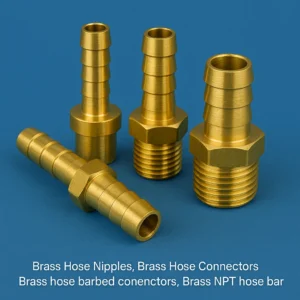
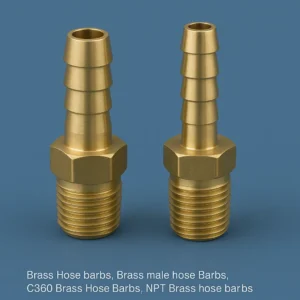
Hose barb inserts are the inner component of the two-piece welding hose fitting assembly — the barb shank is pressed into the hose bore and the hose nut is threaded over it to compress the hose wall between the barb and nut. Barbs are machined from IS 319 brass with annular ribs dimensioned to BS EN 559 and ISO 3821 hose bore tolerances. Single barb, double barb, and serrated profile barbs are available. Left-hand and right-hand versions must be matched to the corresponding nut for correct assembly.
Brass Welding Hose Couplings and Connectors
Welding hose couplings are used to join two lengths of welding hose together or to adapt between different hose end types (e.g., BS to CGA). They consist of two hose end fittings connected by a hex union body, available in oxygen (RH) and fuel gas (LH) thread configurations. These are commonly used in field welding operations to repair or extend hose runs, and by welding supply distributors as spare parts. All connections are machined to BS 5120 and CGA E-1 standards for interoperability with standard welding equipment.
Brass Regulator-to-Hose Nipples (CGA Outlet to Hose Barb)
These nipples transition from a CGA regulator outlet thread (such as CGA 200 for acetylene or CGA 540 for oxygen) to a hose barb end for direct hose assembly without a separate nut-and-barb set. They are used in fixed-installation welding stations, pipeline welding setups, and industrial cutting operations where a direct regulator-to-hose connection is preferred. Available in CGA 200 (acetylene), CGA 510 (propane), CGA 540 (oxygen), and CGA 580 (nitrogen) outlet threads with ¼” to 3/8″ barb shanks.
Applications by Industry
- Oxy-Fuel Welding and Cutting: Connecting oxygen and acetylene or propane hoses to welding torches, cutting blowpipes, heating nozzles, and regulators in fabrication shops, shipyards, and pipeline construction.
- Industrial Gas Supply: Connecting welding-grade gas supply hoses to manifold headers, flashback arrestors, and pressure regulators in large welding workshops and automated welding lines.
- Repair and Maintenance Operations: Field replacement of worn or damaged hose end fittings on existing welding hose sets — a major aftermarket spare part for welding supply distributors.
- EPC & Construction Contractors: Site welding and cutting operations on power plant construction, refinery projects, and structural steelwork where oxy-fuel cutting is used for heavy plate work.
- OEM Welding Equipment Manufacturers: Integrated into new welding torch sets, hose assemblies, and welding kit packaging by torch and gas equipment OEMs.
- Training and Educational Institutions: Welding schools and technical training institutions maintaining gas welding equipment for student training.
Manufacturing Process
Welding hose nuts and barbs are CNC-turned from IS 319 Grade I brass bar stock. The hex body is turned and flats are milled to the specified AF dimension. Threads (LH or RH) are cut on CNC threading lathes and every nut is gauged with calibrated Go/No-Go thread gauges in LH or RH configuration. Barb profiles are turned to drawing dimensions based on BS EN 559 hose bore specifications. After machining, parts are tumbled for deburring and polished to a uniform bright finish. Parts are separated into LH (fuel gas) and RH (oxygen) batches with separate bags, labels, and documentation to maintain gas safety traceability. No LH and RH parts are mixed in any packing or storage operation.
Quality Standards and Certifications
- ISO 9001:2015 Certified Quality Management System
- Manufactured to BS 5120, EN 559 / ISO 3821, and CGA Pamphlet E-1 dimensional standards
- LH/RH thread verification with calibrated gauge sets — 100% inspection
- Material certification per ASTM B16 / IS 319 with spectrographic reports
- Strict segregation of LH (fuel gas) and RH (oxygen) parts throughout production, inspection, and packing
- RoHS and REACH compliant for USA and EU export
Why Choose Brass & Copper Parts India
- LH/RH Thread Safety Discipline: We maintain fully segregated LH and RH production, gauging, and packing lines — critical for welding gas safety compliance and zero-defect supply to distributors.
- BS 5120, EN 559 and CGA Expertise: We hold dimensional specifications for both UK/European (BS/EN) and USA (CGA) welding hose fitting standards, enabling dual-market supply from a single source.
- Non-Sparking Material Compliance: IS 319 / ASTM B16 brass is specified for oxygen service applications per OSHA 29 CFR 1910.253 — we can provide material declaration letters confirming non-sparking brass material.
- Distributor-Ready Packaging: Individual polybag with part number, LH/RH identification, lot number, and country of origin — compliant with USA customs and product liability requirements.
- Volume Supply Capability: 50,000+ pieces per month capacity for hose nuts and barbs; container-load pricing available for welding supply distributors.
Frequently Asked Questions
Why are fuel gas welding hose fittings left-hand threaded?
Left-hand threading on fuel gas fittings is an international safety standard (per EN 559, BS 5120, and CGA conventions) that physically prevents accidental connection of fuel gas hoses to oxygen equipment and vice versa. This eliminates the possibility of dangerous reverse gas connections that could cause fires, explosions, or flashback incidents. The LH thread is identified by a groove on the nut or a notch on the hex flats.
What is the difference between CGA and BS 5120 welding hose fittings?
CGA (Compressed Gas Association) standards are the USA standard for welding hose fittings and connections. BS 5120 is the UK/British standard. While both use LH threads for fuel gas and RH threads for oxygen, the thread pitch, diameter, and connection geometry differ between CGA and BS/EN 559 standards. We manufacture both types and can supply adapters for customers requiring conversion between the two systems.
Are brass welding hose fittings safe for oxygen service?
Yes. Brass (IS 319 / ASTM B16 / CZ121) is the internationally specified material for oxygen gas fittings in welding applications. Brass is non-sparking (does not ignite from impact), does not react with oxygen at normal welding working pressures (up to 400 PSI), and is specified by OSHA 29 CFR 1910.253 and CGA Pamphlet G-4 for oxygen service fittings.
Can acetylene and propane use the same hose fittings?
Both acetylene and propane/LPG welding hose fittings use LH (left-hand) threads. However, they may differ in specific thread size or connection type depending on the equipment manufacturer. Always verify the exact thread specification for your equipment. We can machine to any specified LH thread form for fuel gas service.
What hose bore sizes are available for barb fittings?
We supply barbs for standard welding hose bore sizes: 3/16″ (ID 4.8 mm), ¼” (ID 6.3 mm), 5/16″ (ID 8 mm), 3/8″ (ID 9.5 mm), and ½” (ID 12.7 mm) — corresponding to BS EN 559 size designations 4, 6, 8, 9, and 12. Custom bore sizes are available for OEM programs.
Do you supply flashback arrestors or check valves?
We supply the brass fittings (nuts and barbs) components. Flashback arrestors are a separate assembly — we recommend consulting our product range or a specialist gas safety equipment supplier for these components.
What is the working pressure rating for these fittings?
Oxygen hose fittings: rated to 400 PSI (27.5 bar) working pressure. Fuel gas (acetylene, propane) hose fittings: rated to 200 PSI (14 bar) working pressure, per BS EN 559 / ISO 3821 pressure ratings for the respective gas service.
Can you supply welding hose fitting kits for distributors?
Yes. We supply matched sets of hose nut plus barb insert (oxygen RH and fuel gas LH pairs) in retail-friendly packaging for welding supply distributors. Custom kitting, labeling, and barcoding available for distributor private-label programs.
Suggested Internal Links
- All Pipe and Hose Fittings
- Brass Parts and Components
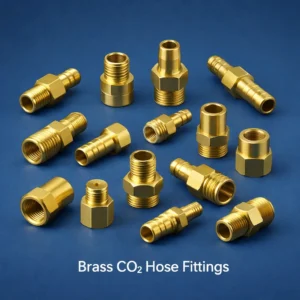
- Brass CO2 Hose Fittings (related product)
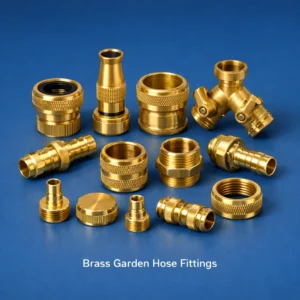
- Brass Garden Hose Fittings (related product)
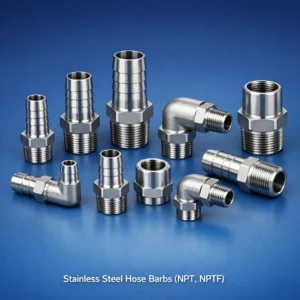
- Stainless Steel Hose Barbs NPT NPTF (related product)
Request a Quote for Brass Welding Hose Nuts and Barbs
Brass & Copper Parts India supplies precision-machined brass welding hose nuts (LH and RH) and hose barbs to USA welding distributors, oxy-fuel torch OEMs, and industrial gas supply companies. Submit your thread specification (CGA or BS 5120), gas type (oxygen or fuel gas), hose bore size, and annual quantity for a competitive pricing proposal. Contact us today.
Product categories
Related Products
-

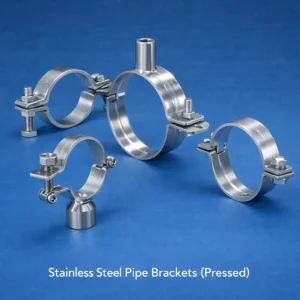
Stainless Steel Pipe Brackets (Pressed)
Read more -
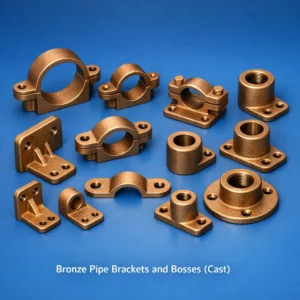
Bronze Pipe Brackets and Bosses (Cast)
Read more -
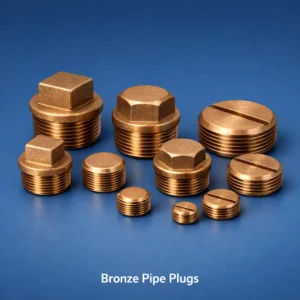
Bronze Pipe Plugs
Read more -
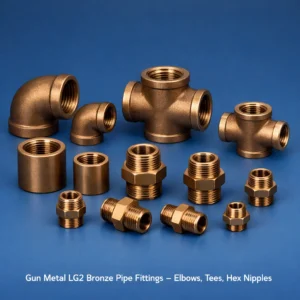
Gun Metal LG2 Bronze Pipe Fittings – Elbows, Tees, Hex Nipples
Read more -
Brass CO2 Hose Fittings
Read more -
Stainless Steel Hose Barbs (NPT, NPTF)
Read more -
Brass Garden Hose Fittings
Read more -
Brass Ferrules, Hose Crimp Ferrules in Brass
Read more -
Brass Hose Nipples, Brass Hose Connectors
Read more -
Stainless Steel Welding Nipples
Read more -
Brass Hose Barbs
Read more -
Lead Free Brass Pipe Fittings, Lead Free Brass Fittings
Read more