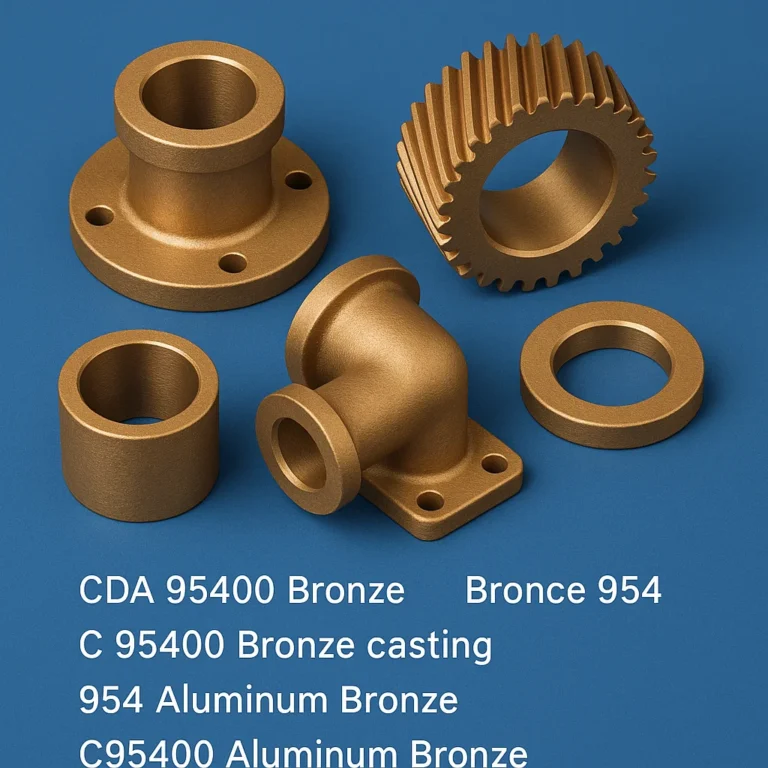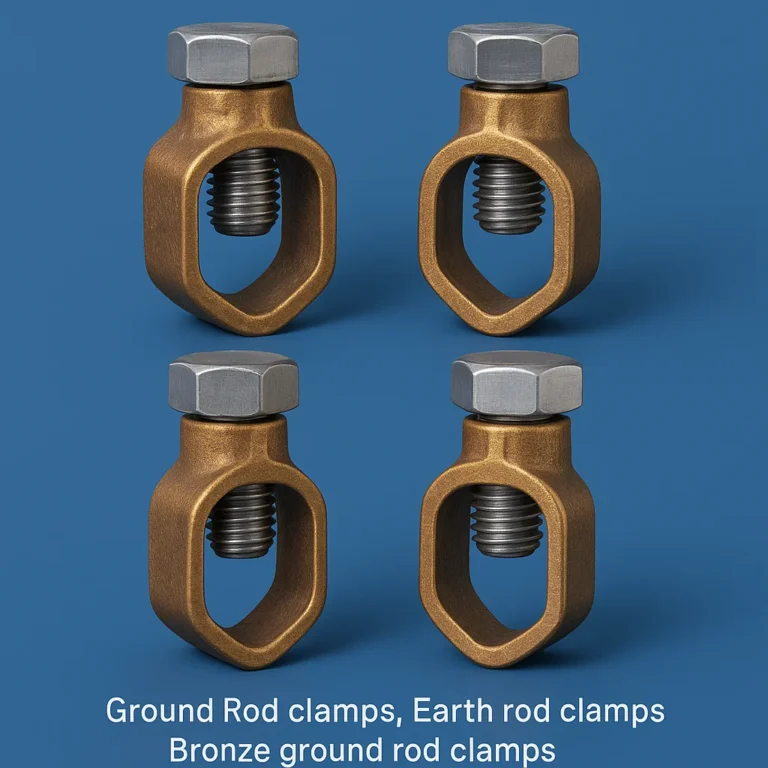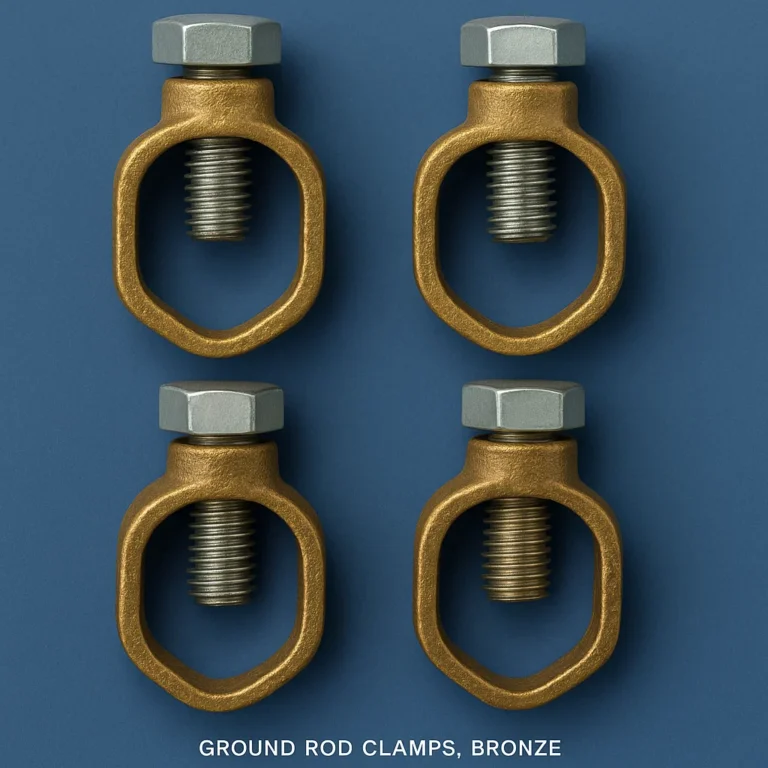
Bronze alloys are among the oldest engineered materials in human history, yet their complexity and variety continue to challenge engineers, procurement specialists, and manufacturers worldwide. Whether you are designing a marine pump, a heavy-load gear, a precision bearing, an artistic sculpture, or an electrical connector, the choice of the correct bronze grade is mission-critical. The wrong alloy selection leads to premature failure, poor machinability, excessive cost, or rejection during inspection. This comprehensive guide covers every major bronze alloy family used globally—with worldwide standard equivalents, composition data, mechanical properties, manufacturing suitability ratings, and cost benchmarks—so you can make one informed decision and move confidently into production.
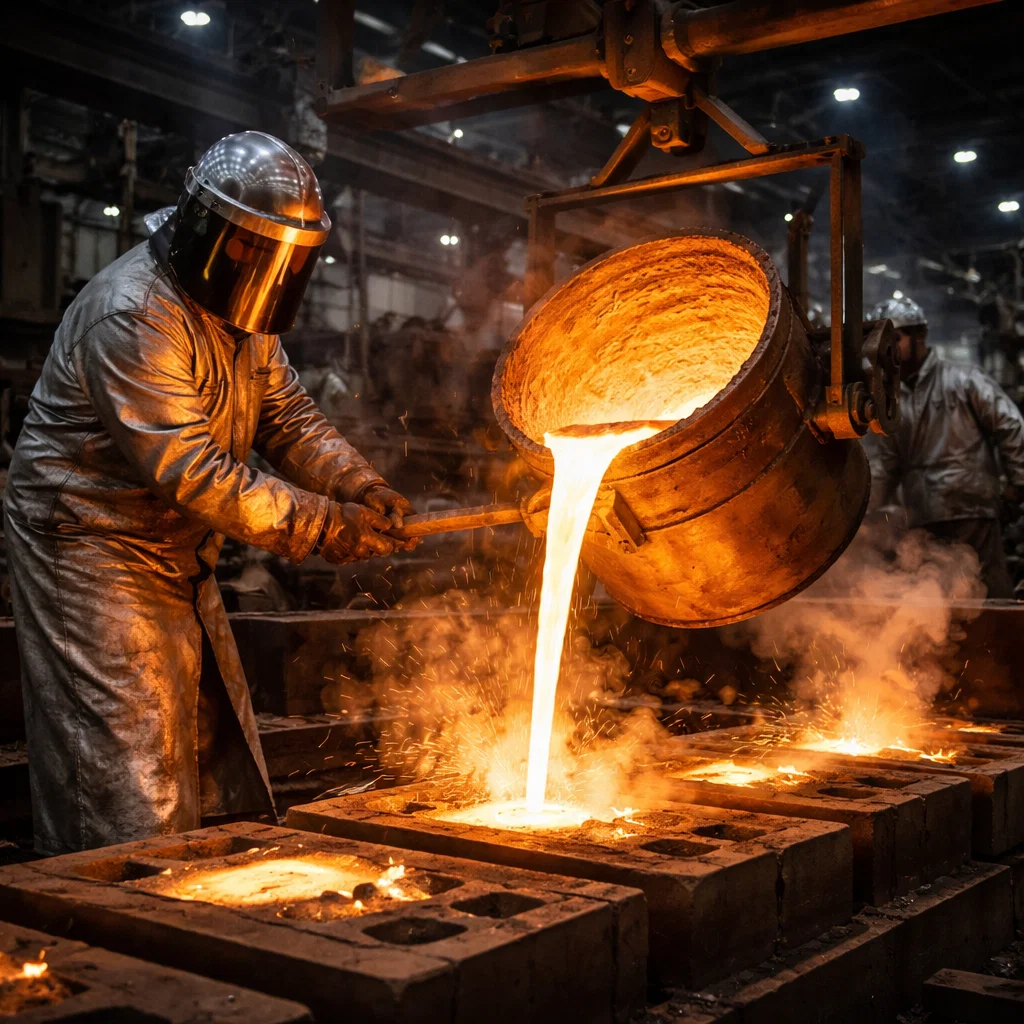
1. What Is Bronze? Understanding the Alloy Family
Bronze is fundamentally a copper-based alloy in which tin is the primary alloying element, although modern usage has expanded the term to include several alloy families that contain little or no tin. The broad bronze family now encompasses Tin Bronze (the classical type), Leaded Tin Bronze, Phosphor Bronze, Aluminum Bronze, Silicon Bronze, Manganese Bronze, Gunmetal (also called Red Brass or Ounce Metal), Bearing Bronze, and Naval Bronze. Each family has unique metallurgical characteristics, and within each family there are multiple sub-grades optimized for different applications.
The unifying characteristic is a copper matrix that delivers inherent corrosion resistance, moderate-to-high strength, excellent wear resistance, good electrical and thermal conductivity (relative to ferrous materials), non-sparking behavior, and biocompatibility. These properties make bronze indispensable in aerospace, marine engineering, oil and gas, power generation, automotive, defense, food processing, architecture, and the arts.
Key Keywords for Searchers
If you arrived at this guide searching for bronze alloy grades, best bronze for machining, bronze casting alloys, aluminum bronze vs tin bronze, ASTM bronze equivalents, BS bronze standards, DIN bronze grades, JIS bronze, IS bronze India, best bronze for bearings, marine bronze alloy, bronze forging material, or bronze alloy cost comparison—you are in exactly the right place.
2. Bronze Alloy Families: Technical Overview
2.1 Tin Bronze (Classical Bronze)
Tin Bronze contains 2–20% tin in a copper matrix. Tin provides solid-solution strengthening, dramatically improves corrosion resistance (particularly in seawater and freshwater), and enhances castability. As tin content rises above roughly 8%, a hard, brittle intermetallic phase (Cu₃Sn, delta phase) begins to appear, reducing ductility. The sweet spot for most engineering applications lies between 8% and 12% tin. Beyond 20% tin, the alloy becomes too brittle for structural use but can still serve as a wear-resistant overlay or bell metal. Common commercial tin bronzes include C90300, C90500, C90700, C91000, and their DIN/ISO equivalents.
2.2 Phosphor Bronze
Phosphor Bronze is a tin bronze with 0.01–0.35% phosphorus added as a deoxidizer and strengthener. Phosphorus refines the grain structure, improves fluidity during casting, increases fatigue strength, and provides a spring temper capability that makes phosphor bronze the preferred choice for electrical springs, connectors, bellows, and diaphragms. Wrought phosphor bronze strip (C51000, C52100, C52400) is produced in a wide range of cold-work tempers.
2.3 Leaded Tin Bronze
Leaded Tin Bronze introduces lead (typically 1–25%) to improve machinability and self-lubricating properties. Lead forms dispersed globules in the copper matrix and acts as an internal lubricant that reduces tool wear and chip formation energy. These alloys are the workhorses of bearing and bushing production. C83600 (Ounce Metal / Gunmetal), C84400, C93200 (SAE 660), C93700, C93800, and C94300 are the most widely used. The trade-off is reduced mechanical strength compared to unleaded bronzes, and growing regulatory pressure on lead (RoHS, REACH) is accelerating interest in lead-free alternatives.
2.4 Aluminum Bronze
Aluminum Bronze replaces tin with aluminum (5–12%) as the primary alloying element, often with additions of iron (up to 5%), nickel (up to 5%), and manganese (up to 3%). Aluminum forms a tenacious Al₂O₃ surface layer that provides exceptional resistance to oxidation at elevated temperatures (up to 400°C continuous), cavitation erosion, impingement attack, and a wide range of acids and alkaline media. Aluminum bronzes are significantly harder and stronger than tin bronzes and can be heat-treated (solution-treated and quenched for alloys above ~9.5% Al) to achieve tensile strengths exceeding 800 MPa. C95200, C95300, C95400, C95500, C63000, and C63200 are key ASTM grades. These alloys are widely used in heavy-duty gears, propeller shafts, pump impellers, valve seats, and naval applications.
2.5 Silicon Bronze
Silicon Bronze contains 1.5–6% silicon with additions of manganese and zinc. Silicon provides very high strength, excellent corrosion resistance in both marine and industrial environments, good weldability, and favorable hot-forging characteristics. C65100 (low silicon) and C65500 (high silicon) are the primary wrought grades. C87300, C87500, and C87600 are casting grades. Silicon bronze produces bright, clean castings and is preferred for artistic bronzes, marine hardware, and hydraulic fittings.
2.6 Manganese Bronze
Manganese Bronze (more accurately a high-strength brass or manganese brass) contains large amounts of zinc (up to 40%) plus manganese, iron, and aluminum. C86300 and C86400 are the most common grades. Despite the name, these are not classical bronzes but offer very high tensile strength (up to 820 MPa) and moderate corrosion resistance, making them popular for heavy-duty bushings, gears, and propeller hubs.
2.7 Gunmetal (Red Brass / Tin-Zinc Bronze)
Gunmetal (ASTM C83600, historically 85-5-5-5: 85% Cu, 5% Sn, 5% Pb, 5% Zn) is a cast alloy combining the corrosion resistance of tin bronze with the machinability benefit of lead and the cost reduction of zinc. It is the most common general-purpose pressure-tight casting alloy for valves, fittings, pump bodies, and marine hardware.
3. World Standard Equivalents for Bronze Alloys
One of the greatest practical challenges in global manufacturing is reconciling alloy designations across national and international standards. The table below provides the most comprehensive cross-reference available, covering UNS (USA), ASTM (USA), BS (UK), DIN/EN (Germany/Europe), JIS (Japan), IS (India), GB (China), and ISO designations.
3.1 Tin Bronze World Equivalents
| Common Name | UNS (USA) | ASTM | BS (UK) | EN (Europe) | JIS (Japan) | IS (India) | GB (China) | Composition |
|---|---|---|---|---|---|---|---|---|
| 8% Tin Bronze | C90300 | B505/B584 | LG2 | CC480K / CuSn8Zn4 | CAC402 | IS 318 Gr.1 | ZCuSn8Zn4 | Cu 87, Sn 8, Zn 4, Pb 1 |
| 10% Tin Bronze | C90500 | B505/B584 | LG4 | CC481K / CuSn10Zn2 | CAC403 | IS 318 Gr.2 | ZCuSn10Zn2 | Cu 88, Sn 10, Zn 2 |
| 12% Tin Bronze | C90700 | B505 | PB2 | CC483K / CuSn12 | CAC404 | IS 318 Gr.3 | ZCuSn12 | Cu 88, Sn 12 |
| 14% Tin Gear Bronze | C91100 | B505 | — | CuSn14 | — | IS 318 Gr.4 | ZCuSn15 | Cu 84, Sn 14, Ni 0.5 |
| Bell Metal (20% Sn) | C91600 | B505 | — | CuSn20 | — | — | — | Cu 80, Sn 20 |
3.2 Phosphor Bronze World Equivalents
| Common Name | UNS | ASTM | BS (UK) | EN (Europe) | JIS (Japan) | IS (India) | GB (China) | Composition |
|---|---|---|---|---|---|---|---|---|
| Phosphor Bronze A (5% Sn) | C51000 | B103/B139 | PB102 | CW451K / CuSn5 | C5191 | IS 7811 PBS2 | QSn5-0.1 | Cu 95, Sn 5, P 0.03-0.35 |
| Phosphor Bronze C (8% Sn) | C52100 | B103 | PB103 | CW453K / CuSn8 | C5210 | IS 7811 PBS3 | QSn8-0.3 | Cu 92, Sn 8, P 0.03-0.35 |
| Phosphor Bronze E (10% Sn) | C52400 | B103 | PB104 | CW454K / CuSn10 | — | IS 7811 PBS4 | QSn10-1 | Cu 90, Sn 10, P 0.03-0.35 |
| Cast Phosphor Bronze | C90700 | B505 | PB2 | CC483K | CAC404 | IS 318 | ZCuSn12 | Cu 88, Sn 12, P 0.3 |
3.3 Leaded Tin Bronze / Bearing Bronze World Equivalents
| Common Name | UNS | ASTM / SAE | BS (UK) | EN (Europe) | JIS (Japan) | IS (India) | GB (China) | Composition |
|---|---|---|---|---|---|---|---|---|
| Gunmetal (Ounce Metal) | C83600 | B505 / SAE 40 | LG2 | CC491K / CuSn5Zn5Pb5 | CAC406 | IS 318 LTB2 | ZCuSn5Pb5Zn5 | Cu 85, Sn 5, Pb 5, Zn 5 |
| SAE 660 Bearing Bronze | C93200 | B505 / SAE 660 | LB2 | CC493K / CuSn7Zn4Pb7 | CAC603 | IS 318 LTB4 | ZCuSn7Pb7Zn4 | Cu 83, Sn 7, Pb 7, Zn 3 |
| High-Lead Tin Bronze | C93700 | B505 / SAE 65 | LB4 | CC494K / CuSn10Pb10 | CAC604 | IS 318 LTB5 | ZCuSn10Pb10 | Cu 80, Sn 10, Pb 10 |
| High-Lead Bearing Bronze | C93800 | B505 / SAE 67 | — | CC496K / CuSn7Pb15 | CAC605 | — | ZCuSn5Pb20 | Cu 77, Sn 7, Pb 15 |
| Very High Lead Bronze | C94300 | B505 | — | — | — | — | — | Cu 70, Sn 5, Pb 25 |
| Leaded Gunmetal | C84400 | B505 | LG1 | CC492K | CAC407 | IS 318 LTB1 | ZCuSn3Zn11Pb4 | Cu 81, Sn 3, Pb 7, Zn 9 |
3.4 Aluminum Bronze World Equivalents
| Common Name | UNS | ASTM | BS (UK) | EN (Europe) | JIS (Japan) | IS (India) | GB (China) | Composition |
|---|---|---|---|---|---|---|---|---|
| Aluminum Bronze (single phase) | C95200 | B148/B505 | AB1 | CC330G / CuAl9 | CAC701 | IS 305 AB1 | ZCuAl9 | Cu 91, Al 9 |
| Aluminum Bronze C | C95300 | B148/B505 | AB1 | CC331G / CuAl10Fe | CAC702 | IS 305 AB2 | ZCuAl10Fe3 | Cu 89, Al 10, Fe 1 |
| Aluminum Bronze D | C95400 | B148/B505 | AB2 | CC333G / CuAl10Fe3 | CAC703 | IS 305 AB3 | ZCuAl10Fe3Mn2 | Cu 85, Al 11, Fe 4 |
| Nickel Aluminum Bronze | C95500 | B148/B505 | AB2 | CC334G / CuAl10Ni5Fe4 | CAC704 | IS 305 AB4 | ZCuAl10Fe4Ni4 | Cu 81, Al 11, Fe 4, Ni 4 |
| Ni-Al Bronze (high Ni) | C95800 | B148/B505 | NAB | CC332G / CuAl10Ni5Fe5 | — | IS 305 NAB | ZCuAl10Ni5Fe4 | Cu 81, Al 9.5, Ni 5, Fe 4, Mn 1 |
| Wrought AlBronze (C63000) | C63000 | B150/B169 | CA103 | CW307G / CuAl10Ni5Fe4 | — | — | QAl10-4-4 | Cu 82, Al 10, Ni 5, Fe 3 |
| Wrought AlBronze (C63200) | C63200 | B150 | — | CW307G | — | — | — | Cu 82, Al 9, Ni 5, Fe 4, Mn 1.5 |
3.5 Silicon Bronze World Equivalents
| Common Name | UNS | ASTM | BS (UK) | EN (Europe) | JIS (Japan) | IS (India) | GB (China) | Composition |
|---|---|---|---|---|---|---|---|---|
| Silicon Bronze Low Si | C65100 | B98 | — | CW116C / CuSi1.5 | — | — | — | Cu 97, Si 1.5, Mn 0.7 |
| Silicon Bronze High Si | C65500 | B98/B315 | — | CW116C / CuSi3Mn1 | — | — | QSi3-1 | Cu 96, Si 3, Mn 1 |
| Cast Silicon Bronze | C87300 | B584 | — | CC751S / CuSi3Mn1 | — | — | — | Cu 94, Si 4, Mn 0.8, Zn 1 |
| Cast Silicon Brass/Bronze | C87500 | B584 | — | CC770S | — | — | — | Cu 82, Si 4.5, Zn 14 |
3.6 Manganese Bronze / High-Strength Bronze World Equivalents
| Common Name | UNS | ASTM | BS (UK) | EN (Europe) | JIS (Japan) | IS (India) | Composition |
|---|---|---|---|---|---|---|---|
| Manganese Bronze (High Strength) | C86300 | B505/B584 | HTB1 | CC765S / CuZn25Al5Mn4Fe3 | CAC304 | IS 318 HSB | Cu 60, Zn 25, Al 6, Fe 3, Mn 3 |
| Manganese Bronze (Medium) | C86400 | B505 | HTB3 | CC763S | CAC303 | — | Cu 58, Zn 38, Al 1.5, Fe 1, Mn 0.4 |
| Manganese Bronze (Low) | C86200 | B505 | — | CC762S | CAC302 | — | Cu 63, Zn 33, Al 3, Fe 1.5, Mn 0.4 |
4. Mechanical Properties Comparison Table
The following table summarizes key mechanical properties in the as-cast or annealed condition unless otherwise noted. Values represent typical mid-range specifications; always consult the applicable ASTM, EN, or IS standard for minimum guaranteed values for design purposes.
| Alloy / Grade | UNS | UTS (MPa) | Yield Strength (MPa) | Elongation (%) | Hardness (HB) | Density (g/cm3) | Thermal Conductivity (W/mK) | Elastic Modulus (GPa) |
|---|---|---|---|---|---|---|---|---|
| Tin Bronze 8% (cast) | C90300 | 240–310 | 120–170 | 18–25 | 65–80 | 8.7 | 75 | 103 |
| Tin Bronze 10% (cast) | C90500 | 260–310 | 130–175 | 16–20 | 70–85 | 8.8 | 72 | 104 |
| Tin Bronze 12% (cast) | C90700 | 280–330 | 140–180 | 8–14 | 80–95 | 8.8 | 50 | 105 |
| Phosphor Bronze A (wrought) | C51000 | 350–700 | 140–620 | 5–45 | 55–200 | 8.86 | 84 | 110 |
| Phosphor Bronze C (wrought) | C52100 | 400–800 | 170–700 | 2–35 | 65–230 | 8.8 | 62 | 110 |
| Gunmetal C83600 (cast) | C83600 | 240–280 | 110–140 | 18–25 | 60–70 | 8.83 | 72 | 97 |
| SAE 660 Bearing Bronze (cast) | C93200 | 240–280 | 115–140 | 12–20 | 60–75 | 8.93 | 47 | 100 |
| High-Lead Bronze (cast) | C93700 | 210–250 | 100–120 | 10–16 | 50–65 | 9.1 | 44 | 97 |
| Aluminum Bronze 9% (cast) | C95200 | 450–510 | 170–205 | 25–35 | 110–120 | 7.6 | 59 | 110 |
| Aluminum Bronze 10% Fe (cast) | C95400 | 550–620 | 240–280 | 12–18 | 140–160 | 7.7 | 59 | 117 |
| Ni-Al Bronze (cast) | C95500 | 620–700 | 270–340 | 8–14 | 160–185 | 7.8 | 42 | 120 |
| Naval Ni-Al Bronze (cast) | C95800 | 590–650 | 240–295 | 12–18 | 150–175 | 7.63 | 36 | 118 |
| Silicon Bronze (wrought) | C65500 | 380–620 | 140–380 | 12–35 | 75–180 | 8.53 | 36 | 115 |
| Manganese Bronze (cast) | C86300 | 690–820 | 380–480 | 10–18 | 190–225 | 8.3 | 59 | 105 |
5. Casting Suitability: Which Bronze Alloys Cast Best?
Casting is the dominant manufacturing route for complex bronze components—pump bodies, valve housings, impellers, marine hardware, and artistic works. Understanding the casting characteristics of each alloy family is essential to selecting the right material and process.
5.1 Castability Factors
The key casting performance parameters are fluidity (ability to fill thin sections and complex molds), hot tearing tendency (risk of cracking during solidification), feeding range (solidification interval—wide range means more porosity risk), shrinkage (volumetric contraction requiring risering), gas porosity susceptibility, pressure tightness (freedom from interconnected porosity), and surface quality. The table below rates each major bronze family across these factors.
| Alloy Family | Key Grades | Fluidity | Hot Tear Risk | Shrinkage | Pressure Tightness | Surface Quality | Overall Castability | Best Casting Processes |
|---|---|---|---|---|---|---|---|---|
| Tin Bronze (8-10% Sn) | C90300, C90500 | Good | Low | 1.6% | Excellent | Very Good | ★★★★★ | Sand, Investment, Centrifugal |
| Tin Bronze (12% Sn) | C90700 | Good | Low-Med | 1.7% | Good | Good | ★★★★☆ | Sand, Centrifugal |
| Leaded Tin Bronze | C83600, C93200 | Very Good | Very Low | 1.5% | Excellent | Excellent | ★★★★★ | Sand, Investment, Die, Centrifugal |
| High-Lead Tin Bronze | C93700, C93800 | Excellent | Very Low | 1.5% | Good | Excellent | ★★★★☆ | Sand, Centrifugal |
| Aluminum Bronze (single-phase) | C95200 | Good | Medium | 2.1% | Good | Good | ★★★☆☆ | Sand, Investment |
| Aluminum Bronze (duplex) | C95400, C95500 | Fair-Good | Medium-High | 2.3% | Fair-Good | Fair | ★★★☆☆ | Sand, Centrifugal |
| Ni-Al Bronze | C95800 | Fair | Medium | 2.1% | Good | Fair-Good | ★★★☆☆ | Sand, Centrifugal |
| Silicon Bronze | C87300, C87500 | Excellent | Low | 1.7% | Excellent | Excellent | ★★★★★ | Sand, Investment, Lost Wax |
| Manganese Bronze | C86300 | Good | Medium | 1.9% | Fair | Good | ★★★☆☆ | Sand, Centrifugal |
5.2 Casting Process Selection Guide
Sand casting remains the most economical route for medium-to-large bronze castings (above 5 kg) and complex geometries in small-to-medium production runs. Investment casting (lost-wax) is ideal for precision parts with tight tolerances (+/-0.2 mm), smooth surfaces (Ra 1.6-3.2 micron), and thin walls (down to 1.5 mm), and is particularly suited to silicon bronze and leaded gunmetal. Centrifugal casting produces dense, porosity-free cylindrical shapes (bushings, sleeves, rings) and is the preferred process for C93200 and C95800. Continuous casting (billet/bar/tube) is the standard route for wrought phosphor bronze and tin bronze bar stock. Die casting of bronze is limited by the high melting points (900-1080 degrees C) but is practiced for silicon bronze with graphite dies. Lost-foam casting is emerging for complex aluminum bronze components in defense and marine sectors.
6. Forging Suitability: Which Bronze Alloys Forge Best?
Forging produces superior mechanical properties compared to casting by refining grain structure, eliminating porosity, and aligning fiber flow with part geometry. Not all bronze alloys are well-suited to hot or cold forging, and the selection of forging temperature, die design, and subsequent heat treatment is critical.
6.1 Hot Forging Temperature Ranges
| Alloy Family | Key Grades | Hot Forging Temp (degC) | Forgeability Rating | Die Life | Typical Reduction Ratio | Heat Treatment After Forging | Notes |
|---|---|---|---|---|---|---|---|
| Phosphor Bronze | C51000, C52100 | 650-800 | ★★★★☆ | Good | Up to 50% | Anneal 475-600degC | Can also be cold-forged in soft temper |
| Tin Bronze (cast billet) | C90500, C90700 | 700-820 | ★★★☆☆ | Fair | Up to 40% | Anneal 450-550degC | Narrow hot-work window; prone to hot-short if overheated |
| Aluminum Bronze | C95400, C63000 | 850-950 | ★★★★★ | Good-Excellent | Up to 70% | Q+T: Quench 900degC, Temper 600degC | Best forgeable bronze; responds to heat treatment |
| Ni-Al Bronze | C63200, C95800 | 870-950 | ★★★★☆ | Good | Up to 60% | Anneal or Stress Relief 600degC | Used for ship propellers and valve discs |
| Silicon Bronze | C65500 | 700-900 | ★★★★★ | Excellent | Up to 80% | Anneal 475-600degC | Excellent hot workability; widely used for marine bolts, shafts |
| Manganese Bronze | C86300 | 620-760 | ★★★★☆ | Good | Up to 50% | None typically required | Used for heavy-duty bushings and gears via forging |
| Gunmetal C83600 | C83600 | — | ★★☆☆☆ | Poor | Limited | — | Primarily a casting alloy; not recommended for forging |
6.2 Cold Forging and Coining
Phosphor bronze (C51000, C52100) in the annealed condition is the most widely cold-forged bronze alloy. It can withstand up to 85% cold reduction with intermediate annealing, and this processing route is standard for contact springs, bearing cages, and precision washers. Silicon bronze (C65500) also cold-forges well. Aluminum bronzes and high-tin bronzes are generally not suitable for cold forging due to their limited ductility in that mode.
6.3 Forging Design Considerations for Bronze
Bronze forgings require generous radii (minimum 3 mm inside, 5 mm outside), draft angles of 3-7 degrees, and careful attention to parting line placement to avoid cold shuts. Preheating of dies to 150-200 degrees C significantly reduces thermal shock cracking. Lubrication with graphite-in-oil compounds is standard for bronze hot forging. Aluminum bronze forgings should be solution-quenched immediately after forging while still above 850 degrees C to achieve the martensitic (beta) microstructure, which can then be tempered to the desired toughness-hardness balance.
7. Machinability: Which Bronze Alloys Machine Best?
Machinability of bronze alloys is a complex function of alloy composition, microstructure, chip characteristics, tool wear rate, surface finish achievability, and cutting speed. The industry standard reference is free-cutting brass C36000 = 100% machinability. Bronze alloys range from approximately 20% (aluminum bronze) to 90% (leaded bearing bronze) on this scale.
7.1 Machinability Ratings and Cutting Parameters
| Alloy | UNS | Machinability Index | Recommended Turning Speed (m/min) | Feed Rate (mm/rev) | Chip Type | Coolant Required | Tool Recommendation | Surface Finish Achievable (Ra micron) |
|---|---|---|---|---|---|---|---|---|
| High-Lead Bearing Bronze | C93700, C93800 | 80-90% | 120-250 | 0.1-0.5 | Short broken chips | Optional | Uncoated HSS or Carbide | 0.4-1.6 |
| SAE 660 Bearing Bronze | C93200 | 70-80% | 100-200 | 0.1-0.4 | Short-medium chips | Optional | Uncoated Carbide / HSS | 0.8-1.6 |
| Gunmetal C83600 | C83600 | 60-70% | 90-180 | 0.1-0.4 | Medium chips | Preferred | Carbide | 0.8-1.6 |
| Tin Bronze 8-10% | C90300, C90500 | 40-50% | 60-120 | 0.08-0.3 | Long stringy chips | Required | Carbide, sharp edges | 0.8-3.2 |
| Tin Bronze 12% | C90700 | 50-60% | 70-130 | 0.1-0.3 | Medium chips | Required | Carbide | 0.8-1.6 |
| Phosphor Bronze C51000 | C51000 | 30-40% | 50-100 | 0.05-0.2 | Long stringy chips | Required | Sharp carbide, positive rake | 0.4-1.6 |
| Phosphor Bronze C52100 | C52100 | 30-40% | 50-90 | 0.05-0.2 | Long stringy chips | Required | Sharp carbide, positive rake | 0.4-1.6 |
| Silicon Bronze C65500 | C65500 | 30-40% | 45-90 | 0.05-0.2 | Long chips | Required | Carbide | 0.8-1.6 |
| Aluminum Bronze C95400 | C95400 | 25-35% | 40-80 | 0.05-0.15 | Stringy, work-hardens | Required (flood) | Sharp carbide, TiAlN coated | 0.8-3.2 |
| Ni-Al Bronze C95800 | C95800 | 20-30% | 30-60 | 0.05-0.12 | Stringy, work-hardens | Required (flood) | TiAlN or CBN tools | 1.6-3.2 |
| Manganese Bronze C86300 | C86300 | 30-40% | 50-100 | 0.08-0.25 | Medium chips | Required | Carbide | 0.8-1.6 |
7.2 Machining Best Practices for Difficult Bronze Alloys
Aluminum bronze and nickel-aluminum bronze (C95400, C95500, C95800, C63000) are notoriously difficult to machine. Their high strength, tendency to work-harden, and formation of built-up edge on cutting tools demand aggressive coolant flow (flood cooling at minimum 10 L/min), high-positive-rake carbide inserts (6-10 degree rake angle), feeds above the work-hardening depth (minimum 0.08 mm/rev), and sharp tool edges (no negative land). Reducing cutting speed when necessary and avoiding interrupted cuts are critical. For CNC turning of aluminum bronze, insert grades CNMG 120408 or DNMG 150608 in PVD-TiAlN coated submicron carbide are recommended. For milling aluminum bronze, a 4-flute variable helix end mill in AlTiN coating at 50-80 m/min surface speed provides the best results.
Phosphor bronze C52100 and C51000 suffer from long, stringy chip problems that can wrap around tooling and cause surface damage. Chip breakers on turning inserts, through-tool coolant, and positive-rake geometries with chip-curl features are essential. High-pressure coolant (70+ bar) helps break chips effectively. For multi-spindle automatic screw machine work, leaded bearing bronze (C93200, C93700) is the recommended grade due to its naturally short chip and self-lubricating properties.
8. Corrosion Resistance: Matching Bronze Alloy to Environment
Corrosion resistance is often the primary driver of bronze alloy selection. The following matrix rates the major bronze families against the most common corrosive environments encountered in engineering.
| Alloy Family | Seawater | Fresh Water | Industrial Atmosphere | Sulfuric Acid (dilute) | Hydrochloric Acid | Caustic Alkali | Ammonia | Hydrogen Sulfide | Steam |
|---|---|---|---|---|---|---|---|---|---|
| Tin Bronze (8-12%) | Excellent | Excellent | Excellent | Fair | Poor | Good | Poor (SCC risk) | Fair | Good |
| Phosphor Bronze | Excellent | Excellent | Excellent | Fair | Poor | Good | Poor (SCC risk) | Fair | Good |
| Leaded Tin Bronze | Excellent | Excellent | Excellent | Fair | Poor | Good | Poor | Fair | Good |
| Aluminum Bronze | Excellent | Excellent | Excellent | Good | Fair | Fair | Good | Good | Excellent |
| Ni-Al Bronze C95800 | Exceptional | Excellent | Excellent | Good | Fair | Fair | Good | Good | Excellent |
| Silicon Bronze | Excellent | Excellent | Excellent | Good | Poor | Good | Good | Fair | Excellent |
| Manganese Bronze | Good | Good | Good | Fair | Poor | Fair | Fair | Fair | Fair |
| Gunmetal C83600 | Excellent | Excellent | Excellent | Fair | Poor | Good | Poor | Fair | Good |
8.1 Dezincification and Dealloying
Bronze alloys containing significant zinc (gunmetal, manganese bronze) can be susceptible to dezincification in certain water chemistries—a selective leaching of zinc that leaves a porous copper sponge. Adding arsenic (0.02-0.06%) or using a DZR (dezincification resistant) variant prevents this. Aluminum bronze can undergo selective phase corrosion of the beta phase if not properly heat-treated (solution annealed and quenched). Season cracking (stress corrosion cracking by ammonia or amines) affects all copper-zinc alloys and some bronze alloys under residual tensile stress—stress relieving at 280-350 degrees C after machining is recommended for components exposed to these environments.
9. Application-Specific Bronze Alloy Selection Guide
9.1 Best Bronze for Bearings and Bushings
For lightly-loaded slow-speed bearings with adequate lubrication, C93200 (SAE 660) is the global industry standard. It provides excellent conformability, embeddability of dirt particles, and adequate load capacity at an economical price. For higher-load applications or where lubrication is marginal, C93700 (SAE 65) with its higher lead content provides better boundary lubrication behavior. For very high-load, low-speed applications (heavy presses, rolling mills, crane hooks), C90700 (12% tin bronze) or C91100 (14% tin bronze) cast centrifugally is preferred. For oscillating, heavily-loaded, poorly-lubricated bearings (construction equipment pins, linkage pins), aluminum bronze C95400 or C95500 provides the necessary hardness and wear resistance. Where potable water contact prohibits lead, unleaded C90300 or silicon bronze C87300 bushings are used.
9.2 Best Bronze for Marine Hardware
Nickel-aluminum bronze C95800 is the premier marine alloy for propellers, pump impellers, valve bodies, and shaft sleeves operating in seawater. Its immunity to cavitation erosion, biofouling resistance, resistance to crevice corrosion, and high strength make it the specification requirement of Lloyd Register, DNV-GL, Bureau Veritas, and the US Navy. For smaller marine hardware (through-hulls, sea cocks, rudder fittings, chainplates), silicon bronze C65500 provides an excellent combination of strength, corrosion resistance, weldability, and formability. Gunmetal C83600 remains the standard for seacock bodies and seawater valve bodies due to pressure tightness and ease of casting.
9.3 Best Bronze for Gears and Worm Wheels
Worm gear wheels that mesh with steel worms require a bronze that minimizes adhesive wear (galling) against the steel while providing adequate fatigue strength to transmit load. The ideal alloy is C90500 or C90700 (tin bronze) for small-to-medium worm gears in moderate service. For heavy-duty worm reducers, C91100 or C91300 (14% tin gear bronze) is specified. Aluminum bronze C95400 is chosen when higher hardness is needed to resist abrasive wear in contaminated environments. Manganese bronze C86300 is used for high-load, slow-speed gears and pinions where space constraints demand maximum strength.
9.4 Best Bronze for Valves and Pressure Fittings
Pressure tightness is paramount for valve bodies, pump casings, and hydraulic manifolds. Gunmetal C83600 (85-5-5-5) has an unmatched 100-year track record for pressure-tight castings and is specified in ASTM B584 and BS 1400 LG2. For higher pressures and temperatures (steam valves, industrial chemical valves), C90300 or C90500 provides greater strength. Aluminum bronze C95400 is selected where corrosion resistance to industrial chemicals, particularly sulfuric acid and oxidizing environments, is required. Lead-free alternatives for potable water applications include C89320 (bismuth-silicon bronze), which meets NSF/ANSI 61 requirements.
9.5 Best Bronze for Electrical and Electronic Applications
Phosphor bronze C51000 and C52100 are the first choices for electrical connector springs, relay contacts, switch contacts, and EMI/RFI shielding. Their excellent spring properties, fatigue resistance, and satisfactory electrical conductivity (15-20% IACS) make them unique in the market. For higher conductivity requirements, copper-beryllium or C19700 (copper-iron-phosphor) is used, but where fatigue resistance is the primary driver, phosphor bronze prevails. For busbars and current-carrying structural members, tin bronze C90300 machined from continuously cast bar is commonly used.
9.6 Best Bronze for Sculpture and Architectural Applications
Artists and architects select silicon bronze C87300 (also called Everdur) as the premier casting alloy for monumental sculpture, architectural details, door hardware, and decorative fixtures. Its excellent castability, ability to capture fine detail in investment molds, resistance to atmospheric corrosion with beautiful natural patination, and weldability for repair and fabrication make it ideal. Tin bronze C90500 with its golden color is a historical and contemporary choice for bells, cymbals, and musical instruments. Phosphor bronze C52100 strip is used for decorative grillework and facade cladding panels.
10. Cost Competitiveness: Relative Pricing of Bronze Alloys
Bronze alloy pricing is driven by base metal content (copper, tin, aluminum, nickel), current LME (London Metal Exchange) commodity prices, form factor (bar, plate, tube, casting), quantity, and supplier location. The following table provides a relative cost index (RCI) where C93200 bearing bronze sand casting = 100 as a common reference point. All figures are indicative for 2024-2025 market conditions and should be verified with current quotations.
| Alloy | UNS | Form | Relative Cost Index (RCI) | Primary Cost Driver | Notes |
|---|---|---|---|---|---|
| SAE 660 Bearing Bronze | C93200 | Sand Cast / Centrifugal | 100 (baseline) | Cu + Sn commodity price | Most economical general bearing bronze |
| Gunmetal (Ounce Metal) | C83600 | Sand Cast | 95-105 | Cu + Sn + Pb | Very cost-competitive; Pb lowers cost |
| High-Lead Bronze | C93700 | Sand Cast | 90-100 | High Pb content reduces cost | Most economical bearing bronze |
| Tin Bronze 8% | C90300 | Sand Cast | 110-125 | 8% Sn addition | Moderate cost; widely available |
| Tin Bronze 10% | C90500 | Sand Cast / Centrifugal | 120-140 | 10% Sn addition | Standard gear/worm wheel bronze |
| Tin Bronze 12% | C90700 | Centrifugal Cast | 135-160 | 12% Sn = highest tin content | Premium gear bronze |
| Phosphor Bronze C51000 | C51000 | Wrought Strip/Bar | 140-165 | Sn + processing (rolling/drawing) | Pricing jumps with temper hardness |
| Phosphor Bronze C52100 | C52100 | Wrought Strip/Bar | 155-185 | 8% Sn + cold work processing | Premium spring material |
| Silicon Bronze C65500 | C65500 | Wrought / Cast | 130-155 | Si content is inexpensive vs Sn | Competitive vs tin bronze for marine |
| Aluminum Bronze C95200 | C95200 | Sand Cast | 115-135 | Al is inexpensive; Cu dominant | Good value for strength |
| Aluminum Bronze C95400 | C95400 | Sand / Centrifugal Cast | 130-155 | Fe and Mn additions | Higher value-to-cost for heavy duty |
| Ni-Al Bronze C95800 | C95800 | Sand Cast / Investment | 200-280 | Nickel content (5%) is costly | Premium alloy for critical marine/naval |
| C63000 Wrought Al Bronze | C63000 | Bar / Plate | 220-300 | Ni + complex hot-working | Aerospace and defense premium |
| Manganese Bronze C86300 | C86300 | Sand Cast | 120-145 | Zn dilutes Cu; cost-effective | High strength at moderate cost |
10.1 Cost Optimization Strategies
The most effective cost-reduction strategies for bronze component sourcing are: (1) Right-sizing alloy selection — avoid specifying Ni-Al bronze C95800 where C95400 will perform adequately; (2) Near-net-shape casting to minimize expensive machining of difficult alloys; (3) Centrifugal casting of bushings from C93200 or C90500 to eliminate porosity and reduce machining stock; (4) Purchasing continuously cast bar rather than sand cast blanks when machining is the primary process; (5) Consolidating orders to meet minimum quantity thresholds for LME-linked pricing; (6) Sourcing from India (major global producer of copper alloy castings and forgings at competitive pricing) for non-time-critical requirements.
11. Heat Treatment of Bronze Alloys
Most bronze alloys are used in the as-cast or as-worked condition, but several alloy families respond significantly to heat treatment, enabling dramatic property improvements.
11.1 Aluminum Bronze Heat Treatment
Aluminum bronzes containing above approximately 9.5% Al undergo a eutectoid transformation on cooling, producing a two-phase alpha+gamma2 microstructure that is brittle. Solution annealing at 870-950 degrees C followed by water quenching produces a martensitic beta phase structure (hard, high strength). Tempering at 400-650 degrees C develops a range of toughness-strength combinations. For C95400 and C95500, a typical heat treatment of solution at 900 degrees C / water quench / temper at 620 degrees C produces tensile strength of 750-820 MPa with 10-15% elongation. This heat treatment capability is unique among cast bronzes and is exploited in heavy engineering components requiring both high strength and good corrosion resistance.
11.2 Stress Relieving
All cold-worked wrought bronze alloys (phosphor bronze springs, silicon bronze hardware) accumulate residual tensile stresses during processing. Stress relieving at 150-200 degrees C for 1-2 hours (below the recrystallization temperature) removes residual stresses without significantly softening the material. This is mandatory for components exposed to ammonia or amines where stress corrosion cracking (season cracking) is a risk. Stress relieving is also recommended for precision machined bronze components to maintain dimensional stability.
11.3 Annealing of Wrought Bronzes
Cold-worked phosphor bronze and silicon bronze strip or bar can be fully annealed (recrystallized) at 475-700 degrees C depending on alloy, restoring full ductility for subsequent forming operations. Intermediate annealing between cold-work passes is essential for high-tin phosphor bronze (C52400) which becomes brittle at above 60% cold reduction without annealing. Annealing should be performed in a protective atmosphere (nitrogen or hydrogen-nitrogen) or with a thin borax flux to prevent surface oxidation.
12. Weldability and Joining of Bronze Alloys
Weldability varies greatly across the bronze alloy family and is an important consideration for repair, fabrication, and assembly.
| Alloy | UNS | TIG/GTAW | MIG/GMAW | Oxy-Acetylene | Braze/Solder | Key Challenges |
|---|---|---|---|---|---|---|
| Silicon Bronze | C65500 | Excellent | Excellent | Good | Excellent | None significant; best weldable bronze |
| Tin Bronze 8-10% | C90300/C90500 | Good | Fair | Fair | Good | Hot cracking risk; preheat 150degC |
| Phosphor Bronze | C51000/C52100 | Good | Fair | Fair | Good | Phosphorus fumes; use low-phosphorus filler |
| Aluminum Bronze | C95400/C95800 | Good (with flux) | Good | Not recommended | Difficult | Al2O3 oxide layer; requires CuAl filler wire |
| Gunmetal C83600 | C83600 | Fair | Poor | Fair | Good | Lead volatilization; ventilation required |
| Leaded Bearing Bronze | C93200/C93700 | Not recommended | Not recommended | Not recommended | Fair | Lead causes severe hot cracking; braze repair only |
| Manganese Bronze | C86300 | Good | Good | Poor | Fair | Zinc fuming; preheat 200-300degC |
For repair welding of bronze castings, the standard approach is to use matching or slightly enriched filler wire (e.g., ECuSn-A for tin bronze, ECuAl-A2 for aluminum bronze, ERCuSi-A for silicon bronze) per AWS A5.7. Preheat to 150-300 degrees C depending on section thickness and alloy. Maintain interpass temperature below 250 degrees C to avoid hot shortness. Post-weld stress relief at 200-300 degrees C for 1-2 hours is recommended for structural welds.
13. Lead-Free Bronze Alloys: Regulatory Compliance and Alternatives
Global regulations are tightening on lead in drinking water plumbing components. The US Safe Drinking Water Act amendments (reduced to 0.25% weighted average lead), European Drinking Water Directive, and RoHS/REACH requirements are driving replacement of traditional leaded bronzes (C83600, C93200, C93700) in potable water contact applications.
13.1 Primary Lead-Free Bronze Alternatives
| Lead-Free Alloy | UNS | Replaces | Standard | Composition | Machinability vs Original | Cost vs Original |
|---|---|---|---|---|---|---|
| Bismuth Tin Bronze | C89320 | C83600 Gunmetal | NSF/ANSI 61 & 372 | Cu 87, Sn 6, Bi 4, Zn 3 | 80-90% of C83600 | +20-30% |
| Bismuth-Selenium Bronze | C89510/C89520 | C93200 SAE660 | NSF/ANSI 61 & 372 | Cu 88, Sn 5, Bi 4, Se 0.5 | 70-80% of C93200 | +25-40% |
| Silicon Bronze C87300 | C87300 | Leaded gunmetal | NSF/ANSI 61 | Cu 94, Si 4, Mn 0.8 | 40-50% of C83600 | +15-25% |
| Tin Bronze C90300 | C90300 | Leaded bearing bronze | ASTM B584 | Cu 87, Sn 8, Zn 4 | 40-50% of C93200 | +10-20% |
| Niobium-Silicon Bronze | C89835 | C83600 | NSF/ANSI 372 | Cu 87, Sn 3.5, Zn 3.5, Si 3, Nb 0.4 | ~60% of C83600 | +30-45% |
The bismuth-containing alloys (C89320, C89510) are the closest drop-in replacements for leaded bronzes because bismuth forms similar soft globule inclusions in the copper matrix, providing chip-breaking behavior. The trade-off is significantly higher raw material cost (bismuth is rarer and more expensive than lead) and slightly lower machinability. For high-volume production of brass/bronze fittings for the North American and European plumbing market, C89320 has become the dominant replacement for C83600.
14. Quality Standards, Testing, and Inspection for Bronze Components
Specifying the correct alloy is only the first step. Ensuring that the material delivered meets specification requires a robust inspection and testing regime.
14.1 Chemical Composition Verification
Optical Emission Spectrometry (OES) is the standard method for rapid, accurate chemical analysis of bronze alloys on the shop floor. X-Ray Fluorescence (XRF) is used for incoming inspection and positive material identification (PMI). Wet chemical analysis per ASTM E53 (copper) and ASTM E54 (copper alloys) provides definitive referee analysis. For critical applications (defense, nuclear, aerospace), a Material Test Certificate (MTC) per EN 10204 3.1 (or 3.2 for witnessed testing) must accompany every shipment.
14.2 Mechanical Testing Standards
Tensile testing of bronze castings follows ASTM E8/E8M (or ISO 6892-1 in Europe). Hardness testing (Brinell HBW) per ASTM E10 is the most common acceptance test for castings. Charpy impact testing per ASTM E23 is required for castings used in low-temperature or shock-load applications. For wrought phosphor bronze strip, spring hardness in terms of Vickers (HV) is specified per ASTM B197.
14.3 Non-Destructive Testing (NDT)
Radiographic testing (RT) per ASTM E155 or EN 12681 is used to inspect bronze castings for internal porosity, shrinkage cavities, and inclusions. Ultrasonic testing (UT) per ASTM E114 is used for thick-section castings and wrought forgings. Liquid penetrant inspection (LPI/FPI) per ASTM E165 detects surface-breaking defects. Pressure testing (hydrostatic or pneumatic) per ASME B16.34 or equivalent is mandatory for all pressure-retaining components (valves, pump bodies).
14.4 Relevant Standards Bodies and Publications
The primary standards that govern bronze alloy procurement and testing globally include: ASTM B505 (centrifugal cast alloys), ASTM B584 (sand cast alloys), ASTM B148 (aluminum bronze castings), ASTM B103/B139 (phosphor bronze strip and rod), ASTM B98 (silicon bronze rod and bar), EN 1982 (European cast copper alloys), EN 12163/12165/12167 (European wrought copper alloys), BS 1400 (UK cast copper alloys), IS 318 (Indian standard for leaded tin bronze castings), IS 305 (Indian standard for aluminum bronze castings), JIS H5120 (Japanese copper alloy castings), and GB/T 1176 (Chinese cast copper alloys).
15. Comprehensive Alloy Selection Decision Matrix
Use the following decision matrix as a quick-reference tool. Identify your primary performance requirement in the left column, then read across for the recommended alloy family and specific grade.
| Primary Requirement | Secondary Requirement | Recommended Alloy Family | First Choice Grade | Alternative Grade | Avoid |
|---|---|---|---|---|---|
| Bearing / bushing (light load) | Low cost, good machinability | Leaded Tin Bronze | C93200 (SAE 660) | C83600 | C95800 (over-engineered) |
| Bearing / bushing (heavy load) | High wear resistance | High-Tin or AlBronze | C90700 or C95400 | C91100 | C93700 (too soft) |
| Bearing (marginal lubrication) | Self-lubricating | High-Lead Tin Bronze | C93700 / C93800 | C94300 | C90700 (no self-lube) |
| Gear / worm wheel | Fatigue strength | Tin Bronze | C90500 / C90700 | C91100 (heavy duty) | C93200 (too soft) |
| Marine seawater pump | Cavitation + corrosion resistance | Ni-Al Bronze | C95800 | C95500 | C83600 (dezinc risk) |
| Marine hardware (small) | Weldable, strong | Silicon Bronze | C65500 | C87300 | Leaded bronzes (weld risk) |
| Pressure valve body | Pressure tight, general service | Gunmetal | C83600 | C90300 | C86300 (porosity risk) |
| Valve body (potable water) | Lead-free, NSF compliant | Bismuth Bronze | C89320 | C87300 | C83600 (lead content) |
| Spring / connector | High fatigue, electrical conductivity | Phosphor Bronze | C52100 | C51000 | Casting alloys (no spring) |
| High-strength structural | Heat-treatable, forged | Aluminum Bronze | C63000 | C95400 HT | C93200 (too weak) |
| Artistic sculpture | Fine detail casting, patina | Silicon Bronze | C87300 (Everdur) | C90500 | Aluminum bronze (poor detail) |
| High-temp service (400degC+) | Oxidation resistant | Aluminum Bronze | C95400 / C95800 | C63000 | Tin bronzes (oxidize above 250degC) |
| Chemical process (acids) | Sulfuric / phosphoric acid resist. | Aluminum Bronze | C95400 | C95800 | Tin bronze (acid attack) |
| Electrical busbar | High conductivity + machinability | Tin Bronze / CuCrZr | C90300 or C18150 | C51000 | C95800 (low conductivity) |
| Cost-driven general casting | Low cost, acceptable properties | Gunmetal / Mn Bronze | C83600 | C86200 | C95800 (highest cost) |
16. Sourcing Bronze Alloy Components from India
India is one of the world largest producers and exporters of bronze alloy castings, forgings, and machined components. The primary manufacturing clusters are located in Jamnagar (Gujarat) for brass and bronze fittings and fasteners; Coimbatore (Tamil Nadu) for precision castings and machined parts; Mumbai and Pune (Maharashtra) for aerospace and defense-grade bronze components; Howrah (West Bengal) for heavy sand castings; and Rajkot (Gujarat) for forged bronze components.
Indian foundries and machine shops work to all major international standards including ASTM, BS, DIN/EN, JIS, and IS specifications. They offer competitive pricing due to lower labor costs while maintaining ISO 9001:2015 quality management, third-party inspection capabilities (SGS, BV, TUV, Lloyds), and export compliance documentation including EN 10204 3.1 material test certificates, NABL-accredited lab reports, and RoHS/REACH compliance statements.
When sourcing bronze castings and machined parts from India, the most important quality checkpoints are: verifying the foundry is spectrometer-equipped for melt chemistry control; ensuring mechanical test certificates are from NABL-accredited labs; requesting radiographic test reports for pressure-critical castings; confirming dimensional inspection with calibrated CMM reports; and establishing clear packaging and corrosion protection requirements for sea-freight export.
17. Frequently Asked Questions: Choosing Bronze Alloys
Q: What is the most widely used bronze alloy worldwide?
C93200 (SAE 660 bearing bronze) is the most widely produced bronze casting alloy globally due to its optimal balance of machinability, bearing properties, and cost. C83600 (Gunmetal) is the most widely used for general pressure-tight valve and fitting castings.
Q: What is the strongest bronze alloy?
Manganese bronze C86300 achieves the highest ultimate tensile strength (up to 820 MPa) in the cast condition. Among heat-treatable alloys, aluminum bronze C95400 (solution treated and tempered) and wrought nickel-aluminum bronze C63000 can achieve 750-900 MPa, combining strength with excellent corrosion resistance.
Q: Which bronze alloy is best for seawater service?
Nickel-aluminum bronze C95800 is universally recognized as the best bronze for continuously immersed seawater service, particularly where cavitation, erosion, and biofouling are concerns. It is specified by the US Navy, NATO navies, and all major classification societies for propeller alloys and seawater pumps.
Q: Is aluminum bronze magnetic?
Standard aluminum bronze alloys (single-phase, below 9.5% Al) are non-magnetic. However, the iron-rich kappa phase in duplex aluminum bronzes (C95400, C95500, C95800) can exhibit weak paramagnetism. For applications requiring strict non-magnetic behavior, the iron content should be kept below 1% and the alloy microstructure should be fully annealed.
Q: What is the difference between bronze and gunmetal?
Gunmetal (C83600, also called Red Brass or Ounce Metal) is technically a leaded tin-zinc bronze with composition approximately 85% Cu, 5% Sn, 5% Pb, 5% Zn. It is classified as both a bronze and a brass depending on the standard being applied. In engineering practice, it is treated as a bronze due to its tin content and corrosion resistance profile.
Q: Can bronze be used for food contact applications?
Unleaded bronzes (tin bronze C90300, silicon bronze C87300, bismuth bronze C89320) are acceptable for food contact applications subject to local regulatory compliance. Leaded bronzes (C93200, C83600, C93700) must not contact food or potable water. In India, FSSAI regulations apply; in the US, NSF/ANSI 61 and FDA 21 CFR 175-178 apply; in Europe, Regulation EC 1935/2004 governs materials in contact with food.
18. Summary: Quick-Reference Bronze Alloy Selector
The following condensed summary helps engineers and procurement teams quickly identify the right starting point for bronze alloy selection.
- Best for general bearings and bushings: C93200 (SAE 660) — cast or centrifugal. Cost-effective, universally available, excellent machinability (70-80%).
- Best for heavy-duty gears and worm wheels: C90500 or C90700 (tin bronze, centrifugal cast). High tin content resists adhesive wear against steel worms.
- Best for marine and seawater service: C95800 (nickel-aluminum bronze). Exceptional cavitation and corrosion resistance; the Navy and classification society standard.
- Best for pressure-tight valves and fittings: C83600 (gunmetal, 85-5-5-5). Outstanding record for pressure tightness in sand castings.
- Best for springs and electrical connectors: C52100 (phosphor bronze, 8% Sn). Unique combination of spring temper, fatigue strength, and electrical conductivity.
- Best for high-strength structural components: C95400 or C63000 (aluminum bronze). Heat-treatable to 750-820 MPa tensile strength.
- Best for welded marine hardware: C65500 (silicon bronze). Excellent weldability, strength, and seawater corrosion resistance.
- Best for potable water (lead-free): C89320 (bismuth tin bronze). NSF/ANSI 61 and 372 compliant; closest drop-in for C83600.
- Best for artistic sculpture: C87300 (Everdur silicon bronze). Fine detail casting, beautiful patination, excellent weldability for repair.
- Best cost/performance ratio: C93200 for bearings; C83600 for castings; C90300 for unleaded castings.
19. Conclusion
Selecting the right bronze alloy is a multi-variable engineering decision that must balance mechanical performance requirements, corrosion environment, manufacturing process (casting, forging, or machining), regulatory compliance, and total cost of ownership. This guide has provided a comprehensive technical framework covering the major bronze alloy families, their worldwide standard equivalents across UNS, ASTM, BS, DIN/EN, JIS, IS, and GB systems, casting and forging suitability, machinability ratings, corrosion resistance data, application-specific recommendations, heat treatment capabilities, weldability, lead-free alternatives, and cost benchmarks.
For the vast majority of bearing and bushing applications, C93200 remains the unchallenged workhorse of the industry. For marine and naval applications, the nickel-aluminum bronzes C95800 and C95500 deliver performance that no other alloy family can match. For complex precision castings requiring excellent surface finish, silicon bronze C87300 and leaded gunmetal C83600 are the casting engineers first choice. For spring and electrical connector applications, phosphor bronze C52100 is irreplaceable.
If you are sourcing bronze castings, forgings, or machined components for any of these applications, our team at Brass and Copper Parts India has the technical expertise and manufacturing capability to supply the correct alloy grade with full material certification, dimensional inspection, and third-party testing compliance to your specification. Contact us today with your drawing, required standard, quantity, and delivery requirement for a competitive quotation.