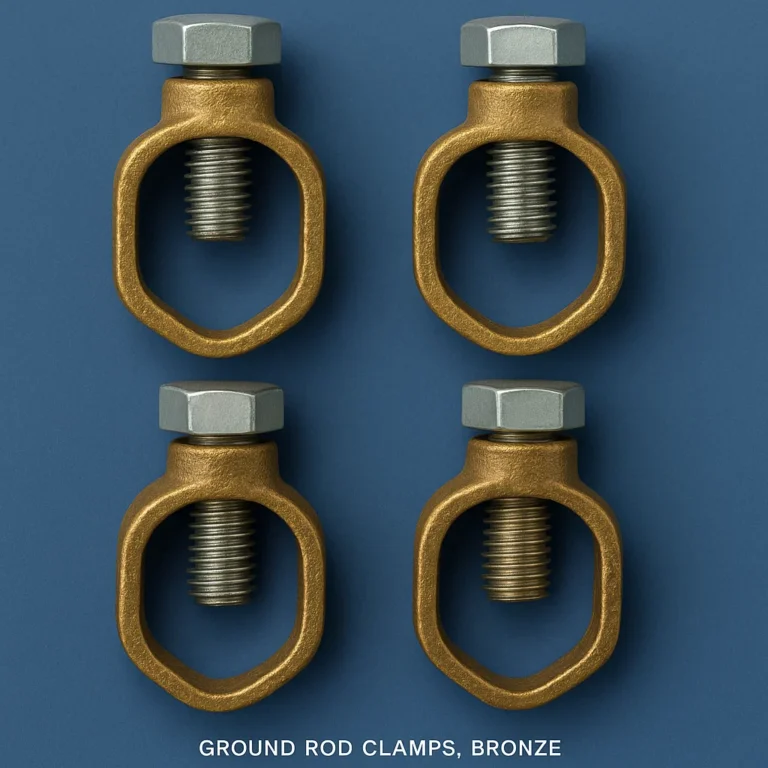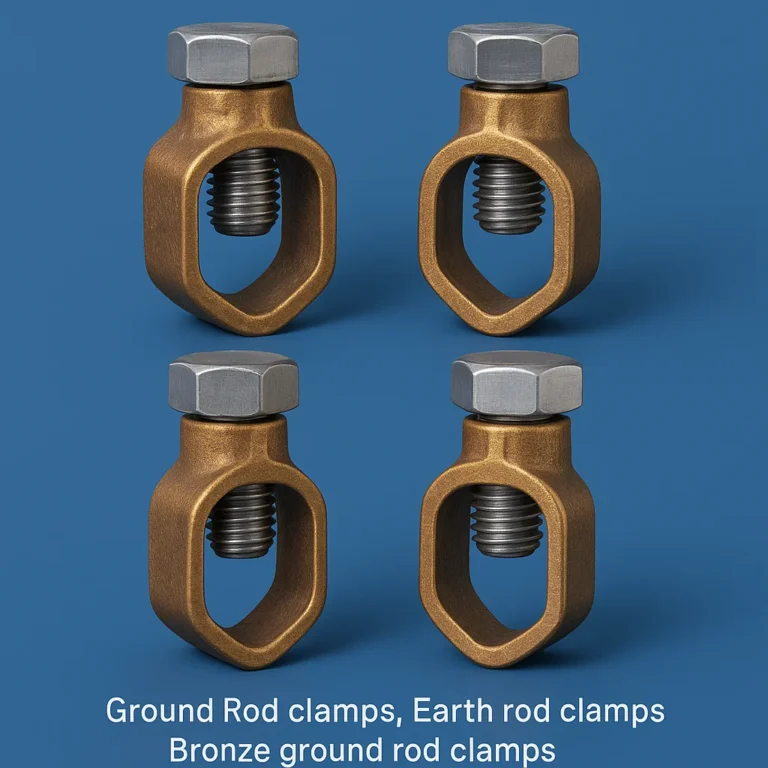

CDA 95400 Bronze, C 95400 Bronze casting, 954 Aluminum Bronze, C95400 Aluminum Bronze, Aluminum Bronze C 95400 Sand casting, Investment casting of Aluminum Bronze 954 grade


C95400 Bronze (CDA 954) — Aluminum Bronze for Tough, Wear-Resistant Castings
C95400 (also written CDA 954, C 95400, Aluminum Bronze 954) is the world’s most widely used cast aluminum-bronze. It combines high strength, excellent wear and galling resistance, good corrosion performance (including many chlorides and seawater splash/immersed zones), and solid machinability for a copper-based alloy. Typical parts include heavy-duty bushings, pump/valve components, gears, wear plates, and marine hardware where bronzes like tin-bronze (C90500) are not strong enough and nickel-aluminum bronzes (e.g., C95500/C95800) would be over-spec.
Names you’ll see in the market
CDA 95400 Bronze / C95400 Bronze
UNS designation for cast aluminum bronze per ASTM standards.954 Aluminum Bronze / C95400 Aluminum Bronze
Common trade/stock name for the same alloy.Aluminum Bronze C 95400 Sand Casting
Same alloy, specified with sand-casting process.Investment Casting of Aluminum Bronze 954 Grade
Same alloy, specified with investment (lost-wax) process.
Chemical composition (typical)
| Element | Typical Range (wt%) |
|---|---|
| Copper (Cu) | Balance (≈ 83–86) |
| Aluminum (Al) | ~10.5–11.5 |
| Iron (Fe) | ~3.0–5.0 |
| Manganese (Mn) | 0.2–1.5 |
| Others/Residuals (Si, Pb, Sn, Ni, etc.) | each typically ≤0.10 (kept low) |
Notes
The exact ranges are controlled by the applicable casting standard (e.g., ASTM B148 for sand castings; ASTM B271 for centrifugal; ASTM B505 for continuous cast). Foundry melt practice keeps tramp elements very low to protect toughness and corrosion performance.
Mechanical properties (typical)
As-cast (good sand or investment castings)
UTS (Rm): ~620–655 MPa (90–95 ksi)
0.2% YS (Rp0.2): ~310–345 MPa (45–50 ksi)
Elongation: ~12–15%
Brinell Hardness: ~170–190 HB
Shear strength: ~380–415 MPa (55–60 ksi)
Modulus of Elasticity: ~110–120 GPa
Density: ~7.5–7.7 g/cm³
Heat-treated (solution-quench + age)
UTS: ~690–760 MPa (100–110 ksi)
0.2% YS: ~415–485 MPa (60–70 ksi)
Elongation: ~8–12%
Brinell Hardness: ~200–230 HB
Process clue: A common cycle is solutionizing ~900–955 °C, rapid quench (usually water), then age/temper ~400–550 °C to optimize strength/toughness balance.
Physical / functional data (typical)
Electrical conductivity: ~7–10 %IACS
Thermal conductivity: ~25–40 W/m·K (lower than brasses/standard bronzes)
Coefficient of thermal expansion (20–300 °C): ~15–17 µm/m·K
Melting range (solidus–liquidus): ~1020–1080 °C
Corrosion & tribology highlights
Seawater: Very good in splash/immersion; superior to many brasses and tin bronzes.
Galling/Wear: Excellent anti-galling vs steel; widely used for bushings and thrust surfaces.
Cavitation/Erosion: Better than standard bronzes; not as extreme as nickel-aluminum bronze grades but strong for pumps/impellers in moderately aggressive services.
Friction pairs: Pairs well against hardened steels (with or without lubrication). Dry running PV limits are modest; with oil/grease lubrication, PV capability increases dramatically.
Typical applications (“typical castings”)
Fluid handling: Pump impellers, casings, wear rings, guide vanes, valve bodies/bonnets/seats/stems
Power & motion: Gears, worm wheels, nuts, screw down nuts, lever arms, cams
Bearings: Bushings, thrust washers, wear plates, slide ways
Marine/offshore: Deck hardware, rope sheaves, guide rollers, fairleads, propulsor auxiliaries
General engineering: Hammer/anvil faces, clapper blocks, dies/bolsters, fixture components
Casting processes for C95400
Sand (green sand / no-bake / CO₂):
Most common and economical for medium-to-large parts.
Linear shrink guideline: ~2.0–2.2% (process/mold dependent).
Use generous feeders/risers; aluminum bronzes exhibit pronounced solidification shrinkage.
Superheat: typically 100–150 °C above liquidus for fluidity (minimize hold time to limit oxide/dross).
Mold preheat helps reduce cold shuts/misruns on heavy sections.
Shell Molding:
Tighter dimensional control and surface finish than conventional sand.
Good for medium-volume repeat parts (gears, bushings, valve bodies).
Investment Casting (lost-wax):
Best for complex, thin-wall geometries with near-net finish.
Finer microstructure can deliver slightly higher tensile/YS vs sand due to faster solidification.
Linear shrink guideline: ~1.3–1.6% (pattern tooling compensates).
Lost-Foam:
Viable for complex shapes; gating/degassing discipline critical to avoid oxide films.
Often chosen for prototype/low-volume complex housings.
Centrifugal Casting:
Excellent for bushings/rings with dense, defect-lean structure.
Often followed by finish machining; properties are very consistent radially.
Permanent Mold/Gravity Die:
Possible on selected geometries; requires careful die design/thermal control due to hot-short tendencies.
More commonly used for nickel-aluminum bronzes; for C95400 it’s feasible but less common than sand/investment/centrifugal.
Foundry practice essentials for 954:
Degassing: Inert gas (argon) purging recommended; avoid hydrogen pickup.
Fluxing/Skimming: Control oxides/dross; use clean ladles and quiet, bottom-feed gating.
Risers/Feeders: Hot spots and last-to-solidify sections need robust feeding to prevent shrinkage cavities.
NDT: Dye penetrant for surfaces, radiography for critical sections; pressure/leak tests for fluid components.
Heat treatment: Stress-relief (≈260–315 °C) after heavy machining helps dimensional stability.
Machining, joining, finishing
Machinability: Moderate (≈ 40–50% vs free-cutting brass = 100). Sharp carbide tools, positive rake, rigid setups, flood coolant.
Weldability/Braze: GTAW/GMAW with Al-bronze filler (e.g., ERCuAl-A2 types) is commonly used; keep interpass heat low. Silver-brazing possible but less common than weld repair.
Surface finishes: Grind/polish to fine finishes for bearing surfaces; phosphorization or solid lubricants can be applied where needed.
Coatings: Usually not required; for aggressive seawater or splash zone, consider nickel-aluminum bronze if pitting risk is extreme.
Equivalent / “closest” international references (guidance)
ASTM/UNS: C95400 (cast aluminum bronze)
ISO/EN (cast): Often cross-referenced to CuAl10Fe3-type compositions (exact EN grade designation varies by producer; mechanicals/impurity limits differ from Ni-bearing grades like CuAl10Ni5Fe4).
BS (historical): Aluminum-bronze families AB1/AB2 exist, but note: AB2 and EN CuAl10Ni5Fe4 are nickel-aluminum bronzes (closer to C95500/C95800), not direct equivalents to C95400.
Always verify chemistry and mechanicals in the purchasing spec; “equivalent” tables differ by region and year.
CDA 95400 Bronze
CDA/UNS C95400 is a Fe-bearing aluminum bronze (~11% Al, 3–5% Fe) designed for castings needing high strength, wear resistance, and seawater-capable corrosion performance without the extra cost or magnetism of high-nickel grades. It’s the go-to for bushings, gears, and pump/valve parts.
C 95400 Bronze Casting
As a casting alloy, C 95400 fills well with appropriate superheat and shows predictable, directional solidification. It benefits from:
Bottom-fed, quiet gating to minimize oxide films,
Liberal risering/thermal modulation on heavy sections, and
Post-cast stress-relief or quench-and-age for dimensional control and strength.
954 Aluminum Bronze
“954 Aluminum Bronze” is the trade name for C95400 across foundries/stockists. Expect the same chemistry/mechanical envelope as above. For sliding wear against steel and shock loads, it’s a proven workhorse.
C95400 Aluminum Bronze
Same alloy, noted for:
High bearing capacity vs standard bronzes,
Better galling resistance vs brasses/tin bronzes,
Good corrosion resistance in water, oils, many chemicals, and coastal/marine environments.
Aluminum Bronze C 95400 Sand Casting
Sand casting is the most economical route for medium-large 954 parts. With good molding practice you’ll see:
Dimensional repeatability suitable for finish machining stock of 2–3 mm per surface (size-dependent),
As-cast properties around 90–95 ksi UTS and 45–50 ksi YS,
After heat treatment, 100–110 ksi UTS is common on many geometries.
Investment Casting of Aluminum Bronze 954 Grade
Choose investment casting for thin-wall, fine-detail geometries, small-to-medium sizes, or when machining allowance must be minimized. Expect:
Finer surface finishes (Ra often ≤3.2–6.3 μm as cast),
Better thin-section soundness,
Slightly higher as-cast strength due to faster solidification.
Selecting between C95400 and nearby alloys
Need higher corrosion resistance in fast-flowing seawater or higher strength at elevated temperatures? → Consider C95500/C95800 (nickel-aluminum bronzes).
Need maximum wear resistance with embedded solid lubricant? → Consider 954 with graphite plugs or a manganese-bronze alternative (application-dependent).
Need superior machinability over strength? → Consider leaded tin bronzes (but check environmental/lead restrictions).
Quality & standards (what to put in your PO)
Standards: ASTM B148 (sand cast), B271 (centrifugal), B505 (continuous cast) as applicable.
NDT: DP/RT levels per ASTM E165/E446 or customer spec for criticals.
Heat treatment: Specify as cast, stress-relieved, or quenched & aged with target hardness (HB).
Mechanical test bars: “Attached” or “separately cast” per spec; investment casting often uses separately poured coupons.
Corrosion/witness samples: For marine service, consider a corrosion witness coupon program.
Practical tolerances & allowances (rule-of-thumb)
Pattern shrink (sand): ~2.0–2.2% (confirm with your foundry).
Pattern shrink (investment): ~1.3–1.6%.
Machining stock: Small parts 1.0–1.5 mm/side; medium 1.5–3.0 mm; large/heavy 3–6+ mm (geometry dependent).
Flatness/straightness: Define functionally; include stress-relief after roughing on large rings/plates.
Quick spec sheet
Alloy: C95400 (CDA 954), Aluminum Bronze
Chemistry (wt%): Al ~10.5–11.5, Fe ~3–5, Mn 0.2–1.5, Cu balance, residuals low
As-cast properties: UTS 90–95 ksi, YS 45–50 ksi, Elong 12–15%, 170–190 HB
Heat-treated: UTS 100–110 ksi, YS 60–70 ksi, Elong 8–12%, 200–230 HB
Processes: Sand (green/no-bake), Shell, Investment (lost-wax), Lost-Foam, Centrifugal
Use-cases: Bushings, wear plates, gears, pump/valve parts, marine hardware
Standards: ASTM B148/B271/B505 (per process)
CTA — Get C95400 Castings Made Right
Need C95400 Aluminum Bronze parts with reliable properties and clean, machinist-friendly castings?
Design for casting support: We’ll review wall transitions, fillets, feeders, and target hardness/strength so your first-article passes.
Process selection: Sand for economy, investment for complexity, centrifugal for rings/bushings — we’ll recommend the best route.
Documentation: Full material certificates, heat-treat charts, and NDT on request (per ASTM/EN and your vendor audit needs).
Let’s engineer your 954 Aluminum Bronze part together.
Share a drawing/CAD + annual quantity + service conditions, and we’ll send DFM notes and a firm quote.