Aluminum Stamped Parts & Aluminum Stampings
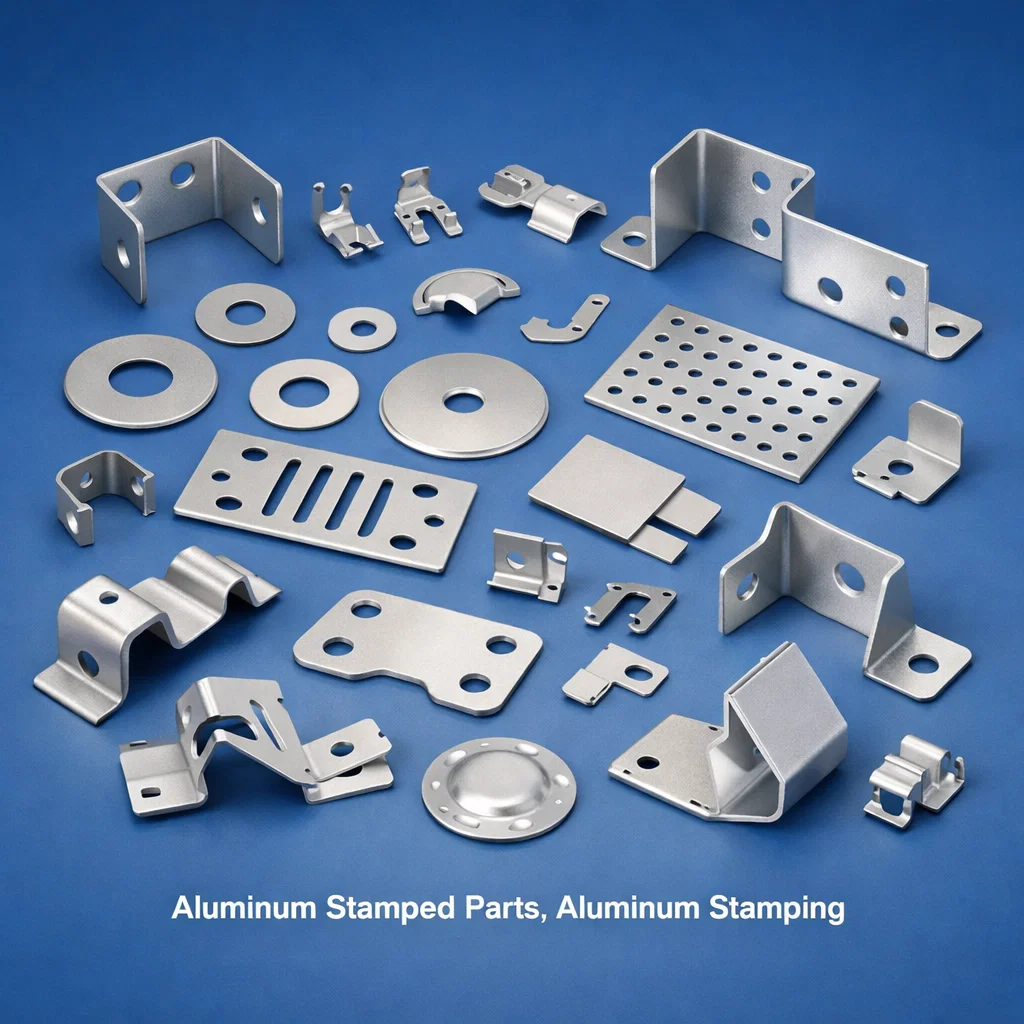
Aluminum stamped parts are precision sheet metal components produced by progressive die stamping, blanking, piercing, forming, and deep drawing of aluminum alloy sheet and strip. Brass & Copper Parts India manufactures aluminum stampings from AA1050, AA1100, AA3003, AA5052, and AA6061 alloys for USA electrical OEMs, EPC contractors, automotive tier suppliers, enclosure manufacturers, and industrial equipment producers. Our aluminum stampings are produced on high-tonnage mechanical and hydraulic presses with in-house progressive die tooling, delivering consistent dimensional accuracy, burr-free edges, and tight tolerances from prototype to high-volume production. Aluminum stampings offer significant weight savings (one-third the density of steel) combined with excellent corrosion resistance, electrical conductivity, and formability.
Product Overview
Aluminum stampings encompass a broad category of formed sheet metal components — from simple blanks and washers to complex multi-stage formed brackets, shields, covers, and connector bodies. The stamping process applies controlled force through hardened die tooling to cut and form aluminum sheet into the desired shape in one or more press operations. Progressive die stampings form the part through a series of stations in a single die set, achieving complex geometries at high production rates with minimal material waste. Brass & Copper Parts India’s stamping capability covers sheet thickness from 0.3 mm to 6.0 mm in all common aluminum alloys, with part sizes from 5 mm to 600 mm across.
Key Features
- Multi-Alloy Stamping Capability: We stamp AA1050 (pure aluminum, high conductivity), AA3003 (moderate strength, good formability), AA5052 (high fatigue strength, seawater resistant), and AA6061-T6 (heat treatable, structural grade) — enabling material selection based on electrical, structural, or environmental requirements.
- Progressive Die and Compound Die Tooling: In-house progressive die tooling for high-volume parts (50,000+ pieces/run); compound and transfer dies for medium-volume complex stampings.
- Tight Dimensional Tolerances: Punched hole tolerances ±0.05 mm; formed/bent dimensions ±0.2 mm; flatness control for electrical contact and sealing-face parts.
- Burr-Free Edges: Die clearance controlled at 5–8% of material thickness to minimize burr height (<0.1 mm); secondary deburring by vibratory tumbling available for critical contact parts.
- Surface Treatment Options: Natural (degreased), anodized (Type II clear or hard anodize Type III), chromate conversion coated (Alodine/Iridite), or powder coated per customer specification.
- ESD and EMI Shield Stampings: AA1050 and AA3003 stampings for EMI shielding enclosures, ground straps, and electrical isolation plates requiring high conductivity and precise flatness.
Technical Specifications
| Parameter | Specification |
|---|---|
| Alloys Stamped | AA1050, AA1100, AA3003, AA5052, AA5083, AA6061 |
| Sheet Thickness Range | 0.3 mm to 6.0 mm |
| Part Size Range | 5 mm to 600 mm (max dimension) |
| Hole Tolerance | ±0.05 mm (punched) |
| Formed Dimension Tolerance | ±0.2 mm standard; ±0.1 mm precision grade |
| Flatness | ≤ 0.3 mm per 100 mm for electrical contact parts |
| Press Capacity | 25 to 400 tonnes |
| Production Rate | Up to 800 strokes/min (progressive die) |
| Surface Finish | Natural / Anodized / Chromate / Powder coat |
Aluminum Alloy Grade Equivalents
| AA (USA) | IS (India) | EN/BS | DIN | JIS | Temper / UTS |
|---|---|---|---|---|---|
| AA1050 / 1100 | IS 19000 HE2 | EN AW-1050A / 1B | Al99.5 / 3.0255 | A1050 / A1100 | O / H14: 75–125 MPa |
| AA3003 | IS 19000 HE4 | EN AW-3003 | AlMn1Cu / 3.0517 | A3003 | H14: 150 MPa min |
| AA5052 | IS 19000 HE30 | EN AW-5052 | AlMg2.5 / 3.3523 | A5052 | H32: 230 MPa min |
| AA6061 | IS 19000 HE20 | EN AW-6061 / H20 | AlMg1SiCu / 3.3211 | A6061 | T6: 310 MPa min |
Product Types and Variants
Progressive Die Aluminum Stampings
Progressive die aluminum stampings are high-volume components produced by feeding aluminum coil strip through a multi-station die where each stroke simultaneously performs multiple operations — blanking, piercing, forming, embossing, and cut-off. This process produces complex parts at extremely high rates (200–800 strokes/min) with low per-piece cost and high repeatability. Typical progressive stamped parts include electrical terminal blanks, connector shells, heat sink fins, bus bar support clips, and grounding brackets for switchgear and distribution equipment. Minimum order for progressive die tooling programs is typically 10,000 pieces per run.
Deep Drawn Aluminum Stampings
Deep drawn aluminum components are formed by drawing flat sheet into cup, cylinder, or box shapes using punch and die sets. Aluminum alloys AA1050, AA1100, and AA3003 are ideal for deep drawing due to their excellent ductility and low strain-hardening rates. Deep drawn aluminum parts include enclosure bodies, terminal housings, heat exchanger end caps, lamp reflectors, and connector shells. Wall thickness uniformity is controlled to ±10% of nominal in our tooling design, and draw ratios up to 2.2:1 are achievable without intermediate annealing for standard formability grades.
Blanked and Pierced Aluminum Parts
Blanking and piercing produces flat aluminum parts — discs, rings, plates, and profiled blanks — cut from sheet or strip by shear cutting in punch-die sets. These are used as electrical isolation plates, terminal lug blanks, washer blanks, and structural gusset plates. Compound dies allow blanking and hole piercing in a single stroke for high accuracy. Sheet thicknesses from 0.5 mm to 6.0 mm are processed, and punch-to-die clearances are set per alloy and thickness to minimize burr height and maintain hole diameter tolerances of ±0.05 mm.
Aluminum Formed and Bent Stampings
Press brake formed and stamping die bent aluminum parts include channels, angles, U-sections, and Z-sections used in panel framing, cable support, bracket manufacture, and enclosure substructures. AA5052-H32 and AA6061-T6 are commonly specified for structural formed stampings due to their higher yield strength compared to pure aluminum grades. Minimum inside bend radius is typically 1.0–1.5× material thickness for AA5052 and 2.0× for AA6061-T6 to avoid cracking on transverse bends. Custom formed stampings are produced to customer drawings with first article inspection.
Embossed and Coined Aluminum Stampings
Embossing and coining operations create raised features, stiffening ribs, identification marks, and precision-coined surfaces on aluminum stampings. Embossed ribs increase panel stiffness without adding thickness. Coined sections create precisely controlled flat or curved surfaces for electrical contact zones, gasket seating faces, and precision fit interfaces. These operations are integrated into progressive or transfer die sequences for high-volume production. Coining tolerances of ±0.05 mm on coined surface height are achievable in aluminum alloys with appropriate die hardness and press tonnage.
Applications by Industry
- Electrical and Power Distribution: Bus bar support plates, terminal blanks, grounding clips, switchgear panel frames, and electrical enclosure components requiring conductivity, light weight, and corrosion resistance.
- Automotive and EV: Battery tray components, EMI shield panels, heat sink stamped fins, electrical connector shells, and lightweight structural brackets for electric vehicle body and chassis systems.
- HVAC and Refrigeration: Evaporator fin stampings, heat exchanger end plates, coil support brackets, and diffuser panels using AA3003 for corrosion resistance and formability.
- Enclosure and Electronics Manufacturing: Rack panel blanks, PCB mounting brackets, EMI shielding stampings, and equipment housings in AA5052 or AA6061 for strength and anodize finish quality.
- Lighting and Solar: Reflector stampings, heat sink fins, mounting brackets, and back plates for LED luminaires, solar panel mounting systems, and junction boxes.
Manufacturing Process
Aluminum sheet or coil (AA grade per order) is received with material test certificates and spectrographic verification. Die tooling is designed using CAD/CAM software (AutoCAD, SolidWorks) and manufactured from D2 or H13 tool steel hardened to 58–62 HRC. Press parameters (speed, force, feed rate, lubrication) are set per alloy and thickness. First article inspection (FAI) verifies all critical dimensions before production release. In-process inspection is performed at defined frequency using calibrated calipers, CMM, and optical comparator. Finished parts undergo 100% visual inspection and sampling dimensional check per AQL 2.5 Level II. Surface treatment (anodize, chromate) is performed in-house or at certified subcontract processors.
Quality Standards and Certifications
- ISO 9001:2015 Certified Quality Management System
- Material conformance to AA (Aluminum Association), ASTM B209 (sheet/plate), EN 485 with EN 10204 3.1 certificates
- First Article Inspection (FAI) per AS9102 available for aerospace-grade programs
- RoHS and REACH compliant; DFARS-compliant aluminum available on request
- CMM dimensional reports and SPC quality records available for OEM production approval
Why Choose Brass & Copper Parts India
- In-House Die Tooling: Full die design and manufacture capability — faster lead times, lower tooling costs, and direct engineering collaboration for design-for-manufacturing optimization.
- Multi-Alloy Capability: All common electrical and structural aluminum alloys in stock for stamping — AA1050 through AA6061 — eliminating multi-sourcing complexity for OEM procurement teams.
- Electrical OEM Experience: Deep experience supplying stamped aluminum components to USA switchgear, distribution board, and power electronics OEMs with full traceability and FAI documentation.
- Competitive OEM Pricing: Low-cost Indian manufacturing with ISO quality systems delivers 30–50% cost reduction vs. North American stamping sources for equivalent quality.
- Volume Flexibility: Prototype quantities (25 pieces) through high-volume production (500,000 pieces/month) accommodated on the same tooling program.
Frequently Asked Questions
What aluminum alloys are most commonly used for electrical stampings?
For electrical applications requiring high conductivity (e.g., ground straps, bus bar blanks, bonding clips), AA1050 or AA1100 (≥99% pure aluminum, 57–61% IACS conductivity) are specified. For structural stampings (brackets, enclosures) where strength is needed, AA5052-H32 or AA6061-T6 are used. AA3003 is used where moderate strength and excellent corrosion resistance in forming operations are both required.
What is the typical lead time for new aluminum stamping tooling and first articles?
Simple compound dies (blanking/piercing): 2–3 weeks tooling, 1 week first articles. Progressive dies (multi-station): 4–6 weeks tooling, 1 week first articles. Complex transfer dies: 6–8 weeks tooling. Lead times include CAD design, manufacturing, try-out, and FAI. Rush tooling programs (compound dies in 10 days) are available at premium.
What is the minimum order quantity for aluminum stampings?
Prototype orders: 25–100 pieces on press brake or simple dies. Production stamping: MOQ 1,000 pieces for progressive die parts; 500 pieces for simple compound die parts. High-volume blanket orders accepted with monthly releases.
Can you supply aluminum stampings with anodize finish?
Yes. Type II anodize (clear or color) and Type III hard anodize are available. Anodize adds corrosion resistance and allows color coding for product differentiation. Hard anodize (25–75 µm thick) adds surface hardness (400–600 HV) for wear resistance on sliding contact surfaces.
What tolerances can you hold on punched holes?
Punched hole diameters in aluminum: ±0.05 mm standard for holes up to 12 mm diameter. Larger holes: ±0.08 mm. For closer tolerances (±0.02 mm), secondary CNC drilling or reaming is available at additional cost.
Do you offer design-for-manufacturing (DfM) review for new stampings?
Yes. Our tooling engineers review customer drawings for stamping feasibility — minimum hole size, bend radius, form depth, blank development, and material flow — and provide DfM recommendations before tooling is committed. This service is provided at no charge as part of our quotation process.
What surface treatments are available for aluminum stampings?
Available treatments: natural degreased, Type II anodize (clear/color), Type III hard anodize, chromate conversion coating (Alodine/Iridite 1200 per MIL-DTL-5541), powder coating, and electroless nickel plating. Treatment selection depends on conductivity, corrosion resistance, wear, and appearance requirements.
Can you stamp AA6061-T6 sheet?
Yes, but with limitations. AA6061-T6 has limited ductility (elongation ~8–10%) and requires careful minimum bend radius control (2.0–2.5× thickness for transverse bends). For complex deep-drawn or highly formed parts, AA6061-O (annealed) is stamped and then artificially aged to T6 condition post-forming. Consult our engineers for forming feasibility on complex AA6061 profiles.
Suggested Internal Links
- All Aluminum Parts
- Pressed Components and Sheet Metal Parts
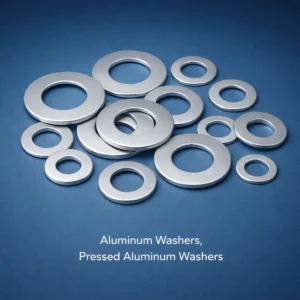
- Aluminum Washers and Pressed Aluminum Washers (related product)
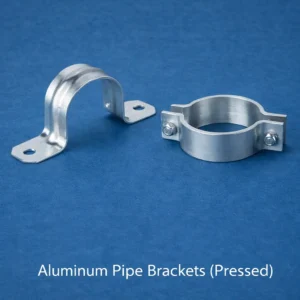
- Aluminum Brackets and Aluminum Pipe Brackets (related product)
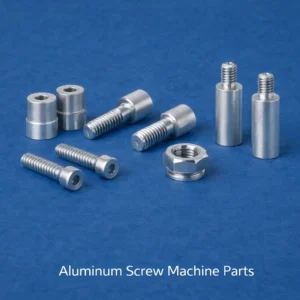
- Aluminum Screw Machine Parts (related product)
Schema Markup (Suggested)
Recommended JSON-LD: Product schema with @type: Product, name, description, brand (Brass & Copper Parts India), material (Aluminum alloys AA1050/3003/5052/6061), manufacturer, offers, additionalProperty for alloy grade, sheet thickness range, and process (Progressive die stamping).
Suggested Image Alt Texts
- “Aluminum progressive die stampings AA5052 electrical panel brackets India”
- “Deep drawn aluminum stamping AA1050 enclosure housing USA OEM supply”
- “Blanked aluminum grounding plate AA1100 punched holes precision tolerance”
- “Aluminum stamping die tooling progressive die D2 tool steel”
- “Anodized aluminum stampings switchgear components India manufacturer”
Request a Quote for Aluminum Stampings
Brass & Copper Parts India supplies precision aluminum stampings to USA electrical OEMs, EPC contractors, enclosure manufacturers, and industrial equipment producers. Submit your drawing, alloy specification, quantity, and surface treatment requirements for a DfM review and competitive quotation. Enquire now.
Product categories
Related Products
-

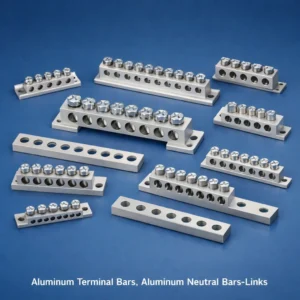
Aluminum Terminal Bars, Aluminum Neutral Bars-Links
₹8.70 Add to cart -
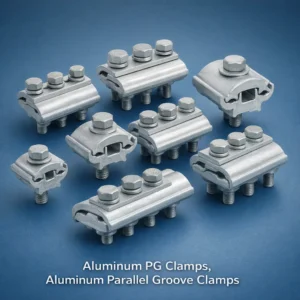
Aluminum PG Clamps, Aluminum Parallel Groove Clamps
₹8.70 Add to cart -
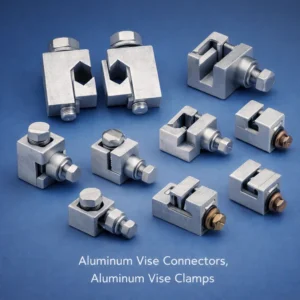
Aluminum Vise Connectors, Aluminum Vise Clamps
₹8.70 Add to cart -
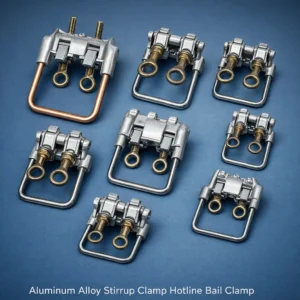
Aluminum Alloy Stirrup Clamp Hotline Bail Clamp
₹8.70 Add to cart -
Aluminum Pressure Die Casting and Aluminum PDC Parts
₹8.70 Add to cart -
Aluminum Gravity Casting and Gravity Cast Parts
₹8.70 Add to cart -
Aluminum Brackets, Aluminum Pipe Brackets (Pressed)
₹8.70 Add to cart -
Aluminum Screw Machine Parts
₹8.70 Add to cart -
Aluminum Washers, Pressed Aluminum Washers
₹8.70 Add to cart -
Aluminum Manifolds, Aluminum Hydraulic Manifolds
₹8.70 Add to cart -
Aluminum Stud Mount Connectors, Aluminum Transformer Connectors,
₹8.70 Add to cart -
Aluminum Parts, Aluminum Turned Components
₹8.70 Add to cart -
Aluminum Hotline Clamps
₹8.70 Add to cart -
Aluminum CNC machined Parts, Aluminum Components
₹8.70 Add to cart