
Brass Permanent Mold Casting
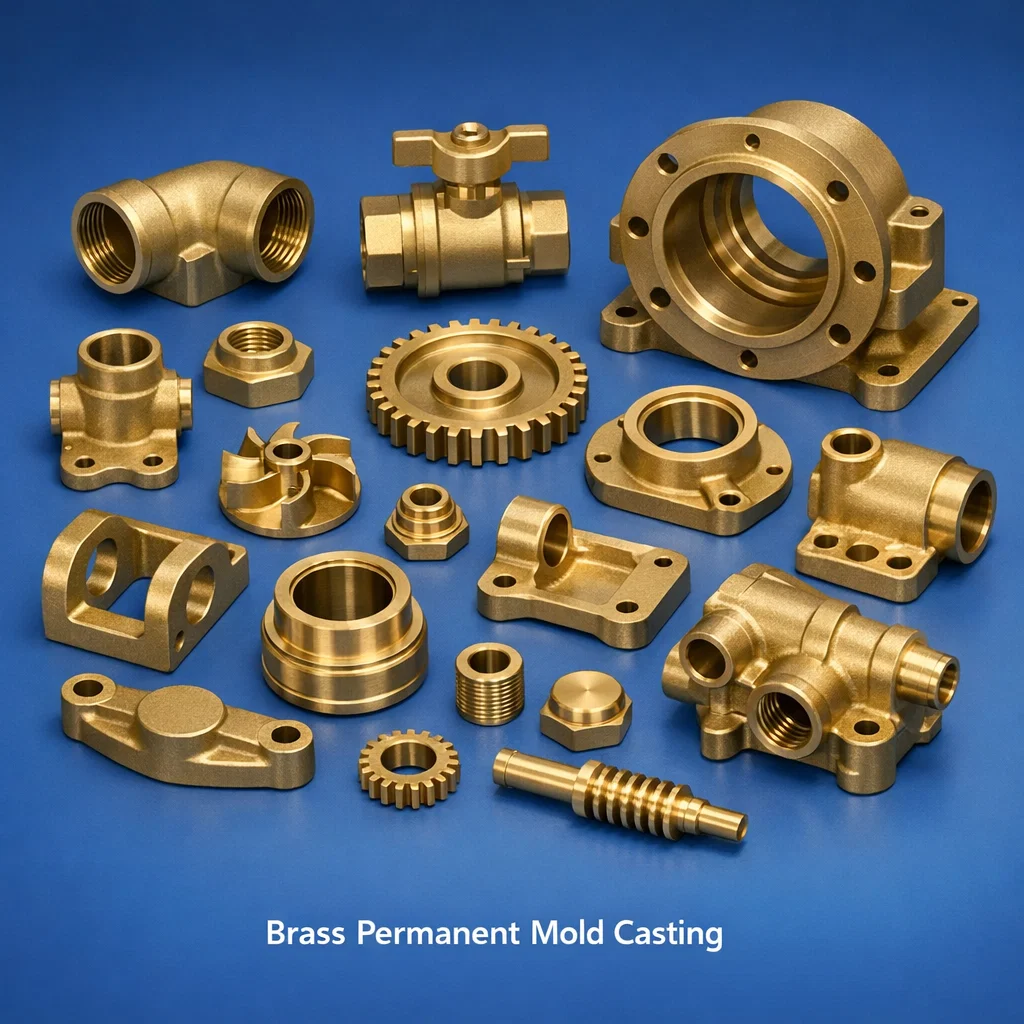
Brass permanent mold casting is the process of producing brass components using reusable metal molds (dies) made from steel or cast iron, where molten brass is introduced under gravity or low-pressure conditions without high-pressure injection. The process encompasses gravity die casting (GDC), low-pressure die casting (LPDC), and tilt-pour casting — all using permanent metal molds rather than expendable sand. Permanent mold casting of brass delivers consistent dimensional accuracy (CT5–CT7), superior surface finish (Ra 3.2–6.3 μm), improved mechanical properties from fine-grained microstructure, and high production rates for medium-to-high volume components in plumbing valves, fittings, electrical hardware, gas meters, and precision engineering parts. Brass & Copper Parts operates brass permanent mold casting facilities in multiple alloy grades including free-cutting brass CW614N, casting brass CuZn39Pb2, DZR brass CW602N, and lead-free silicon brass C87850.
Product Overview
Permanent mold casting (PMC) bridges the gap between sand casting and high-pressure die casting. Unlike sand casting, the reusable metal mold provides consistent cavity geometry and rapid heat extraction, producing finer grain structures and better surface quality. Unlike high-pressure die casting, PMC does not inject metal at high pressure, avoiding the trapped gas porosity that limits HPDC components in pressure-tight and heat-treated applications. Brass permanent mold castings are thus ideal for plumbing valves, gas fittings, and hydraulic components where both dimensional precision and pressure tightness are required. Component weights from 0.05 kg to 5 kg, wall thicknesses from 3 mm, and production rates of 100–400 pieces/hour are achievable. Brass & Copper Parts manages the complete permanent mold casting supply chain — die design, tooling manufacture, production casting, trimming, machining, and certification.
Key Features
- Dimensional consistency – CT5–CT7 tolerances, batch-to-batch repeatability from metal mold
- Good pressure tightness – Lower porosity than HPDC; suitable for PN10–PN16 valve and fitting applications
- Improved mechanical properties – Fine grain structure from rapid solidification in metal mold
- High production efficiency – Rapid cycle times and reusable tooling reduce per-piece cost
- Multi-alloy capability – Standard leaded, DZR, lead-free, and silicon brass all suitable
- Tilt-pour option – Reduces turbulence during filling for critical pressure-retaining castings
- NSF 61 / RoHS compliant options – Lead free alloy PMC available for potable water markets
Technical Specifications
| Property | C85700 (CuZn39Pb2) | C87850 (Silicon Brass LF) | CW602N (DZR Brass) |
|---|---|---|---|
| Copper (%) | 58–63 | 82 min | 62–65 |
| Zinc (%) | Remainder | 12 max | Remainder |
| Lead (%) | 1.0–2.5 | 0.09 max | 0.5–1.5 |
| Silicon (%) | – | 3.8–4.2 | – |
| Tensile Strength (MPa) | 280 min | 380 min | 290 min |
| Yield Strength (MPa) | 103 min | 170 min | 120 min |
| Elongation (%) | 20 min | 15 min | 18 min |
| Hardness (HB) | 60–85 | 85–120 | 70–90 |
| Casting Tolerance | CT5–CT7 | CT5–CT7 | CT5–CT7 |
International Grade Equivalents
| ASTM/CDA | EN/DIN | BS | Application |
|---|---|---|---|
| C85700 | CuZn39Pb2 / CW612N | – | Standard leaded casting brass |
| C87850 | CuSi4Zn3 / CC756S | – | Lead free potable water PMC |
| CW602N (C35330) | CuZn35Pb1AlAs | CW602N | DZR hot water PMC |
| C36000 | CuZn36Pb3 / CW614N | CZ121 | Free-cutting machined PMC |
Product Types and Variants
Permanent Mold Cast Brass Valve Bodies
Gate valves, ball valves, globe valves, and angle valves in ½” to 3″ bore are permanently mold cast in CuZn39Pb2 or silicon brass C87850 for the plumbing hardware market. Permanent mold valve bodies exhibit consistent internal bore geometry, uniform wall thickness, and accurate thread engagement surfaces that reduce machining cycle time and scrap rate versus sand cast alternatives. Bodies cast by PMC are dimensionally traceable to the metal die, allowing SPC monitoring of critical valve dimensions across production batches. Brass & Copper Parts supplies PMC valve body castings as rough castings or machined-to-finished components, with hydrostatic test certification at 1.5× rated working pressure.
Permanent Mold Cast Brass Gas Meter and Regulator Bodies
Gas meter housings, pressure regulator bodies, and safety valve casings for natural gas, LPG, and biogas metering systems are produced by brass permanent mold casting to achieve the pressure tightness, dimensional accuracy, and production economics required for high-volume gas utility supply. PMC gas meter bodies comply with EN 1359, OIML R137, and relevant national metering standards. Alloy selection for gas meter components typically uses low-lead or DZR brass to address environmental and safety regulations applicable in various national markets. Brass & Copper Parts has established customer qualification experience with gas meter and regulator manufacturers in Europe, India, and the Middle East.
Low-Pressure Permanent Mold Brass Casting (LPDC)
Low-pressure die casting of brass uses controlled nitrogen or air pressure (0.2–0.8 bar) to push molten brass upward through a riser tube into the permanent metal mold from a sealed pressurized holding furnace below the die. LPDC produces brass castings with superior density, reduced shrinkage porosity, and better mechanical properties than gravity GDC, making it suitable for pressure-critical components such as valve bodies, pump casings, and gas system components. Solidification pressure ensures complete feeding of thick sections, eliminating the centerline shrinkage common in large gravity GDC sections. LPDC tooling is more complex than GDC but the improved casting quality justifies the investment for demanding applications.
Tilt-Pour Brass Permanent Mold Casting
Tilt-pour casting (rotational gravity casting) tilts the assembled permanent mold and ladle from horizontal to vertical during pouring, providing a smooth, turbulence-free metal fill that minimizes oxide inclusion entrainment. Tilt-pour PMC produces brass castings with extremely low oxide inclusion levels and superior surface quality — particularly important for safety-critical components such as gas valve bodies and pressure-retaining fittings where internal cleanliness is critical. Brass & Copper Parts operates tilt-pour permanent mold casting equipment specifically for gas service and high-cleanliness brass casting production, with oxide rating assessed per EN 1706 cleanliness evaluation standards.
Multi-Cavity Permanent Mold Brass Castings
For high-volume small brass components (0.05–0.5 kg), multi-cavity permanent mold tooling with 4, 6, or 8 cavities per die set maximizes production output per machine cycle. Multi-cavity PMC dies produce hundreds of identical castings per hour, delivering per-piece economics competitive with high-pressure die casting while maintaining the pressure tightness and metallurgical quality advantages of gravity permanent mold filling. Common multi-cavity PMC applications include brass compression fitting bodies, gas valve internals, small pump components, and precision connector bodies. Cavity-to-cavity dimensional consistency is maintained through precision die manufacturing and regular dimensional auditing of individual cavities.
Permanent Mold Brass Castings with Sand Cores
Internal passageways, blind holes, and complex internal chambers in brass PMC components are produced using resin-bonded sand cores inserted into the permanent metal die before casting. This combination — called “semi-permanent mold casting” — uses the accuracy and longevity of the metal outer die with the geometric flexibility of expendable sand cores for internal features. Semi-permanent mold casting is used for manifold bodies, multi-port valve bodies, and pump components where internal passage geometry is too complex for permanent metal cores but external dimensional accuracy must meet CT5–CT7 requirements achievable only with metal die tooling.
Applications by Industry
| Industry | Brass PMC Components |
|---|---|
| Plumbing & Water Systems | Valve bodies, gate valves, ball valves, pipe fittings (PN10/PN16) |
| Gas Distribution | Gas meter bodies, pressure regulators, safety valves, LPG fittings |
| HVAC & Heating | Radiator valve bodies, manifold headers, thermostatic cartridge housings |
| Pump Manufacturing | Small pump casings, impellers, bearing housings, wear rings |
| Electrical Hardware | Connector bodies, cable glands, switchgear fittings, earthing connectors |
| Automotive | Hydraulic valve bodies, fuel system fittings, sensor housings |
Manufacturing Process
Brass permanent mold casting at Brass & Copper Parts follows a controlled production process: die preheating (200–300°C), die release agent spraying, sand core insertion (where required), die closing and locking, pouring (manual ladle or automatic), solidification time control, die opening, casting extraction, and flash trimming. Melt preparation in coreless induction furnaces includes spectrometric analysis before each pour. Die temperature is monitored by thermocouple and controlled by water or air cooling channels to maintain consistent solidification conditions. Post-casting inspection includes visual examination, dimensional gauging, and hydrostatic pressure test for pressure-retaining components. Material certificates per EN 10204 Type 3.1 are issued for each production batch.
Quality Standards and Certifications
- ASTM B584 – Copper alloy castings applicable to PMC brass
- EN 1982 / EN 12164 – European copper alloy casting standards
- NSF/ANSI 61 & 372 – Lead free brass PMC for potable water contact
- BS EN 12288 – DZR brass dezincification resistance compliance
- EN 1359 – Gas meters, for gas meter body castings
- ISO 9001:2015 – Quality management system
- RoHS 2011/65/EU – For lead free brass PMC components
Why Choose Brass & Copper Parts
Brass & Copper Parts combines permanent mold casting capability across multiple brass alloy grades with complete in-house die design, die manufacture, CNC machining, pressure testing, and certification services. Our die manufacturing facility produces steel permanent mold tooling with EDM precision machining, ensuring long die life and consistent cavity dimensions. Dedicated production lines for leaded, lead-free, and DZR alloys prevent cross-contamination. SPC is implemented on critical casting dimensions with Cpk reporting available for quality-critical supply chain customers. We supply PMC brass castings to valve, gas meter, plumbing, and industrial OEM customers in 25+ countries.
Frequently Asked Questions
What is the difference between brass permanent mold casting and sand casting?
Sand casting uses disposable expendable molds, providing maximum flexibility for large, complex, and low-volume castings but with lower dimensional accuracy (CT8–CT10) and poorer surface finish (Ra 12.5–25 μm). Permanent mold casting (PMC) uses reusable metal dies, delivering better dimensional accuracy (CT5–CT7), improved surface finish (Ra 3.2–6.3 μm), and higher production rates — but requiring greater tooling investment. PMC is cost-effective for medium-to-high volume production of smaller brass components (0.05–5 kg) where the tooling cost is amortized over thousands of casting cycles.
Can brass PMC castings be used for gas service?
Yes. Brass PMC castings in DZR or low-lead alloys are used for gas meter bodies, pressure regulator casings, and gas valve components conforming to EN 1359, EN 13611, and applicable national gas safety standards. Gas service castings require specific alloy compliance, dimensional testing, and pressure/leak testing per the relevant gas equipment standard. Brass & Copper Parts produces gas meter body castings to EN 1359 requirements with full material certification and hydrostatic/leak test documentation.
What alloy is best for lead free brass PMC?
Silicon brass C87850 (CuSi4Zn3, CC756S) is the most machinable and widely used lead free alloy for brass PMC, with machinability approximately 80% of free-cutting leaded brass. Bismuth brass (C89550) is an alternative where silicon content would affect electrical conductivity. For DZR-compliant lead free brass, CW602N (arsenic-modified) is specified. Alloy selection depends on market (US NSF 372, EU RoHS, Australia AS 4020), application (potable water, gas, industrial), and machining requirements.
What pressure rating do brass PMC castings achieve?
Brass PMC castings for valve and fitting applications are typically rated PN10 (10 bar) to PN16 (16 bar) for general plumbing service, consistent with equivalent sand cast ratings. For gas service, working pressures per EN 1359 range from low pressure (LP, ≤200 mbar) to medium pressure (MP, ≤4 bar) for typical gas meter and regulator applications. Higher pressure ratings require increased wall section and design validation per applicable pressure vessel codes.
What is the minimum order quantity for brass PMC?
For existing die tooling: orders from 100 pieces are accepted. For new tooling: tooling investment is amortized over agreed minimum annual volume commitments, typically 2,000–10,000 pieces per year depending on die cost. Prototype casting from new tooling (5–20 pieces for FAI approval) is available with tooling cost payable separately. Brass & Copper Parts maintains stock tooling for common valve and fitting sizes, enabling smaller first orders on standard part geometries.
Request a Quote
Brass & Copper Parts manufactures brass permanent mold castings (GDC, LPDC, tilt-pour) in standard and lead-free alloys for plumbing, gas, HVAC, and industrial applications. Contact us with drawings and production volumes for tooling and per-piece pricing.
Contact us: sales@brass-copper-parts.com | +91-22-43449300
Product categories
Related Products
-

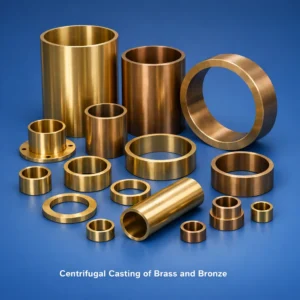
Centrifugal Casting of Brass and Bronze
₹13.40 Add to cart -
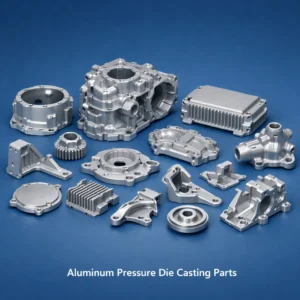
Aluminum Pressure Die Casting Parts
₹8.70 Add to cart -
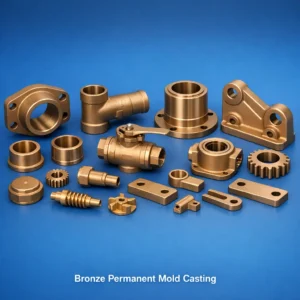
Bronze Permanent Mold Casting
₹13.40 Add to cart -
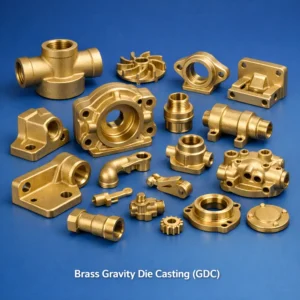
Brass Gravity Die Casting GDC
₹11.80 Add to cart -
Stainless Steel 304 and 316 Sand Casting
₹8.90 Add to cart -
Stainless Steel Investment Casting
₹8.90 Add to cart -
Aluminum Bronze Investment Casting
₹8.70 Add to cart -
Bronze Shell Molding, Shell Casting
₹13.40 Add to cart -
Gunmetal Casting Foundry
₹13.40 Add to cart -
83600 Bronze Casting, CDA 836 Bronze Casting
₹13.40 Add to cart -
LG2 Bronze Casting 85-5-5-5
₹13.40 Add to cart -
Phosphor Bronze Casting
₹13.40 Add to cart -
Lead Free Brass Casting
₹11.80 Add to cart -
Aluminum Bronze Casting
₹8.70 Add to cart