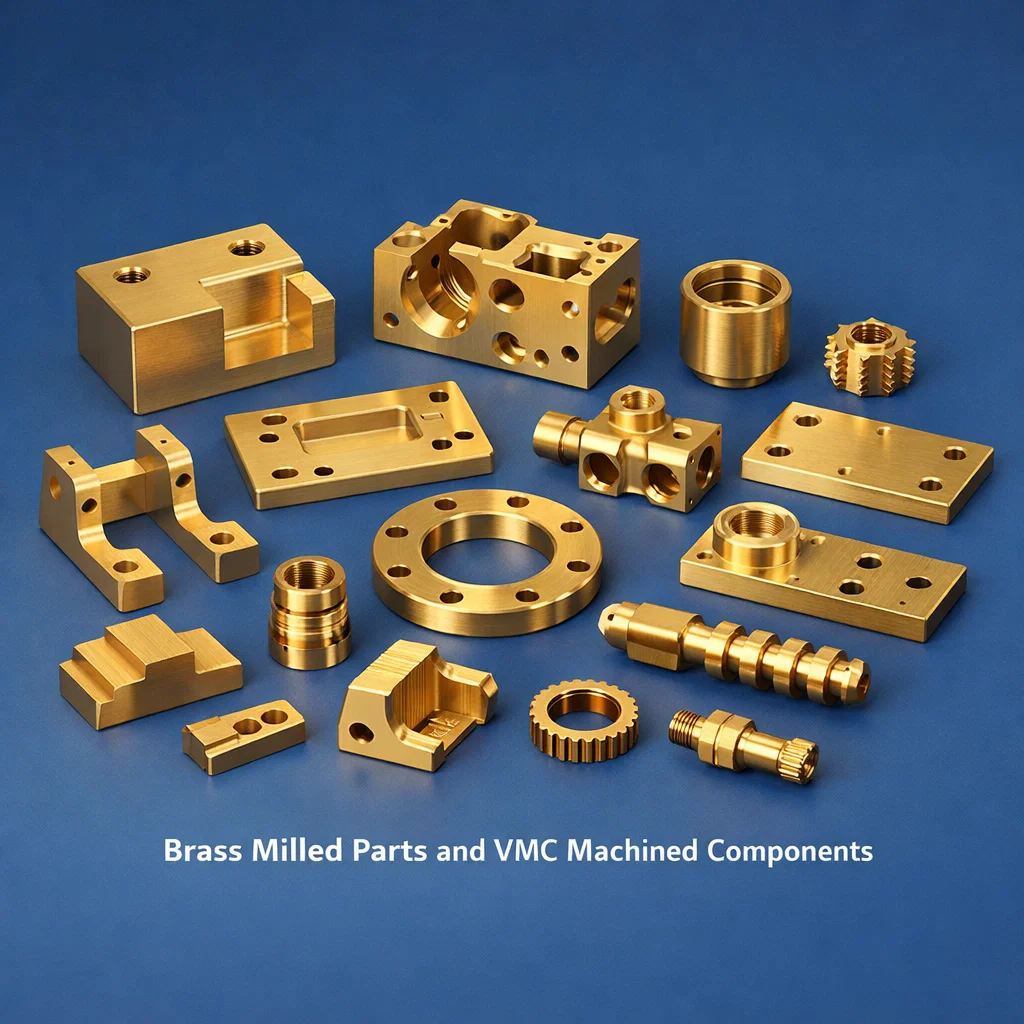
Overview: Brass Milled Parts and VMC Machined Components
Brass & Copper Parts manufactures precision Brass Milled Parts and VMC (Vertical Machining Centre) machined components from its ISO 9001:2015 certified facility in Jamnagar, India. With over 29 years of experience in non-ferrous precision machining, we produce close-tolerance milled, drilled, bored, and contoured brass components using modern 3-axis and 4-axis VMC centres. Our brass milling capability covers flat surfaces, slots, pockets, profiles, T-slots, gear teeth, cam profiles, and complex prismatic geometries on free-machining brass grades such as ASTM C36000 (CW614N / IS 319 Type-I). Components range from 2 mm miniature parts to 400 mm envelope sizes, with dimensional tolerances achievable to ±0.01 mm and surface finishes to Ra 0.8 µm. We supply to OEM buyers in the USA, UK, Europe, and Australia across plumbing, instrumentation, electronics, automotive, and defence sectors.
Detailed Product Overview
VMC machining uses a vertically oriented spindle that moves in X, Y, and Z axes to machine flat, contoured, and 3D surfaces. Unlike CNC turning which produces rotational parts, VMC machining produces prismatic components with planar and contoured features: brackets, housings, manifolds, valve blocks, connector bodies, and tooling fixtures. Brass is the preferred metal for VMC-milled parts due to its excellent machinability (machinability index 100 relative to AISI 1212 steel), dimensional stability, low work-hardening tendency, and inherent corrosion resistance. Our VMC centres are supported by CAD/CAM programming (Mastercam, Fusion 360), CNC probe-based in-process inspection, and SPC-backed process control to ensure every batch meets your engineering drawings without deviation.
Key Features
- High Machinability: Free-machining C36000 / CW614N brass ensures short chip formation, extended tool life, and superior surface finish in VMC operations.
- Tight Tolerances: Dimensional tolerances to ±0.01 mm on critical features; GD&T compliance per ASME Y14.5 or ISO 1101.
- 3-Axis and 4-Axis Capability: Standard 3-axis VMC for prismatic features; 4th-axis rotary indexing for compound angles and helical features.
- Complex Geometry: Pockets, undercuts, slots, T-slots, boss patterns, cam profiles, and multi-plane hole patterns achievable in single setups.
- SPC-Controlled Process: In-process SPC with Cpk data provided per production lot; CMM verification on first-off and periodic samples.
- Surface Finish Options: As-machined, polished, electroless nickel, tin-plated, chrome-plated, or RoHS-compliant coatings.
- Short Lead Times: 4–6 weeks standard; prototype samples in 2–3 weeks.
Technical Specifications
| Parameter | Specification |
|---|---|
| Machine Type | 3-Axis and 4-Axis VMC (Vertical Machining Centre) |
| Working Envelope | Up to 1000 mm × 500 mm × 600 mm (X × Y × Z) |
| Spindle Speed | Up to 12,000 RPM |
| Positioning Accuracy | ±0.005 mm |
| Repeatability | ±0.003 mm |
| Dimensional Tolerance | ±0.01 mm (standard); ±0.005 mm (precision) |
| Surface Finish (Ra) | 0.8 µm – 3.2 µm (as-machined); 0.4 µm (polished) |
| Min. Feature Size | 0.5 mm slot width; 1.0 mm end mill |
| Hole Diameter Range | 1.0 mm – 100 mm (drilled/bored) |
| Thread Forms | UNC, UNF, BSP, BSPt, NPT, Metric (M2–M64) |
| Weight Range | 2 g – 5 kg per component |
| Primary Material | Brass C36000 / CW614N / IS 319 Type-I |
Brass Raw Material Grades and International Equivalents
| Standard | Designation | Cu % | Zn % | Pb % | Characteristic |
|---|---|---|---|---|---|
| ASTM (USA) | C36000 | 60–63 | Balance | 2.5–3.7 | Free-cutting brass, benchmark machinability |
| EN / BS (Europe/UK) | CW614N | 57–59 | Balance | 2.5–3.5 | EN 12164 free-machining brass rod |
| IS (India) | IS 319 Type-I | 60–63 | Balance | 2.5–3.7 | Indian standard equivalent to C36000 |
| JIS (Japan) | C3604 | 59–63 | Balance | 1.8–3.7 | JIS H3250 free-cutting brass |
| DIN (Germany) | CuZn39Pb3 | 59–63 | Balance | 2.5–3.5 | DIN 17660 leaded brass |
| GB (China) | HPb59-1 | 57–60 | Balance | 0.8–1.9 | Chinese free-machining brass |
Product Types and Variants
Brass Milled Flat Components
These are prismatic brass parts machined from flat bar or plate stock using face mills and end mills. Applications include bus bar connectors, terminal blocks, EMI shielding plates, and PCB standoff bases. Flatness tolerances of 0.02 mm per 100 mm are routinely achieved. Multiple holes, slots, and threaded inserts are completed in single VMC setups to maintain positional accuracy. Material is C36000 / CW614N brass plate per ASTM B36 / EN 12167.
Brass VMC Housings and Bodies
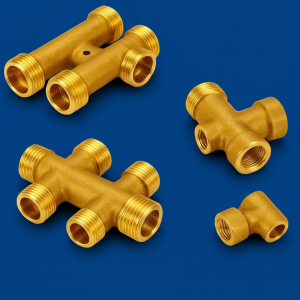
Complex enclosure and valve body geometries are machined on 3-axis VMC centres from brass billets or extruded sections. These parts feature internal cavities, O-ring grooves, port threads, and tight bore fits. Typical applications include solenoid valve bodies, pneumatic manifolds, pressure sensor housings, and flow control bodies. Bore tolerances are held to H7/H8 fits per ISO 286-1. All internal passages are verified by air-pressure leak testing.
Brass Multi-Face Machined Parts (4-Axis)
4th-axis rotary indexing allows machining of features on multiple faces of a brass component in a single clamping cycle. This eliminates datum errors introduced by re-clamping and is essential for complex hydraulic manifolds, multi-port connector bodies, and instrument housings requiring hole patterns and threads on 3 or more faces. Angular positioning accuracy on 4th axis is ±5 arc-seconds.
Brass Milled Gear Blanks and Rack Segments
VMC gear hobbing and profile milling produce brass spur gear blanks, rack segments, worm gears, and bevel gear profiles. These components are widely used in instrumentation drives, valve actuators, flow meters, and small mechanical assemblies. Pitch accuracy to DIN 3961 quality 8 or better is achievable. Material hardness is Vickers 70–90 HV (as-machined C36000 brass).
Brass Jigs, Fixtures, and Tooling Components
Brass is frequently used for soft tooling components such as guide bushings, dowel bases, and fixture plates due to its dimensional stability, non-sparking nature, and ease of precision machining. VMC-machined brass tooling components are supplied to die-casting tool rooms, injection moulding facilities, and inspection jig manufacturers requiring tight bore and pitch tolerances.
Brass Engraved and Marked Panels
VMC engraving with carbide or diamond cutters produces high-contrast identification plates, instrument faceplates, rating nameplates, and scale panels in brass. Character depth is 0.1–0.5 mm with width as fine as 0.3 mm. Lacquered, anodized (on aluminium inserts), or bare brass finishes are offered. These components are widely used in marine instrumentation, switchgear panels, and industrial equipment.
Applications by Industry
| Industry | Typical VMC Brass Parts |
|---|---|
| Plumbing & HVAC | Valve bodies, manifold blocks, meter housings |
| Electronics & PCB | EMI shields, terminal blocks, RF connector bodies |
| Instrumentation | Sensor housings, flow meter bodies, gauge manifolds |
| Automotive | Fuel system components, gear blanks, sensor brackets |
| Defence & Aerospace | Connector housings, waveguide blocks, actuator bodies |
| Medical Devices | Dental instrument parts, diagnostic instrument housings |
| Telecom Infrastructure | Antenna mounts, coaxial connector bodies, grounding blocks |
Manufacturing Process
Step 1 – Material Procurement: Brass rod, bar, or plate is sourced from ASTM/EN certified mills with mill test certificates (MTC). Incoming material is verified by XRF spectroscopy for alloy composition.
Step 2 – CAD/CAM Programming: Customer DXF/STEP/IGES files are imported into Mastercam or Fusion 360 CAM software. Toolpaths are generated, simulated for gouge-check, and posted to machine-specific G-code.
Step 3 – Fixturing and Setup: Parts are located on precision vices, angle plates, or custom fixtures. Setup is verified with CMM probe or edge-finder to establish work offsets within ±0.005 mm.
Step 4 – VMC Machining: Roughing cycles remove bulk material with high feed rates; semi-finish and finish passes achieve final dimensional targets. Coolant (water-soluble oil) is used for chip evacuation and thermal control.
Step 5 – In-Process Inspection: Key dimensions are checked with calibrated verniers, micrometers, bore gauges, and CMM probes after each critical operation. SPC charts are maintained in real time.
Step 6 – Deburring and Cleaning: Tumble deburring or manual deburring removes sharp edges; ultrasonic cleaning removes coolant residue. Visual inspection under magnification confirms surface quality.
Step 7 – Secondary Operations: Threading (tapping or thread milling), reaming, press-fitting inserts, surface treatment (plating, lacquering), and marking are completed as per engineering drawing.
Step 8 – Final Inspection and Dispatch: CMM first-article reports, dimensional inspection sheets, and Cpk analysis accompany each lot. Parts are packed in anti-abrasion trays or compartmentalized cartons for safe export.
Quality Standards and Certifications
- ISO 9001:2015 Quality Management System
- Material compliance to ASTM B16, B36, B453; EN 12164, EN 12167
- Dimensional inspection per ASME Y14.5-2018 / ISO 1101 GD&T
- RoHS 2 (EU Directive 2011/65/EU) and REACH SVHC compliance
- EN 10204 Type 3.1 material test certificates available
- First Article Inspection (FAI) per AS9102 available on request
- PPAP documentation (Level 1–3) available for automotive customers
Why Choose Brass & Copper Parts
- 29+ Years Expertise: Unmatched experience in non-ferrous VMC machining from Jamnagar – India’s brass capital.
- Modern VMC Fleet: 3-axis and 4-axis VMC centres with spindle speeds to 12,000 RPM and CNC probing.
- Integrated Quality: In-house CMM, profilometers, XRF spectrometry, and SPC-based process control.
- Full-Service Supply: Raw material sourcing → machining → plating → marking → packing → export documentation.
- Flexible MOQ: Prototypes from 10 pieces; production runs to millions.
- Export Compliance: FOB/CIF/DDP Incoterms; CPTPP, USMCA, and GSP origin documentation available.
Frequently Asked Questions
What brass grades are used for VMC milling?
We primarily use ASTM C36000 (CW614N / IS 319 Type-I) free-machining brass. Lead-free alternatives CW511L (CuZn28Sn) and C46400 are available on request for potable water or RoHS-sensitive applications.
What is the maximum part size you can VMC machine?
Our VMC working envelope accommodates parts up to 1000 mm × 500 mm × 600 mm (X × Y × Z). For larger components, we can machine sub-assemblies and provide precision assembly.
Can you machine complex internal cavities and undercuts?
Yes. Using extended reach tooling, angle heads, and 4th-axis rotary positioning, we machine internal cavities, undercuts, and multi-face features that would otherwise require multiple setups.
What tolerance level is achievable for bore fits?
Standard VMC boring achieves H7 fits (e.g., 20H7 = 20.000/+0.021 mm). Precision boring with fine-bore heads achieves H6 tolerances. Reaming is used for H6/H7 on hole diameters up to 50 mm.
Do you provide CAD/CAM programming support?
Yes. Our in-house CAM engineers program from customer DXF, STEP, or IGES files. We can also work from detailed 2D drawings or samples for reverse engineering.
What surface finishes are available after VMC machining?
As-machined (Ra 1.6–3.2 µm), polished (Ra 0.4–0.8 µm), electroless nickel, bright tin, satin tin, chrome, lacquer, and RoHS-compliant clear coat are available.
Is PPAP documentation available?
Yes. We offer PPAP Level 1 to Level 3 documentation including PFMEA, control plans, MSA studies, and initial sample inspection reports (ISIR) for automotive customers.
What is your standard lead time for prototype VMC parts?
Prototype VMC parts are typically delivered in 2–3 weeks from drawing approval. First article inspection report (FAIR) is included.
Can you supply plated VMC brass parts?
Yes. Post-machining plating services (tin, nickel, chrome, silver) are arranged through our approved plating partners with full traceability and RoHS compliance certificates.
What inspection equipment do you use for VMC parts?
We use a Brown & Sharpe CMM, Mitutoyo micrometers and verniers, Mahr profilometers, Zeiss optical comparators, and SPC software for real-time process monitoring.
Get a Quote for Brass Milled Parts and VMC Machined Components
Send us your drawings (DXF, STEP, IGES, or PDF), quantity, and required material grade. Our engineering team will revert with a competitive quotation within 24–48 hours.
Email: sales@brass-copper-parts.com | Phone/WhatsApp: +91-22-43449300
Brass & Copper Parts (India) – Plot 10-B, GIDC Industrial Estate, Shankar Tekri, Jamnagar 361004, Gujarat, India.
Product categories
Related Products
-

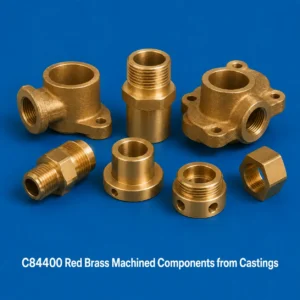
C84400 Red Brass Machined Components from Castings
₹11.80 Add to cart -
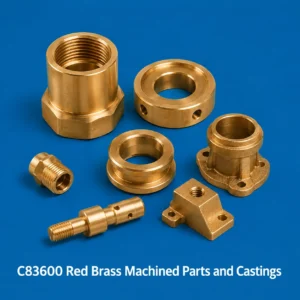
C83600 Red Brass Machined Parts and Castings
₹11.80 Add to cart -
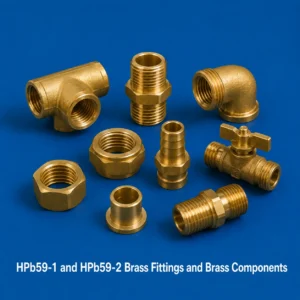
HPb59-1 and HPb59-2 Brass Fittings and Brass Components
₹11.80 Add to cart -
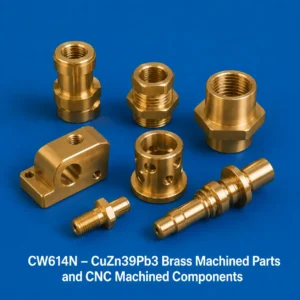
CW614N – CuZn39Pb3 Brass Machined Parts and CNC Machined Components
₹11.80 Add to cart -
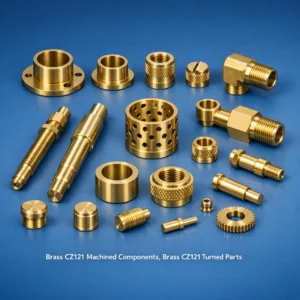
Brass CZ 121 Machined Components, Brass CZ 121 Turned Parts
₹11.80 Add to cart -
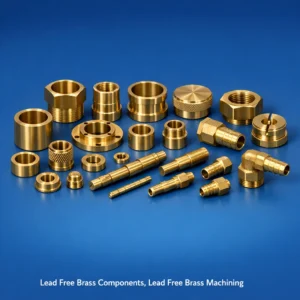
Lead Free Brass Components, Lead Free Brass Machining
₹11.80 Add to cart -
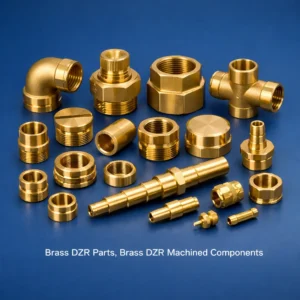
Brass DZR Parts, Brass DZR Machined Components
₹11.80 Add to cart -
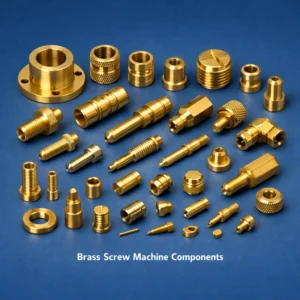
Brass Screw Machine Components
₹11.80 Add to cart -
Brass C36000 Alloy Parts, Free Machining CDA 360 Brass Parts
₹11.80 Add to cart -
Brass Fasteners
₹11.80 Add to cart -
Brass Forging
₹11.80 Add to cart -
Brass CNC Parts
₹11.80 Add to cart