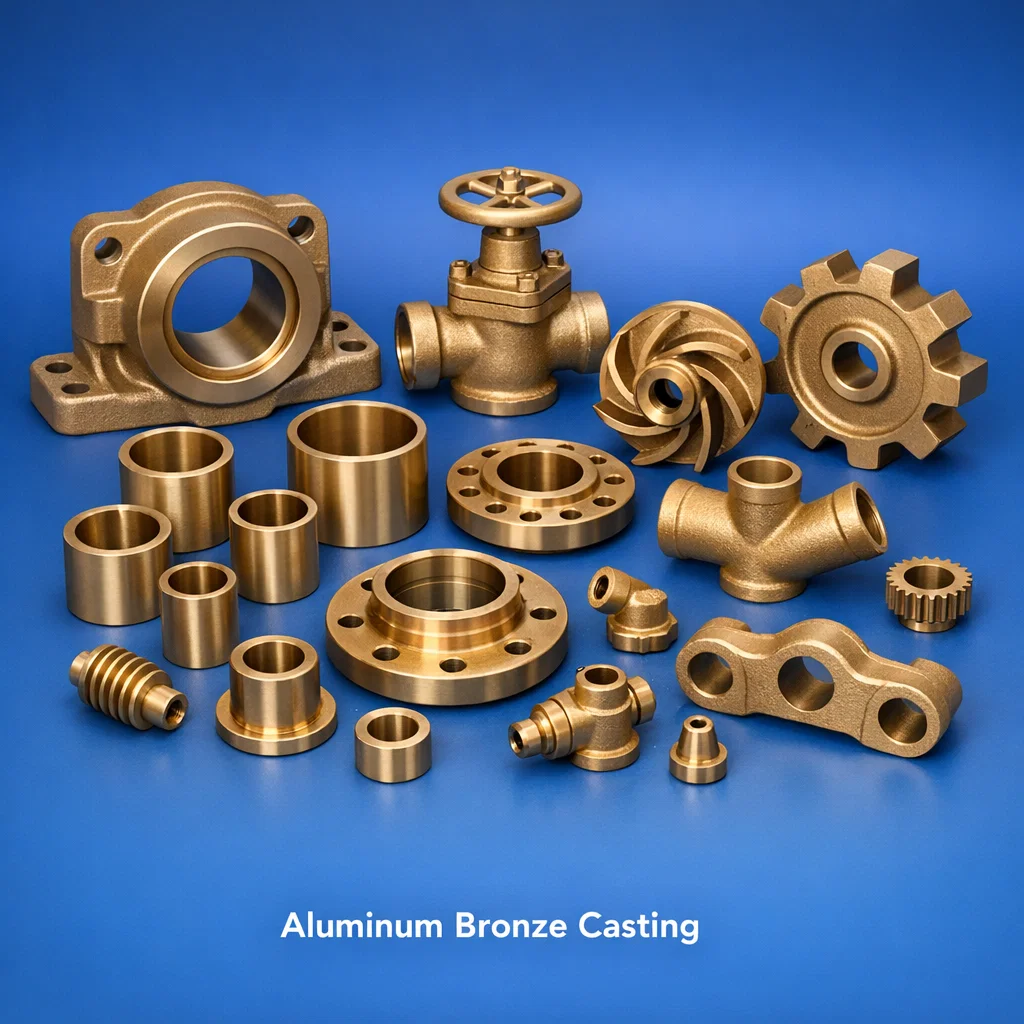
Aluminum Bronze Casting
Aluminum bronze casting refers to copper-based alloy castings containing 6–14% aluminum as the primary alloying element, often combined with iron, nickel, manganese, and silicon for enhanced mechanical and corrosion-resistant properties. These castings are manufactured using sand casting, investment casting, centrifugal casting, and continuous casting processes, producing components that exhibit exceptional tensile strength, hardness, wear resistance, and resistance to corrosion in seawater, chemicals, and high-temperature environments. Brass & Copper Parts supplies precision aluminum bronze castings to marine, defense, oil & gas, pump, valve, and heavy engineering industries across global markets.
Product Overview
Aluminum bronze alloys belong to the copper-aluminum binary and multi-component alloy family. The addition of aluminum creates a protective aluminum oxide layer on the casting surface, providing outstanding resistance to corrosive media including seawater, sulfuric acid, hydrofluoric acid, and oxidizing atmospheres. Depending on alloy composition, aluminum bronze castings achieve tensile strengths ranging from 500 MPa to over 900 MPa, making them suitable for high-stress structural and wear applications. Brass & Copper Parts manufactures aluminum bronze castings in weights from 0.1 kg to 500 kg, conforming to ASTM, BS, DIN, IS, and ISO standards.
Key Features
- High tensile strength – Up to 900 MPa, suitable for structural and load-bearing applications
- Excellent corrosion resistance – Superior performance in seawater, marine, and chemical environments
- Outstanding wear and abrasion resistance – Ideal for bearings, bushings, gears, and cam components
- Good cavitation resistance – Suitable for pump impellers, propellers, and valves in turbulent flow
- Non-sparking properties – Safe for use in explosive and flammable environments
- Good machinability after casting – Can be machined to close tolerances for precision assemblies
- Elevated temperature performance – Retains strength and hardness at temperatures up to 400°C
Technical Specifications
| Property | C95400 (AB1) | C95500 (AB2) | C95800 (AB3) |
|---|---|---|---|
| Aluminum (%) | 10.0–11.5 | 10.0–11.5 | 8.5–9.5 |
| Iron (%) | 3.0–5.0 | 3.0–5.0 | 3.5–4.5 |
| Nickel (%) | 1.5 max | 3.0–5.5 | 4.0–5.0 |
| Manganese (%) | 0.5 max | 3.5 max | 0.8–1.5 |
| Tensile Strength (MPa) | 586 min | 655 min | 620 min |
| Yield Strength (MPa) | 241 min | 276 min | 276 min |
| Elongation (%) | 12 min | 6 min | 15 min |
| Hardness (Brinell) | 150–200 HB | 170–230 HB | 140–190 HB |
| Density (g/cm³) | 7.45 | 7.58 | 7.64 |
International Grade Equivalents
| ASTM / CDA | BS (UK) | DIN (Germany) | IS (India) | ISO |
|---|---|---|---|---|
| C95400 | AB1 / CuAl10Fe3 | CuAl10Fe3 | CuAl10Fe3 (IS 1458) | CuAl10Fe3-ISO 197 |
| C95500 | AB2 / CuAl10Fe5Ni5 | CuAl10Fe5Ni5 | CuAl10Ni5Fe4 (IS 1458) | CuAl10Ni5Fe4-ISO 197 |
| C95800 | CuAl9Ni5Fe4Mn | CuAl9Ni5Fe4Mn | – | CuAl9Ni5Fe4Mn |
| C95200 | CuAl9Fe3 | CuAl9Fe3 | – | CuAl9Fe3 |
Product Types and Variants
Sand Cast Aluminum Bronze Components
Sand casting is the most widely used process for aluminum bronze castings, enabling complex geometries and large component sizes. Green sand and chemically bonded sand molds are used to produce pump casings, valve bodies, bearing housings, and marine hardware. Sand cast aluminum bronze offers excellent dimensional flexibility with weight capability from 0.5 kg to 500 kg per piece. Surface finish typically ranges from Ra 12.5 to Ra 25, with secondary machining applied for critical dimensional surfaces. These castings are used extensively in water treatment, desalination, and offshore platform equipment where large corrosion-resistant components are required at competitive cost.
Investment Cast Aluminum Bronze Parts
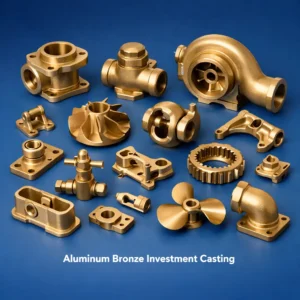
Investment casting (lost wax process) produces aluminum bronze components with near-net-shape accuracy, fine surface finish (Ra 1.6 to Ra 6.3), and tight dimensional tolerances (CT5–CT7 per ISO 8062). This process is suitable for complex, thin-walled geometries including impellers, turbine blades, nozzles, valve internals, and aerospace structural parts. Investment cast aluminum bronze eliminates or minimizes secondary machining, reducing total manufacturing cost for medium-to-high volume production runs. Brass & Copper Parts operates wax injection, ceramic shell building, and de-waxing facilities for consistent investment cast aluminum bronze production.
Centrifugal Cast Aluminum Bronze Bushings and Rings
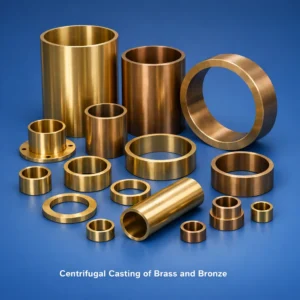
Centrifugal casting is the preferred process for cylindrical aluminum bronze components such as bushings, bearings, rings, liners, and sleeves. Centrifugal force produces a dense, porosity-free microstructure with uniform grain distribution from the inner to outer diameter. These castings have superior mechanical properties compared to static sand castings due to the elimination of shrinkage porosity. Centrifugally cast aluminum bronze bushings are manufactured to DIN 1718, ASTM B505, and BS 1400 standards, in bore diameters from 25 mm to 600 mm and lengths up to 1000 mm. They are widely used in heavy machinery, ship propulsion systems, and steel plant rolling mill equipment.
Continuous Cast Aluminum Bronze Bars and Plates
Continuous casting produces aluminum bronze in rod, bar, plate, and tube form with excellent surface quality and consistent mechanical properties throughout the length. This semi-finished product is then machined or fabricated into finished components such as wear plates, slide pads, guide rails, and custom precision parts. Continuous cast aluminum bronze bars are produced in diameters from 20 mm to 300 mm and plates up to 1000 mm width, suitable for CNC machining in job shop and production environments. Brass & Copper Parts supplies continuous cast aluminum bronze as a raw material or in the form of precision-machined finished components.
Aluminum Bronze Valve and Pump Castings
Aluminum bronze is the material of choice for seawater service valves, pump bodies, impellers, wear rings, and stuffing box components due to its biofouling resistance and superior cavitation resistance compared to gunmetal or ductile iron. These castings are produced to ASTM B148 (C95800) and BS 1400 AB2 for marine and offshore service. Dimensional and pressure testing per ASME B16.34 and API 600 is available. Aluminum bronze pump and valve castings are used in FPSO vessels, offshore platforms, desalination plants, naval vessels, and firewater systems where NACE compliance may be required.
Non-Sparking Aluminum Bronze Safety Components
In explosive gas, petroleum refinery, and mining environments, non-sparking tools and structural components manufactured from aluminum bronze are critical for safe operation. Aluminum bronze alloys produce no sparks on impact with steel surfaces, meeting ATEX, OSHA, and MSHA requirements for use in Zone 1 and Zone 2 hazardous areas. Brass & Copper Parts manufactures non-sparking aluminum bronze castings including valve handles, tool components, coupling flanges, and cable glands specifically for petrochemical, pharmaceutical, grain handling, and underground mining applications. These products are supplied with material test certificates confirming non-sparking alloy composition compliance.
Applications by Industry
| Industry | Typical Components |
|---|---|
| Marine & Naval | Ship propellers, rudder components, seawater valves, shaft bearings, keel bolts |
| Oil & Gas | Valve bodies, pump impellers, non-sparking tools, wellhead components, flow fittings |
| Pump & Valve Manufacturing | Pump casings, wear rings, impellers, valve seats, gate valves, check valves |
| Heavy Engineering | Bushings, bearing housings, wear plates, press tooling, gears, worm wheels |
| Desalination | Evaporator tube plates, seawater intake screens, pump bodies |
| Defense & Aerospace | Hydraulic manifolds, actuator housings, structural brackets, non-sparking fittings |
| Power Generation | Turbine components, condenser tube sheets, heat exchanger shells |
Manufacturing Process
Aluminum bronze castings at Brass & Copper Parts are produced using induction melting furnaces with controlled atmosphere to prevent aluminum oxide contamination during melt preparation. Charge materials including copper cathode, aluminum ingot, iron, and nickel are weighed and added in sequence per metallurgical best practices. Melt temperature is maintained at 1150–1200°C, and degassing is performed using nitrogen purging or hexachloroethane tablets to minimize hydrogen porosity. Pouring temperature is controlled within ±10°C of specification to ensure optimal fluidity and sound casting. Post-casting operations include fettling, shot blasting, heat treatment (annealing or quench-temper as required), non-destructive testing, dimensional inspection, and hydrostatic pressure testing for applicable pressure-retaining components.
Quality Standards and Certifications
- ASTM B148 – Standard specification for aluminum bronze sand castings
- ASTM B505 – Continuous cast copper alloy rod, bar, and tubes
- BS 1400 – British standard for copper alloy ingots and castings
- DIN 1714 – German standard for copper-aluminum alloy castings
- IS 1458 – Indian standard for copper alloy castings
- ISO 9001:2015 – Quality management system certification
- EN 1982 – European standard for copper alloy castings
- DNV / Lloyd’s / BV / ABS material approval for marine grade castings
Why Choose Brass & Copper Parts
Brass & Copper Parts has over two decades of experience manufacturing aluminum bronze castings for global OEM and project-based customers. Our in-house metallurgical laboratory performs spectrometric analysis, mechanical testing, and microstructural evaluation on every heat to ensure compliance with specified alloy grades. We maintain a dedicated quality assurance team for dimensional inspection, NDT (dye penetrant, radiography, ultrasonic), and hydrostatic testing. With casting facilities capable of producing components from 0.1 kg to 500 kg, we serve both low-volume prototype and high-volume production requirements. We export aluminum bronze castings to the UK, USA, Germany, UAE, Singapore, and Australia with full material traceability documentation.
Frequently Asked Questions
What is the difference between C95400 and C95800 aluminum bronze?
C95400 contains approximately 10–11.5% aluminum with iron, offering high strength and good machinability, suitable for general engineering applications. C95800 contains nickel (4–5%) and manganese in addition to aluminum and iron, providing superior corrosion resistance in seawater and higher-temperature applications. C95800 is the preferred grade for marine and offshore service per ASTM B148.
Can aluminum bronze castings be welded?
Yes, aluminum bronze can be welded using GTAW (TIG) or GMAW (MIG) processes with matching aluminum bronze filler wire (ERCuAl-A2). Pre-heat of 150–200°C is recommended for sections above 12 mm thickness to prevent cracking. Post-weld heat treatment may be required for stress-sensitive applications.
What is the corrosion resistance of aluminum bronze in seawater?
Aluminum bronze exhibits excellent corrosion resistance in seawater due to the formation of a stable aluminum oxide passive film. C95800 (nickel aluminum bronze) is particularly suited to seawater service and is used in ship propellers, sea chests, and seawater cooling systems, with service lives exceeding 20–30 years in fully submerged conditions.
Is aluminum bronze suitable for food and pharmaceutical contact?
Standard aluminum bronze alloys are not recommended for potable water or food contact applications due to potential aluminum and lead leaching. However, for non-food-contact industrial applications requiring corrosion resistance, aluminum bronze is widely specified. For food-grade applications, lead-free brass or stainless steel is preferred.
What casting tolerances are achievable with aluminum bronze?
Sand castings conform to dimensional tolerances of CT8–CT10 per ISO 8062-3. Investment castings achieve CT5–CT7. Centrifugally cast bushings can achieve bore tolerances of H7 after machining. Post-casting CNC machining enables tolerances of ±0.01 mm on critical dimensions.
What heat treatment is applied to aluminum bronze castings?
Annealing (650–750°C, air cool) is used to relieve residual casting stress and improve ductility. Quench-temper heat treatment (900°C quench, 650°C temper) produces a higher-strength, finer-grained microstructure for applications requiring maximum mechanical properties. Heat treatment is specified per ASTM B148 or customer requirement.
What is the minimum order quantity for aluminum bronze castings?
Brass & Copper Parts accepts orders from single prototype pieces to large production runs. For sand castings, MOQ is typically 1 piece for development and sampling. For investment castings, a minimum tooling commitment is required for wax dies, but production quantities can start from 10 pieces. Delivery lead time is 4–8 weeks depending on complexity and quantity.
Do you supply certified material test reports (MTR) with aluminum bronze castings?
Yes. All aluminum bronze castings are supplied with material test certificates (EN 10204 Type 3.1 or 2.2) confirming chemical composition by spectrometric analysis and mechanical test results. Heat numbers are traceable to individual pours. Additional certifications including radiographic test reports, hydrostatic test certificates, and dimensional inspection reports are available on request.
What surface treatments are available for aluminum bronze castings?
Standard supply condition is as-cast or shot-blasted. Additional surface treatments available include: CNC machining to drawing, electroless nickel plating, hard chrome plating, anodizing (for aesthetic purposes), and protective paint coatings for non-submerged applications. Surface finish requirements are specified at order placement.
Can you produce aluminum bronze castings to custom alloy compositions?
Yes, Brass & Copper Parts can produce aluminum bronze castings to proprietary or customer-specified alloy compositions, subject to feasibility review. We regularly cast alloys to Navy specification, Lloyd’s Register approval, and customer-specific material specifications for defense and offshore projects. Full chemical analysis certification is provided with every batch.
Request a Quote
Brass & Copper Parts supplies aluminum bronze castings to engineering specifications worldwide. Share your drawing, alloy grade, weight, quantity, and delivery requirement with our technical team for a prompt quotation. We offer competitive pricing for both prototype and production quantities with full material certification and inspection documentation.
Contact us: sales@brass-copper-parts.com | +91-22-43449300
Product categories
Related Products
-

Centrifugal Casting of Brass and Bronze
₹13.40 Add to cart -
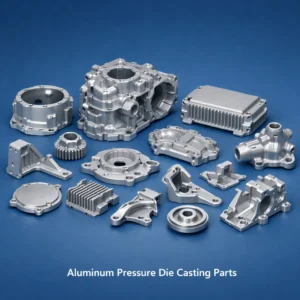
Aluminum Pressure Die Casting Parts
₹8.70 Add to cart -
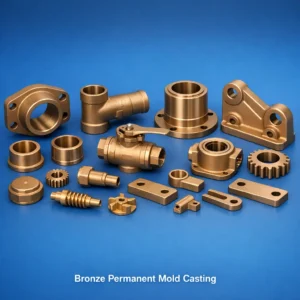
Bronze Permanent Mold Casting
₹13.40 Add to cart -
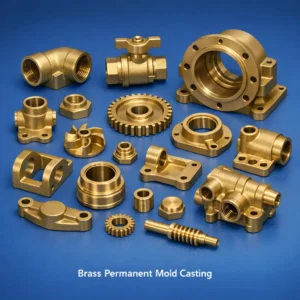
Brass Permanent Mold Casting
₹11.80 Add to cart -
Brass Gravity Die Casting GDC
₹11.80 Add to cart -
Stainless Steel 304 and 316 Sand Casting
₹8.90 Add to cart -
Stainless Steel Investment Casting
₹8.90 Add to cart -
Aluminum Bronze Investment Casting
₹8.70 Add to cart -
Bronze Shell Molding, Shell Casting
₹13.40 Add to cart -
Gunmetal Casting Foundry
₹13.40 Add to cart -
83600 Bronze Casting, CDA 836 Bronze Casting
₹13.40 Add to cart -
LG2 Bronze Casting 85-5-5-5
₹13.40 Add to cart -
Phosphor Bronze Casting
₹13.40 Add to cart -
Lead Free Brass Casting
₹11.80 Add to cart