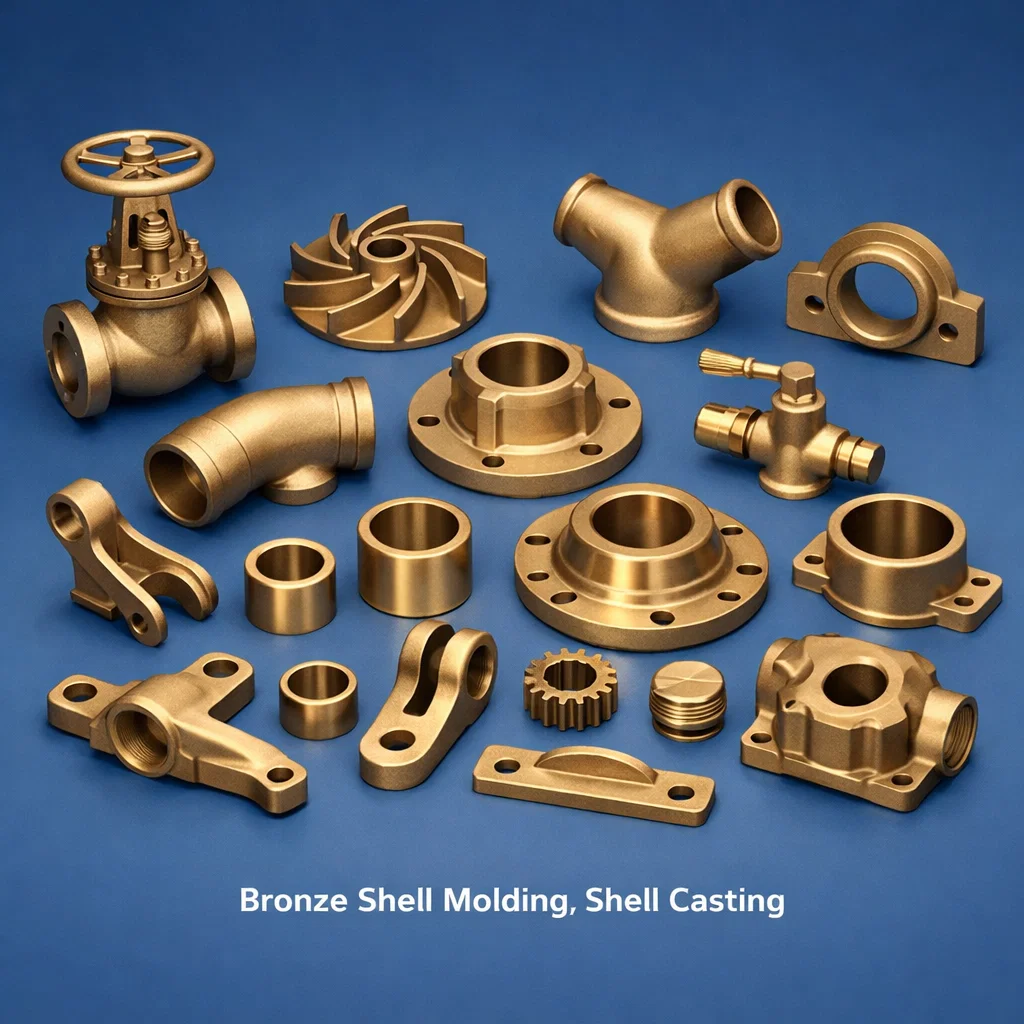
Bronze Shell Molding
Bronze shell molding (also called shell casting or Croning process) is a precision casting method using thermosetting resin-bonded sand shells to produce bronze and copper alloy castings with superior dimensional accuracy, excellent surface finish, and consistent metallurgical properties compared to conventional green sand casting. The process uses phenolic resin-coated fine sand applied to a heated metal pattern to form a rigid thin shell mold, enabling production of complex-geometry bronze components in LG2, phosphor bronze, aluminum bronze, and gunmetal alloys. Brass & Copper Parts operates shell molding facilities for high-volume production of bronze valves, fittings, pump components, marine hardware, and precision engineering parts requiring tighter tolerances and better surface quality than standard sand casting can achieve.
Product Overview
The shell molding process was developed by Johannes Croning in Germany in the 1940s and remains widely used for medium-to-high volume production of non-ferrous and ferrous castings requiring dimensional accuracy intermediate between sand casting and investment casting. Shell molds are produced by dumping or blowing resin-coated sand onto a heated metal pattern (200–300°C), curing the resin shell to a thickness of 6–12 mm, stripping the shell halves, assembling them with adhesive or clamps, and pouring molten bronze into the cavity. Shell mold castings exhibit dimensional tolerances of CT6–CT8 (ISO 8062), surface finish Ra 3.2–6.3 μm, and sharp corner definition not achievable with green sand. Brass & Copper Parts produces bronze shell castings in alloy grades LG2 (C83600), phosphor bronze (C90500), aluminum bronze (C95400), and gunmetal (G1), in component weights from 0.05 kg to 25 kg per piece.
Key Features
- Superior dimensional accuracy – CT6–CT8 per ISO 8062, tighter than green sand casting (CT9–CT11)
- Excellent surface finish – Ra 3.2–6.3 μm as-cast, minimizing secondary machining
- High production rates – Shell mold cycle times of 60–120 seconds enable high-volume output
- Consistent casting quality – Automated shell production eliminates operator skill variability
- Good thin-wall capability – Minimum wall thickness of 3–4 mm achievable in bronze alloys
- Reduced machining allowance – Near-net-shape castings reduce material waste and machining cost
- Complex core capability – Resin sand cores enable internal passages and undercuts
Technical Specifications
| Parameter | Shell Molding | Green Sand | Investment Casting |
|---|---|---|---|
| Dimensional Tolerance | CT6–CT8 | CT9–CT11 | CT4–CT6 |
| Surface Finish (Ra μm) | 3.2–6.3 | 12.5–25 | 1.6–3.2 |
| Min. Wall Thickness (mm) | 3–4 | 5–8 | 1.5–2 |
| Weight Range (kg) | 0.05–25 | 0.5–500 | 0.005–5 |
| Pattern/Tooling | Metal pattern plate | Wood/Al pattern | Wax tooling |
| Production Rate | High (automated) | Medium | Low–Medium |
| Unit Cost (mid-volume) | Low–Medium | Low | Medium–High |
Bronze Alloy Grades for Shell Molding
| Alloy Grade | ASTM | BS 1400 | EN 1982 | Typical Application |
|---|---|---|---|---|
| Leaded Gunmetal | C83600 | LG2 | CC491K | Valves, fittings, plumbing hardware |
| Phosphor Bronze | C90500 | PB2 | CC480K | Bearings, pump impellers, marine |
| Aluminum Bronze | C95400 | AB1 | CuAl10Fe3 | High-strength wear components |
| Tin Bronze | C90700 | PB4 | CC483K | Worm wheels, gears, heavy bearings |
| Silicon Brass | C87850 | – | CC756S | Lead free plumbing, potable water |
Product Types and Variants
Shell Molded Bronze Valve Components
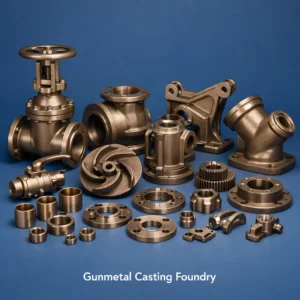
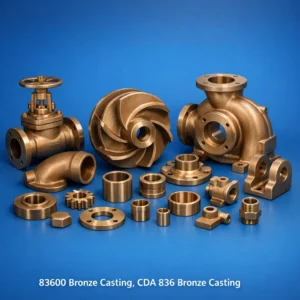
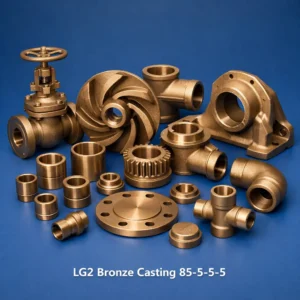
Shell molding is particularly well-suited for high-volume production of bronze valve bodies, bonnets, gland nuts, and end caps in LG2 (C83600) and gunmetal alloys. The process produces valve bodies with dimensional consistency across large production batches, reducing per-piece machining time compared to green sand castings. Shell cast valve bodies for PN10/PN16 service are produced in bore sizes from DN15 (½”) to DN100 (4″), with BSP, NPT, or flanged end connections. The improved surface quality of shell cast internal passages reduces flow turbulence and simplifies lapping of valve seating faces. Brass & Copper Parts supplies shell cast bronze valve body castings as rough castings or fully machined, pressure-tested finished components to valve OEM customers globally.
Shell Cast Bronze Pump Parts
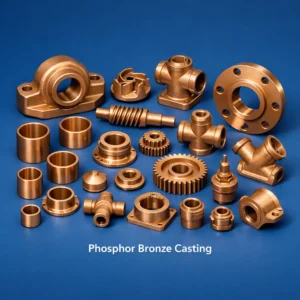
Pump impellers, wear rings, back covers, and bearing housings in phosphor bronze (C90500) and LG2 (C83600) are efficiently produced by shell molding when volumes exceed 500 pieces per year. The dimensional accuracy of shell mold castings reduces balancing corrections required on impellers and minimizes bore grinding allowance on bearing components. Shell cast pump impellers achieve hydraulic passage geometry closer to the design intent compared to green sand, improving pump efficiency. Brass & Copper Parts produces shell cast pump components for centrifugal, peripheral, and turbine pump OEM manufacturers in the 50 mm to 300 mm impeller diameter range, with production rates of 200–500 pieces per shift per cavity.
Shell Cast Bronze Fittings and Connectors
High-volume bronze pipe fittings — elbows, tees, reducers, unions, couplings, and nipples — benefit significantly from shell molding versus green sand due to the tighter wall thickness consistency and superior thread-undercut definition achievable in the mold. Shell cast fittings in LG2 (C83600) and silicon brass (C87850) are produced to BS EN 10226, ASME B16.3, or customer-specific standards. The improved dimensional repeatability of shell mold tooling reduces setup and gauging time in CNC threading operations, lowering per-piece manufacturing cost for production runs above 1,000 pieces. Brass & Copper Parts operates multiple-cavity shell mold tooling for standard fitting sizes, enabling same-day production scheduling for repeat orders.
Shell Cast Bronze Marine Hardware
Marine hardware components including fairlead shells, mooring cleats, propeller shaft coupling flanges, and through-hull fitting bodies are produced by shell molding when component complexity and surface quality requirements exceed green sand capability. Shell cast marine bronze components in LG2 and aluminum bronze (C95400) exhibit sharper detail definition for decorative hardware, more consistent wall thickness for pressure-retaining fittings, and cleaner internal bore surfaces for seawater through-hull fittings. Marine shell cast components conform to BS 1400 and ASTM B584 material standards, with Lloyd’s Register or DNV material certification available for classification-required components.
Shell Cast Resin Sand Cores for Complex Bronze Castings
Shell molding is also used to produce resin-bonded sand cores for use in conventional green sand molds, enabling internal passages, blind holes, and undercuts in larger bronze castings that cannot be formed with simple core boxes. Resin shell cores exhibit dimensional accuracy of ±0.3 mm on core dimensions, compared to ±0.8–1.5 mm for oil-bonded cores. This reduces internal passage misalignment in valve bodies and pump casings, improving hydraulic efficiency and reducing scrap rates. Brass & Copper Parts manufactures shell cores on automated core shooters using cold-box or hot-box resin systems, integrating them into both in-house and customer-supplied sand mold production.
High-Volume Shell Cast Bronze Precision Parts
Small bronze precision components including lock bodies, hydraulic fittings, gas meter internals, instrument housings, and automotive decorative hardware are efficiently produced by multi-cavity shell mold tooling at production rates of 1,000–5,000 pieces per day per mold set. The automated shell mold production process ensures consistent wall thickness, sharp corner definition, and dimensional repeatability across large batches, supporting quality control requirements such as 100% dimensional gauging and automated vision inspection. Brass & Copper Parts operates semi-automated shell molding machines with automatic mold closing and pouring indexing for maximum production efficiency on high-volume bronze casting contracts.
Applications by Industry
| Industry | Shell Molded Bronze Components |
|---|---|
| Valve Manufacturing | Valve bodies, bonnets, gland nuts, end caps (PN10/PN16) |
| Pump Manufacturing | Impellers, wear rings, bearing housings, back covers |
| Plumbing & Fittings | Elbows, tees, unions, couplings, reducers, hose fittings |
| Marine Hardware | Fairleads, cleats, through-hull bodies, coupling flanges |
| Automotive | Hydraulic fittings, decorative trim, sensor housings |
| General Engineering | Lock bodies, instrument housings, bearing caps, connectors |
Manufacturing Process
The shell molding process at Brass & Copper Parts begins with heated metal pattern plates (220–280°C) mounted on semi-automatic shell machines. Phenolic resin-coated fine silica sand (AFS 80–100 grain fineness) is dumped onto the heated pattern and held for 15–25 seconds to cure a shell of 6–10 mm thickness. Uncured sand is dumped back for reclamation, and the shell is further oven-cured at 300°C for 60–90 seconds. Shell halves are assembled with hot melt adhesive and placed in a steel flask with backup sand for pouring support. Bronze is melted in coreless induction furnaces at 1050–1150°C, analyzed by OES spectrometer, and poured at controlled temperature. After solidification and cooling, shells are broken out, castings fettled and shot-blasted, and subjected to spectrometric, dimensional, and visual inspection before dispatch.
Quality Standards and Certifications
- ASTM B584 – Standard specification for copper alloy sand castings (applicable to shell cast)
- BS 1400 LG2, PB2, AB1 – Material standards for respective alloy grades
- EN 1982 – European copper alloy casting standard
- ISO 8062-3 – Dimensional tolerances for castings (CT6–CT8 for shell mold)
- ISO 9001:2015 – Quality management system
- EN 10204 Type 3.1 – Material test certificates with every heat
Why Choose Brass & Copper Parts
Brass & Copper Parts has invested in semi-automated shell molding equipment specifically for high-volume bronze casting production, offering customers a cost-effective alternative to investment casting where CT6–CT8 tolerances are sufficient and volumes justify the tooling investment. Our in-house pattern shop manufactures shell mold tooling from steel or ductile iron, ensuring long tool life for production runs of 50,000+ pieces. Multi-cavity tooling (2, 4, or 6 cavities per mold set) minimizes per-piece cycle time for high-volume orders. Tooling amortization options are available on committed production volumes. Full material certification, dimensional inspection reports, and hydrostatic test documentation are provided as standard.
Frequently Asked Questions
What is the difference between shell molding and green sand casting for bronze?
Green sand casting uses moist sand with clay binder and produces castings with CT9–CT11 dimensional tolerance and Ra 12.5–25 μm surface finish. Shell molding uses resin-coated fine sand cured into rigid shells, producing CT6–CT8 tolerance and Ra 3.2–6.3 μm finish. Shell molding requires higher tooling investment (metal pattern plates vs. wooden patterns) but reduces machining cost for medium-to-high volume production.
What is “resin sand” in shell molding?
Resin sand refers to silica sand coated with a thermosetting phenolic resin binder (typically 1.5–3% resin by weight of sand). When heated on the metal pattern, the resin melts, flows between sand grains, and polymerizes to form a rigid shell. The resin provides the binding strength (unlike clay in green sand) and burns out cleanly during and after casting, facilitating easy shakeout. AFS grain fineness of 70–120 is typical for bronze shell casting, producing smooth mold surfaces.
What minimum volume justifies shell mold tooling investment?
Shell mold tooling (metal pattern plates) costs approximately 2–5× more than equivalent wooden green sand patterns. For bronze castings, annual volumes of 500–1,000 pieces per part number typically justify shell mold tooling when the reduction in machining cost and scrap rate is factored in. For very high volumes (10,000+ pieces per year), multi-cavity shell tooling provides significant per-piece cost advantages over both green sand and investment casting.
What is the maximum casting weight for bronze shell molding?
Shell molding is most economical for bronze castings up to 10–15 kg per piece. Above this weight, the shell mold thickness required to withstand metallostatic pressure increases, making the process less competitive versus green sand. For small to medium bronze castings in the 50 gram to 5 kg range, shell molding offers the best combination of dimensional accuracy, surface quality, and production cost.
Can shell molded bronze castings be used in pressure-retaining applications?
Yes. Shell mold bronze castings in LG2 (C83600) and gunmetal alloys are used extensively in valve bodies and fittings rated to PN10–PN16. The dense, fine-grained microstructure of shell cast bronze, combined with the elimination of the moisture-related porosity common in green sand, produces castings with excellent pressure tightness. Hydrostatic testing at 1.5× rated working pressure is performed on all pressure-retaining shell cast components as standard.
What resin types are used in bronze shell molding?
Hot-box phenolic urethane resin systems and cold-box amine-cured phenolic urethane are the two main resin systems used. Hot-box (heated pattern) is most common for shell molding bronze due to pattern temperature control flexibility. Cold-box systems are used primarily for core production. Resin sand systems used at Brass & Copper Parts comply with workplace health and safety regulations, with enclosed gas extraction systems managing amine and phenol emissions during curing.
What is the typical lead time for shell cast bronze components?
For existing tooling: 3–4 weeks production lead time from order confirmation. For new tooling development: 6–8 weeks for metal pattern plate manufacture followed by 2–3 weeks for first samples and approval. Total new tooling to first approved production: 8–11 weeks. Rush tooling services are available. Brass & Copper Parts maintains stock of common bronze grades (LG2, phosphor bronze) for immediate melt availability on approved orders.
Do you supply shell cast bronze castings with dimensional inspection reports?
Yes. Brass & Copper Parts provides first article inspection (FAI) reports for new part introductions, including full dimensional layout against customer drawing, spectrometric chemical analysis certificate, and visual/surface inspection sign-off. For production batches, statistical sampling inspection per ANSI/ASQ Z1.4 AQL 1.0 is standard, with 100% gauge inspection available for critical dimensions on request. All reports are issued in PDF format with the shipment documentation.
Request a Quote
Brass & Copper Parts offers bronze shell molding and shell casting services for high-volume precision bronze components. Share your drawings, alloy grade, annual volume, and quality requirements for a competitive quotation with tooling cost and per-piece pricing.
Contact us: sales@brass-copper-parts.com | +91-22-43449300
Product categories
Related Products
-

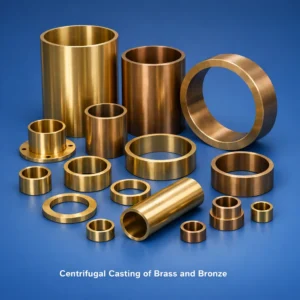
Centrifugal Casting of Brass and Bronze
₹13.40 Add to cart -
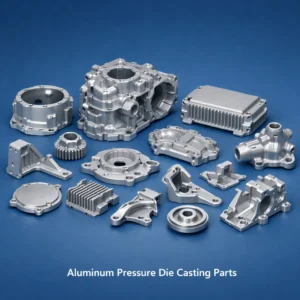
Aluminum Pressure Die Casting Parts
₹8.70 Add to cart -
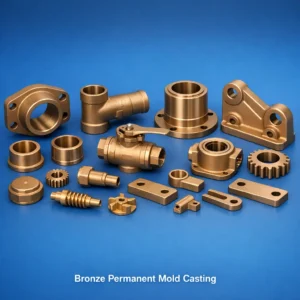
Bronze Permanent Mold Casting
₹13.40 Add to cart -
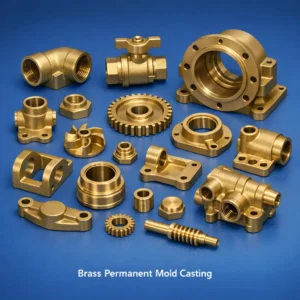
Brass Permanent Mold Casting
₹11.80 Add to cart -
Brass Gravity Die Casting GDC
₹11.80 Add to cart -
Stainless Steel 304 and 316 Sand Casting
₹8.90 Add to cart -
Stainless Steel Investment Casting
₹8.90 Add to cart -
Aluminum Bronze Investment Casting
₹8.70 Add to cart -
Gunmetal Casting Foundry
₹13.40 Add to cart -
83600 Bronze Casting, CDA 836 Bronze Casting
₹13.40 Add to cart -
LG2 Bronze Casting 85-5-5-5
₹13.40 Add to cart -
Phosphor Bronze Casting
₹13.40 Add to cart -
Lead Free Brass Casting
₹11.80 Add to cart -
Aluminum Bronze Casting
₹8.70 Add to cart