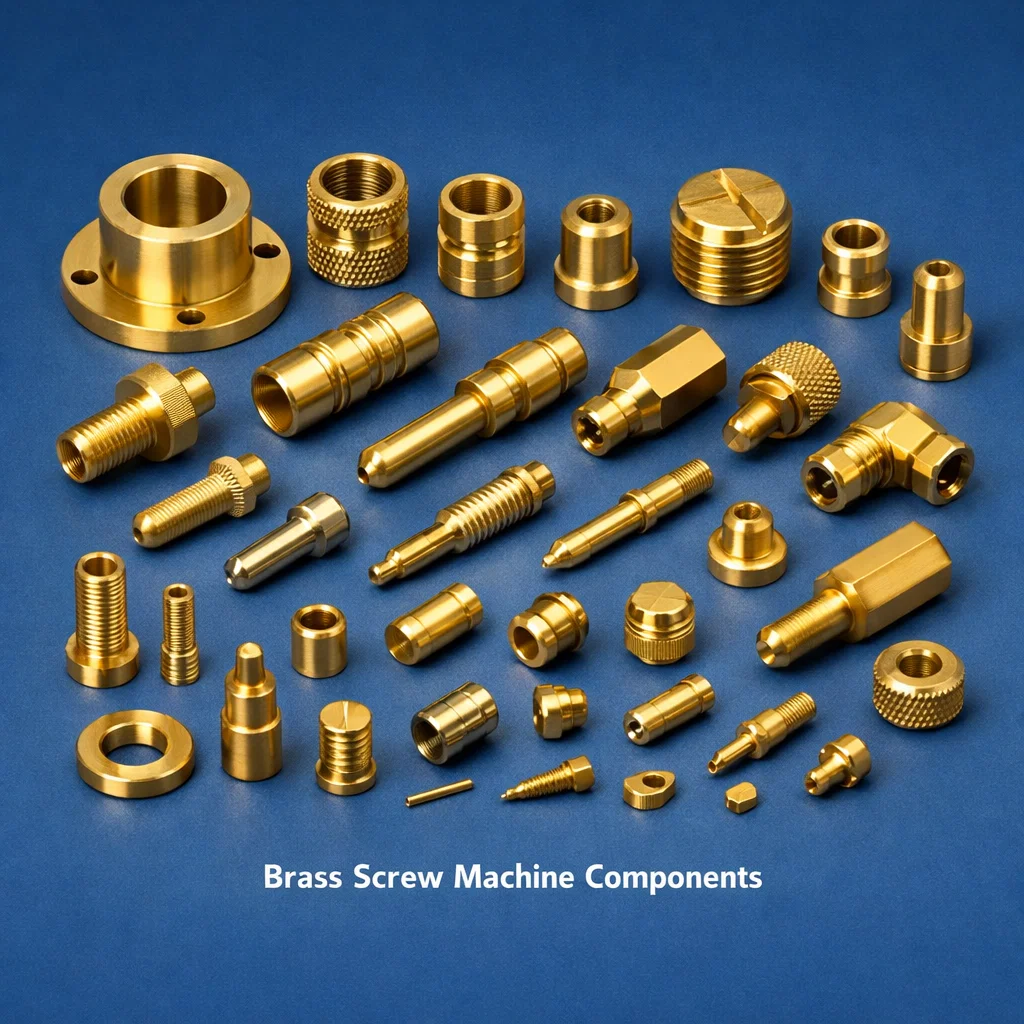
Overview: Brass Screw Machine Components
Brass & Copper Parts manufactures high-volume precision Brass Screw Machine Components from its ISO 9001:2015 certified production facility in Jamnagar, India. Screw machine production—encompassing multi-spindle automatic screw machines, single-spindle automatics, and Swiss-type CNC sliding-headstock lathes—is the most cost-efficient method for producing large quantities of small, rotationally symmetric brass components with multiple turned, cross-drilled, threaded, and knurled features in a single clamping cycle. With over 29 years of experience running automatic screw machines on free-machining brass (ASTM C36000 / CW614N / IS 319), we supply OEM buyers in the USA, UK, Europe, and Australia with electrovalve parts, pneumatic fittings, electrical terminals, instrumentation connectors, plumbing components, and automotive sub-parts in quantities from 10,000 to 10 million pieces per annum.
What Are Brass Screw Machine Components?
A screw machine (also called an automatic lathe or automatic bar machine) feeds brass bar stock continuously through a collet chuck and machines parts using a fixed tooling station while the bar rotates. Multi-spindle machines carry 4, 6, or 8 spindles simultaneously, each performing a different machining operation—turning, cross-drilling, thread rolling, knurling, or parting—so that a finished part is produced at each index cycle. Swiss-type sliding-headstock machines add synchronized linear bar feeding to achieve ultra-close tolerances on long, slender parts. Brass screw machine components are characterised by tight dimensional tolerances (±0.01 mm standard), excellent surface finish, and complex multi-feature geometry achieved in a single production pass without manual re-clamping. The free-machining nature of C36000 brass—machinability index 100—makes it the ideal bar stock for screw machine production.
Key Features of Brass Screw Machine Components
- High Production Rate: Multi-spindle screw machines produce 5,000–20,000 pieces per shift depending on component complexity, enabling competitive pricing on large volumes.
- Consistent Tolerances: Cam-driven tooling on conventional multi-spindles or CNC servo axes on modern machines hold ±0.01 mm across all spindles; Swiss-type achieves ±0.005 mm on diameters.
- Complex Multi-Feature Parts: Simultaneous cross-drilling, form turning, knurling, thread rolling, and parting on one machine eliminates transfer and re-clamping errors.
- Minimal Material Waste: Bar feeding and continuous production minimise set-up scrap; brass swarf is 100% recyclable and recovered for credit.
- Surface Finish Quality: C36000 brass produces burr-free, Ra 0.8–1.6 µm surfaces as-machined on screw machines; polished to Ra 0.4 µm with secondary barrel finishing.
- Wide Diameter Range: Bar diameters from 3 mm to 65 mm processed on conventional multi-spindle; 1 mm to 32 mm on Swiss-type CNC automatics.
- Plating and Finishing: Post-machining tin, nickel, or chrome plating is coordinated through approved in-house and subcontract plating partners.
Technical Specifications: Brass Screw Machine Production
| Parameter | Multi-Spindle Screw Machine | Swiss-Type CNC Automatic |
|---|---|---|
| Number of Spindles | 4, 6, or 8 | 1 (synchronised) |
| Bar Diameter Range | 6 mm – 65 mm | 1 mm – 32 mm |
| Turned Diameter Tolerance | ±0.01 mm | ±0.005 mm |
| Length Tolerance | ±0.02 mm | ±0.01 mm |
| Thread Class | 6H/6g ISO; 2A/2B ANSI | 6H/6g ISO; 3A/3B ANSI |
| Surface Finish (Ra) | 0.8 – 1.6 µm | 0.4 – 0.8 µm |
| Roundness (TIR) | 0.005 mm | 0.002 mm |
| Cross-Hole Min. Diameter | 1.5 mm | 0.5 mm |
| Knurl Types | Diamond, straight, angled | Diamond, straight |
| Production Rate | 100–1,000 pcs/hour | 50–500 pcs/hour |
| Primary Material | C36000 / CW614N / IS 319 | C36000 / CW614N |
Raw Material Grades for Screw Machine Production
| Standard | Grade | Cu % | Pb % | Zn % | Machinability |
|---|---|---|---|---|---|
| ASTM (USA) | C36000 | 60–63 | 2.5–3.7 | Balance | 100 (Benchmark) |
| EN (Europe) | CW614N (CuZn39Pb3) | 57–59 | 2.5–3.5 | Balance | ~100 |
| IS (India) | IS 319 Type-I | 60–63 | 2.5–3.7 | Balance | 100 |
| JIS (Japan) | C3604 | 59–63 | 1.8–3.7 | Balance | ~90 |
| BS (UK) | CZ121 | 57–59 | 2.5–3.5 | Balance | ~100 |
| DIN (Germany) | CuZn39Pb3 | 59–63 | 2.5–3.5 | Balance | ~100 |
Product Types and Variants
Brass Electrical Terminal and Connector Screw Machine Parts
One of the largest applications for brass screw machine components is the production of electrical terminal pins, connector bodies, socket contacts, and relay housings for PCB, wire-to-board, and industrial connector applications. These parts require tight diameter tolerances (±0.005 mm on pin diameters), controlled surface finish (Ra 0.8 µm) for reliable plating adhesion, and close thread-to-diameter concentricity for mating connector assembly. We produce to IEC 60947, DIN 41612, and NEMA standards. Bright tin or selective gold plating is available for contact surfaces.
Brass Pneumatic and Hydraulic Fittings (Screw Machine)
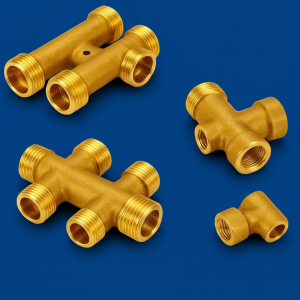
Push-in fittings, nipples, adaptors, and union bodies for compressed air (ISO 6150), hydraulic systems (ISO 4399), and gas service are produced in high volumes on multi-spindle screw machines from C36000 brass. Hex flats, cross-holes for locking wire, knurled grip surfaces, and BSP/NPT threads are formed in a single production pass. Rated working pressures from 10 bar (compressed air) to 350 bar (hydraulic) are achievable depending on wall thickness and design. We supply fittings compliant with BSP (ISO 7/1), NPT (ASME B1.20.1), and SAE 37° flare standards.
Brass Plumbing and HVAC Screw Machine Components
Stem valves, seat inserts, meter nipples, compression olive holders, and manifold inserts for plumbing, HVAC, and gas service are produced from C36000 brass on screw machines. Bore diameters and seat angles are critical features—bores are held to H7 tolerance and seat angles to ±0.5° for positive sealing. Components are routinely tested for pressure tightness at 1.5× working pressure. For dezincification-prone environments or potable water service, we recommend our DZR or Lead-Free Brass variants.
Brass Automotive Screw Machine Parts
Fuel system fittings, brake line unions, sensor bodies, carburetor jets, and gear mechanism pins are produced from C36000 brass on high-speed screw machines for the automotive and off-highway equipment sectors. Automotive screw machine parts require PPAP-supported production with PFMEA, control plans, and Cpk ≥ 1.67 on critical characteristics. Dimensional verification is performed on 100% of threaded features and key diameters with calibrated gauging stations integrated into the production line.
Brass Instrumentation Screw Machine Parts
Flow meter bodies, pressure gauge adaptors, thermocouple compression fittings, and capillary tube couplings for precision instrumentation are among the most demanding screw machine components we produce. These parts require surface finishes to Ra 0.4 µm, bore roundness within 0.003 mm TIR, and thread lead accuracy to Class 6H/3A tolerances. Swiss-type CNC automatics are used for long, slender instrumentation components with diameter-to-length ratios up to 1:15. Full dimensional reports accompany each delivery.
Brass Specialty and Custom Screw Machine Components
Our screw machine capability extends to custom components including knurled thumb screws, locking studs, standoffs, spacers, inserts for injection moulding, and bespoke prismatic forms. Cam profiles, custom groove geometries, and interrupted threads are achievable using form tools and cross-slide tooling. Prototyping on CNC Swiss-type machines allows complex first-article verification before committing to cam-driven multi-spindle tooling for high-volume production.
Applications by Industry
| Industry | Typical Brass Screw Machine Parts |
|---|---|
| Electrical and Electronics | Terminal pins, connector bodies, relay housings, PCB studs |
| Pneumatics and Hydraulics | Push-in fittings, union bodies, elbow adaptors, nipples |
| Plumbing and HVAC | Valve stems, compression ferrules, meter adaptors, seat inserts |
| Automotive | Fuel jets, brake fittings, sensor bodies, gear pins |
| Instrumentation | Gauge adaptors, compression fittings, capillary connectors |
| Medical and Dental | Precision instrument fittings, handpiece components |
| Defence and Telecommunications | Connector inserts, RF fittings, waveguide components |
Manufacturing Process
Step 1 – Bar Stock Preparation: C36000 brass bar or rod is cut to 3–4 metre bar lengths suitable for bar-feed equipment. Bar straightness and surface condition are verified. Material identity is confirmed by XRF spectrometry.
Step 2 – Tooling and Cam Design: For conventional multi-spindle machines, cams are ground to produce the required feed and depth profiles for each spindle station. CNC servo-driven machines use programmed axis moves. First-off samples are inspected before production run approval.
Step 3 – Screw Machine Production: Bar stock is fed through a collet, machined at each spindle station simultaneously, and parted off as a completed part at each machine cycle. Parts fall into a collection bin or onto a conveyor. Coolant (sulphurised cutting oil or water-soluble emulsion) is circulated continuously.
Step 4 – In-Process Gauging: Operators gauge critical dimensions (diameter, thread, length) on sample parts every 15–30 minutes using calibrated SPC-linked gauging stations. Out-of-tolerance conditions trigger immediate machine adjustment or stoppage.
Step 5 – Deburring and Tumbling: Parts are vibratory tumbled in ceramic or plastic media to remove burrs from cross-holes, parting faces, and thread roots. Washing and drying follow tumbling.
Step 6 – Secondary Operations: Milling of flats, additional drilling, slotting, or press-fitting of inserts are performed as secondary operations where required. Thread rolling (preferred over tapping for thread strength and surface hardness) is available.
Step 7 – Plating and Surface Treatment: Barrel-plated or rack-plated tin, nickel, chrome, or zinc is applied per customer specification. Plating thickness is verified by XRF coating gauge.
Step 8 – Final Inspection and Dispatch: AQL sampling per ISO 2859-1 (typically AQL 1.0 for critical dimensions, 2.5 for minor dimensions). Full inspection reports, packing lists, and MTC accompany each shipment.
Quality Standards and Certifications
- ISO 9001:2015 Certified Quality Management System
- Material certification to ASTM B16, EN 12164, IS 319 with EN 10204 3.1 MTC
- Thread gauging per ASME B1.20.1 (NPT), ISO 7/1 (BSP), ISO 965 (Metric), BS 21
- SPC-controlled production with Cpk reporting per lot (target Cpk ≥ 1.33)
- AQL inspection per ISO 2859-1 with customer-specified AQL levels
- RoHS 2 (EU 2011/65/EU) Annex III exemption 6(c) for leaded brass
- PPAP Level 1–3 available for automotive OEM supply
- In-house XRF spectrometry for alloy verification and plating thickness measurement
Why Choose Brass & Copper Parts for Screw Machine Components
- Jamnagar Precision Machining Hub: Located in India’s brass precision machining capital with direct access to certified C36000 bar stock at competitive pricing.
- Multi-Spindle and Swiss-Type Capability: Diverse machine fleet handles small miniature parts (Swiss) to medium-diameter high-volume parts (multi-spindle) under one roof.
- Volume Flexibility: Economic production from 10,000 pieces on Swiss-type machines; multi-spindle production economical from 50,000 pieces upwards.
- Full Secondary Processing: Deburring, tumbling, plating, assembly, and kitting are integrated in-house or through dedicated approved suppliers.
- Responsive Tooling: New cam sets for multi-spindle machines developed in 2–3 weeks; CNC Swiss-type parts programmable in days.
- Export Track Record: 29+ years of exporting to USA, UK, Europe, and Australia with documented compliance to customer-specific standards.
Frequently Asked Questions
What is the difference between a screw machine part and a CNC turned part?
A screw machine part is produced on a multi-spindle or single-spindle automatic bar machine optimised for high-volume, small-part production with minimal cycle time. CNC turning centres are more flexible for complex geometry and lower volumes. For quantities above 10,000–50,000 pieces, screw machine production is typically more cost-effective than CNC turning.
What is the minimum part diameter for brass screw machine production?
Swiss-type CNC automatics can handle bar diameters down to 1 mm, enabling miniature parts as small as 1.5 mm finished diameter. Multi-spindle screw machines are economical from 6 mm bar diameter.
Can you produce parts with cross-holes and knurling in one cycle?
Yes. Multi-spindle screw machines perform cross-drilling, knurling, form turning, threading, and parting simultaneously across different spindle stations in a single production cycle without manual transfer.
What thread standards do you produce on screw machines?
We produce BSP (ISO 7/1), NPT (ASME B1.20.1), metric coarse and fine (ISO 965), UNC, UNF, and custom thread forms including ACME and British Association (BA) threads. Thread rolling is offered as an alternative to tapping for improved thread surface finish and fatigue strength.
What is the tightest tolerance achievable on a brass screw machine part?
On Swiss-type CNC automatics: ±0.003 mm on turned diameters, ±0.005 mm on lengths. On multi-spindle screw machines: ±0.01 mm on turned diameters, ±0.02 mm on lengths. Bore tolerances to H6 are achievable with reaming operations.
Do you offer thread gauging with each lot?
Yes. Go/No-Go thread plug and ring gauges (traceable to NIST/NPL) are used to verify 100% of critical threads on key components. Gauge calibration records are maintained and available for customer audit.
Can you supply plated screw machine parts?
Yes. Barrel tin plating (IEC 60068-2-58), electroless nickel (MIL-C-26074 / EN ISO 4527), chrome, and zinc plating are arranged through our approved plating partners. Plating thickness is verified by XRF.
What is the typical lead time for brass screw machine components?
Prototypes on Swiss-type machines: 2–3 weeks. First production lots with new tooling on multi-spindle: 4–6 weeks. Repeat orders with existing tooling: 3–4 weeks.
What is the minimum order quantity?
Swiss-type CNC: 1,000 pieces minimum for economical production. Multi-spindle screw machine: 10,000–50,000 pieces minimum depending on component complexity and cam tooling cost amortisation.
Do you provide SPC reports with screw machine production lots?
Yes. Every production lot is accompanied by an SPC data summary including Cpk values for critical dimensions. Full raw SPC data is available for customer download on request.
Request a Quote for Brass Screw Machine Components
Submit your component drawings (DXF, STEP, PDF), annual volume requirements, and target lead time. Our engineering team will assess screw machine feasibility, provide a tooling cost estimate, and offer a competitive unit price quotation within 24–48 hours.
Email: sales@brass-copper-parts.com | Phone/WhatsApp: +91-22-43449300
Brass & Copper Parts (India) – Plot 10-B, GIDC Industrial Estate, Shankar Tekri, Jamnagar 361004, Gujarat, India.
Product categories
Related Products
-

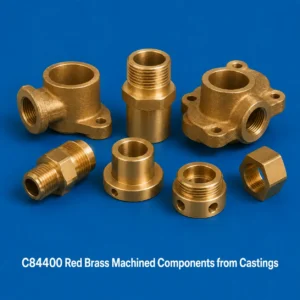
C84400 Red Brass Machined Components from Castings
₹11.80 Add to cart -
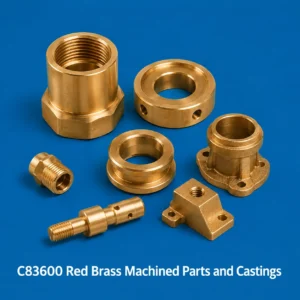
C83600 Red Brass Machined Parts and Castings
₹11.80 Add to cart -
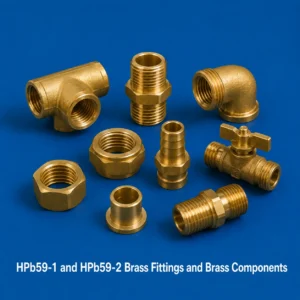
HPb59-1 and HPb59-2 Brass Fittings and Brass Components
₹11.80 Add to cart -
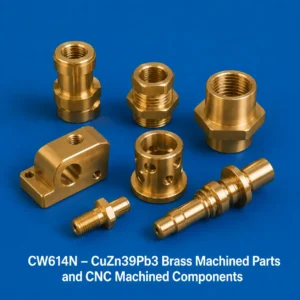
CW614N – CuZn39Pb3 Brass Machined Parts and CNC Machined Components
₹11.80 Add to cart -
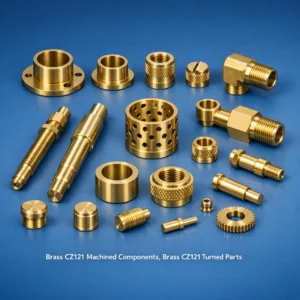
Brass CZ 121 Machined Components, Brass CZ 121 Turned Parts
₹11.80 Add to cart -
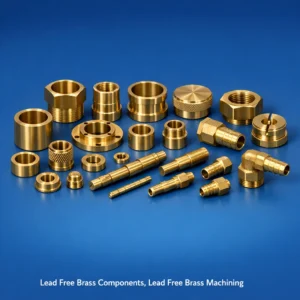
Lead Free Brass Components, Lead Free Brass Machining
₹11.80 Add to cart -
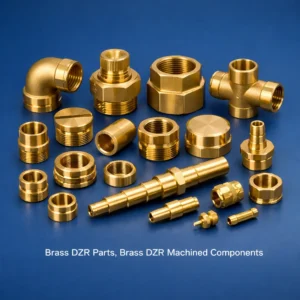
Brass DZR Parts, Brass DZR Machined Components
₹11.80 Add to cart -
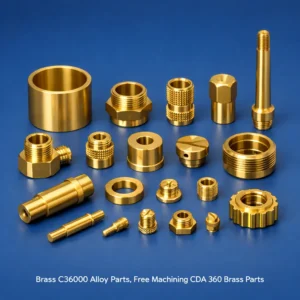
Brass C36000 Alloy Parts, Free Machining CDA 360 Brass Parts
₹11.80 Add to cart -
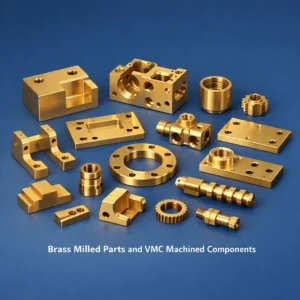
Brass Milled Parts and VMC Machined Components
₹11.80 Add to cart -
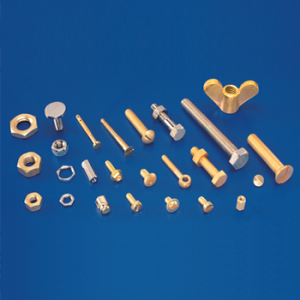
Brass Fasteners
₹11.80 Add to cart -
Brass Forging
₹11.80 Add to cart -
Brass CNC Parts
₹11.80 Add to cart