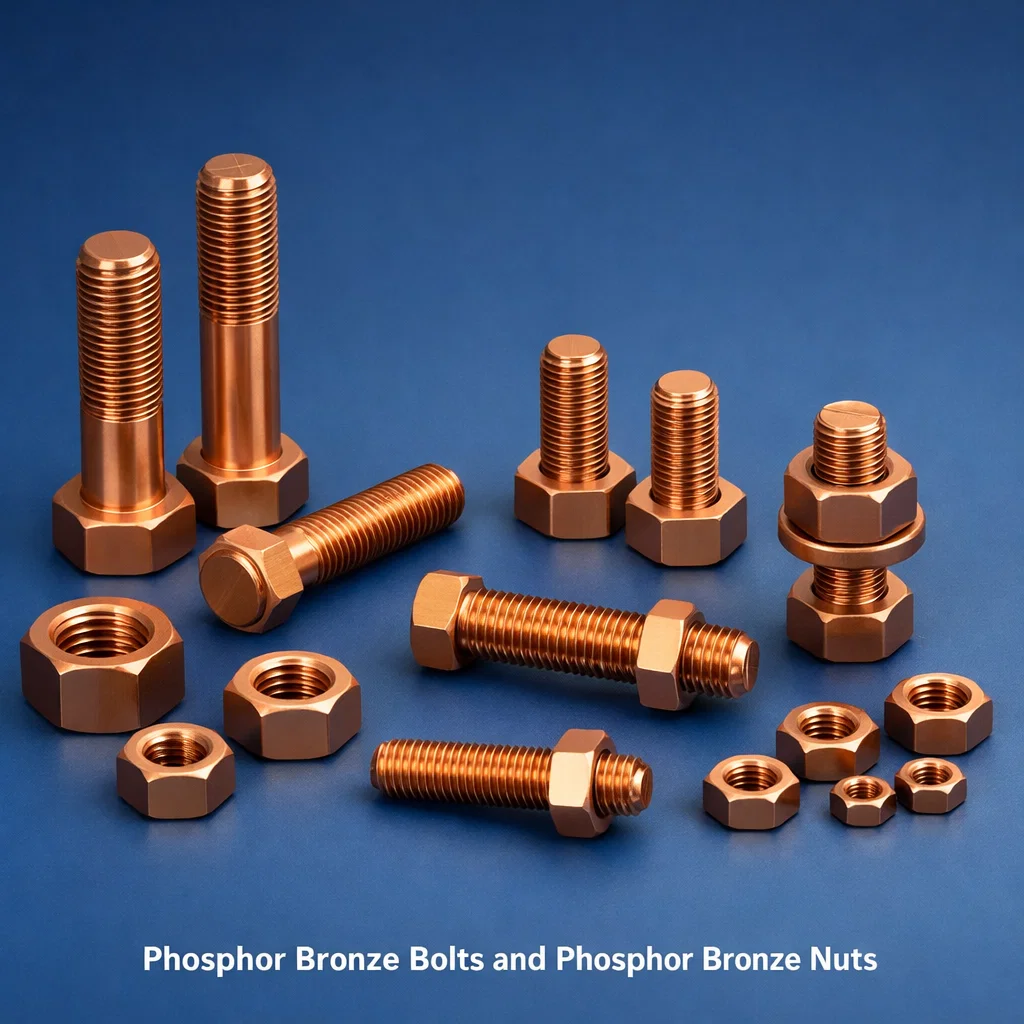
Overview: Phosphor Bronze Bolts and Phosphor Bronze Nuts
Brass & Copper Parts manufactures precision Phosphor Bronze Bolts and Phosphor Bronze Nuts from its ISO 9001:2015 certified facility in Jamnagar, India. Phosphor bronze (tin-copper alloy with phosphorus deoxidation) is the preferred fastener material for marine, offshore, electrical, and corrosion-critical industrial applications where standard steel or brass fasteners are inadequate. Our phosphor bronze bolts and nuts are produced from ASTM B139 / BS 2874 PB102 / EN CW451K (CuSn8) alloy rod and bar in hex bolt, hex cap screw, stud bolt, carriage bolt, and hex nut configurations, covering thread forms from M4 to M48 (metric), 3/16″ to 2″ (UNC/UNF), and 1/8″ to 2″ BSW/BSF/BSP. We supply OEM buyers, marine outfitters, electrical switchgear manufacturers, and industrial MRO distributors across the USA, UK, Europe, Australia, and the Middle East.
What is Phosphor Bronze and Why Use It for Fasteners?
Phosphor bronze is a copper-tin-phosphorus alloy (CuSn) in which tin (typically 4–10%) provides strength and corrosion resistance, while residual phosphorus (0.01–0.35%) from the deoxidation process improves stiffness, fine grain structure, and bearing properties. Compared to brass fasteners, phosphor bronze offers superior resistance to seawater corrosion, stress corrosion cracking (SCC) in ammonia environments, dezincification, and fatigue. Its non-magnetic, non-sparking, and galling-resistant properties make it ideal for use in explosive atmospheres, magnetic-sensitive installations, and applications requiring reliable torque retention under vibration. Phosphor bronze bolts do not seize or gall against phosphor bronze or brass nuts under marine immersion or high-humidity conditions, making them the preferred choice over stainless steel in copper-alloy flange assemblies.
Key Features of Phosphor Bronze Bolts and Nuts
- Superior Marine Corrosion Resistance: PB102 / C51000 / CW451K phosphor bronze withstands continuous seawater immersion, tidal splash, and marine atmospheric exposure without pitting, rust, or dezincification.
- Non-Magnetic: Phosphor bronze is paramagnetic (magnetic permeability ≈ 1.0), suitable for compass housings, degaussing equipment, MRI-adjacent structures, and magnetically-shielded enclosures.
- Non-Sparking: No ferrous content; ATEX / IECEx compatible for use in Zone 1 and Zone 2 explosive atmospheres (flammable gases, vapours, and dusts).
- Galling Resistance: Phosphor bronze against phosphor bronze or brass does not gall or cold-weld under high clamping loads, unlike austenitic stainless steel fastener pairs.
- Good Electrical Conductivity: 15% IACS; suitable for earthing bonding bolts, electrical panel fasteners, and bus bar connections requiring low-resistance metallic continuity.
- High Fatigue Strength: Fatigue limit of 180–220 MPa for PB102/C51000; significantly higher than brass (C36000 ~80 MPa) and comparable to mild steel.
- Broad Thread Range: Produced in metric (ISO), UNC, UNF, BSW, BSF, and BSP thread forms with standard or custom thread classes.
Technical Specifications: Phosphor Bronze Fastener Alloys
| Property | C51000 / PB102 / CW451K | C54400 / PB104 | Standard |
|---|---|---|---|
| Copper (Cu) | 94.0 – 96.0% | 87.0 – 90.0% | ASTM B139 |
| Tin (Sn) | 4.2 – 5.8% | 3.5 – 4.5% | ASTM B139 |
| Lead (Pb) | 0.05% max | 3.5 – 4.5% | ASTM B139 |
| Phosphorus (P) | 0.03 – 0.35% | 0.01 – 0.50% | ASTM B139 |
| Density | 8.86 g/cm³ | 8.80 g/cm³ | — |
| Tensile Strength | 380 – 690 MPa | 310 – 520 MPa | ASTM B139 |
| Yield Strength (0.2%) | 140 – 550 MPa | 125 – 380 MPa | ASTM B139 |
| Elongation | 10 – 48% | 15 – 35% | ASTM B139 |
| Hardness (HRB) | 55 – 90 HRB | 45 – 80 HRB | — |
| Electrical Conductivity | 15% IACS | 18% IACS | — |
| Thermal Conductivity | 69 W/m·K | 75 W/m·K | — |
| Machinability Index | ~20 | ~80 (leaded PB) | CDA |
| Magnetic Permeability | ≈ 1.0 (non-magnetic) | ≈ 1.0 (non-magnetic) | — |
International Phosphor Bronze Grade Equivalents
| Standard / Country | Designation | Specification | Sn % | Notes |
|---|---|---|---|---|
| ASTM (USA) | C51000 | ASTM B139, B103 | 4.2–5.8 | Primary phosphor bronze for fasteners |
| ASTM (USA) | C54400 | ASTM B139 | 3.5–4.5 | Leaded PB for machined fasteners (free-machining) |
| BS / EN (UK/Europe) | PB102 / CW451K | BS 2874, EN 12164 | 4.0–6.0 | CuSn5; closest EN equivalent to C51000 |
| BS / EN (UK/Europe) | PB103 / CW453K | BS 2874, EN 12164 | 7.0–9.0 | CuSn8; higher Sn for greater strength |
| IS (India) | Grade 2 / IS 7814 | BIS IS 7814 | 4.0–6.0 | Indian phosphor bronze fastener grade |
| JIS (Japan) | C5191 | JIS H3270 | 5.0–7.0 | Spring/connector PB grade |
| DIN (Germany) | CuSn6 | DIN 17662 | 5.5–7.0 | German phosphor bronze rod |
| AS (Australia) | PB102 | AS 1567 | 4.0–6.0 | Equivalent to BS PB102 |
Phosphor Bronze Fastener Dimensional Range
| Fastener Type | Thread Standard | Size Range | Drive / Head Type |
|---|---|---|---|
| Hex Bolt / Hex Cap Screw | Metric ISO | M5 – M36 | Hex head, full/partial thread |
| Hex Bolt / Hex Cap Screw | UNC / UNF (ASME B18.2.1) | 1/4″ – 1-1/2″ | Hex head, Grade 2 equivalent |
| Hex Bolt / Hex Cap Screw | BSW / BSF | 3/16″ – 1-1/2″ | Hex head |
| Stud Bolt | Metric / UNC / UNF | M8 – M48 / 5/16″–2″ | Double-end, waist, full thread |
| Carriage Bolt | UNC / Metric | M6 – M20 / 1/4″–3/4″ | Dome head, square neck |
| Hex Nut | Metric ISO | M5 – M36 | Standard hex, thin (jam), heavy |
| Hex Nut | UNC / UNF | 1/4″ – 1-1/2″ | Hex, ASME B18.2.2 |
| Hex Nut | BSW / BSF | 3/16″ – 1-1/2″ | Full hex |
| Lock Nut / Dome Nut | Metric / UNC | M6 – M24 / 1/4″–1″ | Nyloc equivalent, dome/acorn |
| Square Nut | UNC / Metric | M5 – M20 / 1/4″–3/4″ | Square body |
Product Types and Variants
Phosphor Bronze Hex Bolts and Hex Cap Screws
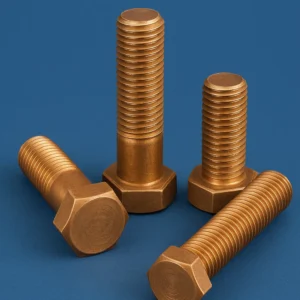
Phosphor bronze hex bolts and hex cap screws are produced from C51000 / PB102 rod stock by CNC turning, thread rolling, and head forming operations. Full-thread and partial-thread (with shank) configurations are available in metric (ISO 4014/4017), UNC (ASME B18.2.1), UNF, BSW, and BSF standards. Head dimensions comply with ISO 4014 (metric hex bolts) and ASME B18.2.1 (imperial hex cap screws). Thread class 6H/6g (metric) or 2A (ANSI) is standard; class 3A available for precision applications. Property class equivalent to ISO 4.6/4.8 in C51000 alloy. Marine-grade fasteners are supplied with EN 10204 3.1 MTCs confirming alloy grade and mechanical properties.
Phosphor Bronze Stud Bolts
Double-end phosphor bronze stud bolts for flange joints, pressure vessel flanges, and pipeline assemblies are produced to ASME B16.5, BS 4882, and ASTM A193 dimensional equivalents in phosphor bronze alloy. Stud bolt configurations include double-end studs (threaded both ends with plain centre shank), full-thread studs, and tap-end studs for blind-hole flange applications. Thread form options include UNC, UNRC (controlled-root radius), metric coarse, and BSP (for valve bonnet studs). Phosphor bronze stud bolts are widely specified for non-ferrous valve body assemblies, gunmetal flange connections, and copper alloy pressure equipment joints.
Phosphor Bronze Hex Nuts
Phosphor bronze hex nuts are produced from C51000 / PB102 bar in standard hex (ISO 4032), thin hex (ISO 4035/jam nut), heavy hex, and deep hex configurations. The full thread engagement and lead-free surface of phosphor bronze nuts provides reliable torque-retention in marine environments where zinc-plated steel nuts corrode and strip rapidly. Hex nut thread class 6H (metric) or 2B (ANSI) standard; nuts are supplied fully chamfered with clean thread run-out on both faces. Lock nuts (all-metal prevailing torque type), dome nuts (acorn nuts), and wing nuts are also available in C51000 phosphor bronze.
Phosphor Bronze Carriage Bolts and Coach Bolts
Phosphor bronze carriage bolts (coach bolts) with domed heads and square anti-rotation necks are produced for marine deck hardware, wooden boat construction, timber framing in coastal structures, and general outdoor applications. Square neck dimensions comply with ASME B18.5 (UNC) and ISO 8677 (metric) standards. The square neck locks into pre-drilled square holes in timber or laminated panels to prevent rotation during nut tightening. C51000 phosphor bronze resists tannin-laden timber acids and seawater-saturated wood environments that cause rapid degradation of iron or brass carriage bolts.
Phosphor Bronze Stainless Combination Sets (Bolt and Nut)
Matched phosphor bronze bolt-and-nut sets are supplied as kits for valve flange assemblies, marine through-hull fittings, sea cocks, and strainer body connections. Sets include hex bolts or stud bolts with matching hex nuts and optional flat washers and spring lock washers in C51000 phosphor bronze. Pre-assembled inspection confirms thread class fit between bolt and nut before despatch. Fastener kits are packed in labelled moisture-resistant poly bags with traceability to the alloy heat and dimensional inspection lot.
Custom Phosphor Bronze Fasteners
Non-standard phosphor bronze fasteners including slotted pan head machine screws, round head bolts, T-head bolts, lifting eye bolts, step bolts, and custom stud configurations are produced by CNC turning from PB102 / C51000 rod. Custom thread forms including ACME, trapezoidal (TR), and modified fine threads are achievable. Left-hand thread phosphor bronze fasteners for valve spindles and jack mechanisms are produced on request. Engineering drawings (DXF, STEP, or PDF) are accepted; prototype lead time is 2–3 weeks.
Applications by Industry
| Industry | Phosphor Bronze Fastener Application |
|---|---|
| Marine and Naval | Hull fittings, sea cocks, deck hardware, keel bolts, propeller shaft studs |
| Electrical and Switchgear | Bus bar bolts, earthing bonding bolts, panel mounting, neutral link fasteners |
| Offshore and Oil & Gas | Flange stud bolts for non-ferrous valves, ATEX fasteners in Zone 1/2 |
| Water Treatment | Filter housing fasteners, pump casing studs, non-ferrous piping flanges |
| Chemical Processing | Acidic/caustic environment flanges, pump assembly fasteners |
| Defence and Naval | Non-magnetic fasteners for degaussing systems, submarine equipment |
| Construction and Civil | Coastal structure timber bolts, heritage building restoration fasteners |
Manufacturing Process
Step 1 – Material Receipt and Verification: Phosphor bronze rod (C51000 / PB102 / CW451K) is received from ASTM B139 or EN 12164 certified mills with EN 10204 3.1 MTCs. Incoming XRF analysis verifies Cu, Sn, Pb, and P composition. Hardness and tensile coupon testing is performed on incoming bar lots.
Step 2 – Bar Cutting and Blank Preparation: Rod is cut to bolt blank lengths on high-speed band saws or circular saws. Blanks are deburred and end-faced on lathes before heading or turning operations. For hex nuts, bar stock is cut to nut blank thickness with close-tolerance face parallelism.
Step 3 – Head Forming (Bolts): Bolt heads are formed by cold heading on multi-blow formers for smaller sizes (M5–M20), or by hot forging for larger diameter bolts (M24 and above). Cold-headed heads have superior grain structure and mechanical properties vs. machined heads; hot-forged heads are used for bolts where cross-section reduction exceeds cold-heading limits of the PB alloy.
Step 4 – Thread Production: Threads are rolled (preferred—for superior thread surface finish, work-hardened root, and fatigue resistance) or machined (for custom or non-standard threads). Thread rolling is performed on rotary die roll threaders; thread-cutting on single-point CNC turning centres. All threads are gauged with Go/No-Go plug and ring gauges per applicable standard.
Step 5 – Nut Machining: Hex nuts are machined from hexagonal bar stock on CNC turning centres with live tooling. Internal threads are tapped or single-point thread-bored to 6H class. Chamfer, face, and OD dimensions are held to ISO 4032 / ASME B18.2.2 dimensional tolerances.
Step 6 – Deburring and Cleaning: All fasteners are vibratory tumbled to remove burrs, lapping marks, and thread start burrs. Ultrasonic alkaline cleaning removes tumbling media fines and machining oils.
Step 7 – Final Inspection: Thread gauging on 100% of critical fasteners; dimensional AQL sampling per ISO 2859-1 (AQL 1.0 for threads, 2.5 for dimensional); hardness verification per lot; visual inspection under 5× magnification for seams, laps, or thread defects.
Step 8 – Packing and Export: Fasteners are packed in polythene bags or fibre drums with moisture desiccant. Export documentation: EN 10204 3.1 MTC, dimensional inspection report, packing list, and Certificate of Origin (India).
Quality Standards and Certifications
- ISO 9001:2015 Certified Quality Management System
- Material to ASTM B139 (C51000 rod), EN 12164 (CW451K), BS 2874 (PB102)
- Dimensional compliance: ISO 4014/4017/4032 (metric), ASME B18.2.1/B18.2.2 (imperial), BS 1768 (BSW/BSF)
- Thread gauging per ISO 965-1 (metric), ASME B1.1 (UNC/UNF), BS 84 (BSW/BSF)
- EN 10204 Type 3.1 material test certificates with Cu, Sn, Pb, P composition
- Mechanical property verification: tensile and hardness per ASTM B139 / EN 12164
- RoHS 2 compliant (C51000 Pb ≤ 0.05%); REACH SVHC declaration available
- PPAP Level 1–3 documentation available on request
Why Choose Brass & Copper Parts for Phosphor Bronze Fasteners
- Non-Ferrous Fastener Specialists: 29+ years producing copper alloy fasteners from Jamnagar; CNC turning, cold-heading, and thread-rolling capability under one roof.
- Full Thread Standards Coverage: Metric (ISO), UNC, UNF, BSW, BSF, and BSP threads all produced with calibrated gauging traceable to NIST/NPL.
- Marine-Grade Traceability: EN 10204 3.1 MTCs from mill to finished fastener with heat lot traceability; Lloyds Register or DNV GL inspection available on request.
- Flexible MOQ: Prototypes from 50 pieces; production from 500 pieces; volume supply to 500,000+ pieces annually.
- Custom Configurations: Non-standard bolt head styles, shank diameters, thread forms, and lengths produced from engineering drawings in 2–4 weeks.
- Competitive Export Pricing: Indian manufacturing cost base provides 30–45% saving vs. European phosphor bronze fastener suppliers for equivalent quality.
Frequently Asked Questions
What is the difference between phosphor bronze C51000 and C54400?
C51000 (PB102) contains ≤ 0.05% lead and is preferred for marine, electrical, and corrosion-critical applications where lead-free performance is required. C54400 (PB104) contains 3.5–4.5% lead for free-machining screw machine production of smaller fasteners. Both have similar corrosion resistance; C54400 has higher machinability index (~80 vs. ~20 for C51000).
Are phosphor bronze bolts suitable for seawater service?
Yes. C51000 phosphor bronze exhibits excellent resistance to seawater corrosion, tidal splash, and marine atmospheric exposure. It is non-dezincifying (no zinc content) and does not suffer the stress corrosion cracking experienced by brass fasteners in ammonia-containing marine environments. It is widely specified for hull fitting bolts, keel bolts, and sea cock assembly studs.
What property class do phosphor bronze bolts correspond to?
Phosphor bronze C51000 (PB102) fasteners have tensile strength of 380–690 MPa depending on temper, broadly equivalent to ISO Property Class 4.8 to 8.8 steel. They are specified by material and temper (e.g., ASTM B139 Half Hard) rather than ISO property class. For structural calculations, mechanical test certificates confirming actual tensile and yield strength per lot are provided.
Can you supply phosphor bronze bolts with ATEX certification?
Phosphor bronze is an inherently non-sparking material suitable for use in explosive atmospheres per IECEx/ATEX requirements. We supply material test certificates confirming the non-ferrous, non-sparking nature of C51000/PB102 alloy. Formal ATEX product certification of individual fastener products requires product-level classification by an ATEX Notified Body; we can supply documentation supporting this process.
What is the maximum bolt size you manufacture in phosphor bronze?
Standard production capability: M36 (metric) and 1-1/2″ UNC in hex bolt form. Stud bolts up to M48 (metric) and 2″ UNC are produced by CNC turning from larger bar stock. Larger sizes available by enquiry.
Do phosphor bronze bolts require anti-seize compound?
Phosphor bronze against phosphor bronze or brass does not gall or cold-weld, unlike stainless steel fastener pairs. However, for flange connections that may require future disassembly after long service in seawater, a thin coat of copperised anti-seize or PTFE paste is recommended as a precaution to prevent thread surface oxidation over extended service periods.
Can you supply matched bolt-and-nut sets with washers?
Yes. Matched hex bolt, hex nut, flat washer, and spring washer sets in C51000 phosphor bronze are available as kits for specific flange sizes (e.g., ASME B16.5 Class 150 flanges). Kits are supplied in labelled, barcoded moisture-resistant bags with combined inspection certificate.
What is the lead time for phosphor bronze fasteners?
Standard catalogue sizes: 3–4 weeks from order. Custom specifications with new tooling: 4–6 weeks. Prototype samples of custom fasteners: 2–3 weeks. Repeat orders with existing tooling: 2–3 weeks.
Do you supply phosphor bronze fasteners with marine survey certificates?
Yes. Lloyds Register (LR) and DNV GL witnessing and approval of our phosphor bronze fastener production can be arranged for marine classification society requirements. Third-party inspection costs are additional to product price.
Can you produce left-hand thread phosphor bronze bolts and nuts?
Yes. Left-hand thread (LH) bolts and nuts in phosphor bronze are produced by CNC single-point thread turning. Available in M6–M36 LH metric and 1/4″–1″ LH UNC. Used in valve spindles, turnbuckles, and anti-rotation fastener applications. Lead time is typically 3–4 weeks from drawing approval.
Request a Quote for Phosphor Bronze Bolts and Nuts
Submit your thread standard (metric/UNC/BSW), size range, grade (C51000/PB102 or C54400/PB104), quantity, and required certifications. Our engineering team will respond with a competitive quotation and full compliance documentation within 24–48 hours.
Email: sales@brass-copper-parts.com | Phone/WhatsApp: +91-22-43449300
Brass & Copper Parts (India) – Plot 10-B, GIDC Industrial Estate, Shankar Tekri, Jamnagar 361004, Gujarat, India.
Product categories
Related Products
-

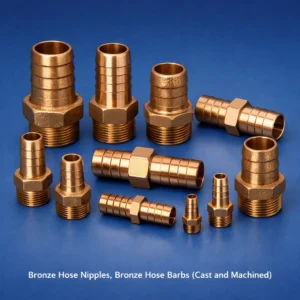
Bronze Hose Nipples, Bronze Hose Barbs (Cast and Machined)
₹13.40 Add to cart -
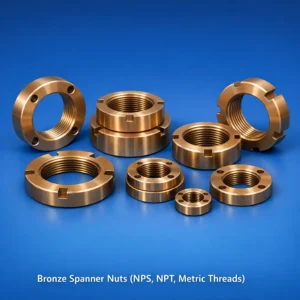
Bronze Spanner Nuts (NPS, NPT, Metric Threads)
₹13.40 Add to cart -
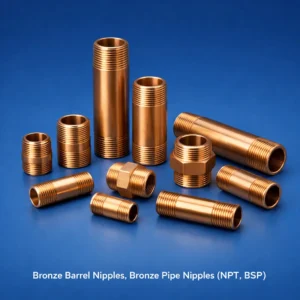
Bronze Barrel Nipples, Bronze Pipe Nipples (NPT, BSP)
₹13.40 Add to cart -
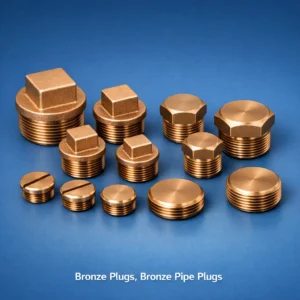
Bronze Plugs, Bronze Pipe Plugs
₹13.40 Add to cart -
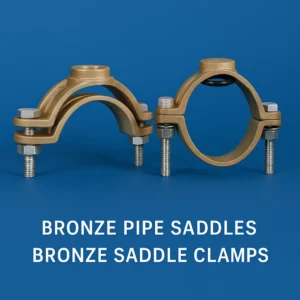
Bronze Pipe Saddles & Bronze Saddle Pipe Clamps
₹13.40 Add to cart -
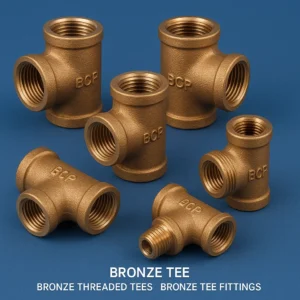
Bronze Tees, Bronze Threaded Tees
₹13.40 Add to cart -
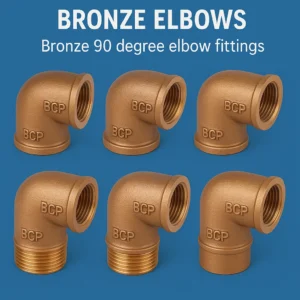
Bronze Elbows, Bronze 90 Degree Elbows Fittings
₹13.40 Add to cart -
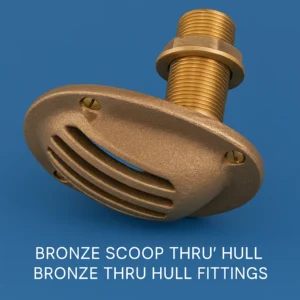
Bronze Scoop Thru Hull Fittings
₹13.40 Add to cart -
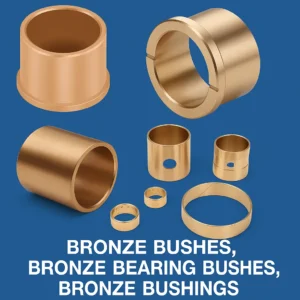
Bronze Bushings, Bronze Bearing Bushes & Bronze Bushes
₹13.40 Add to cart -
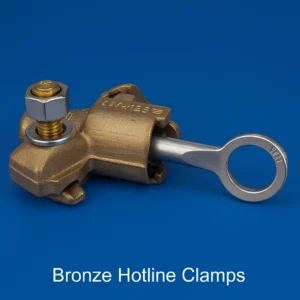
Hotline Clamps, Bronze Hotline Clamps
₹13.40 Add to cart -
Silicon Bronze Bolts, Silicon Bronze Hex Bolts
₹13.40 Add to cart -
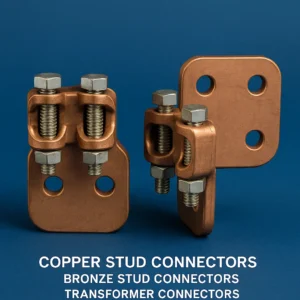
Bronze Transformer Connectors, Bronze Stud Connectors, Copper Transformer Connectors
₹13.40 Add to cart -
Bronze Fittings
₹13.40 Add to cart