Aluminum Bronze Investment Casting
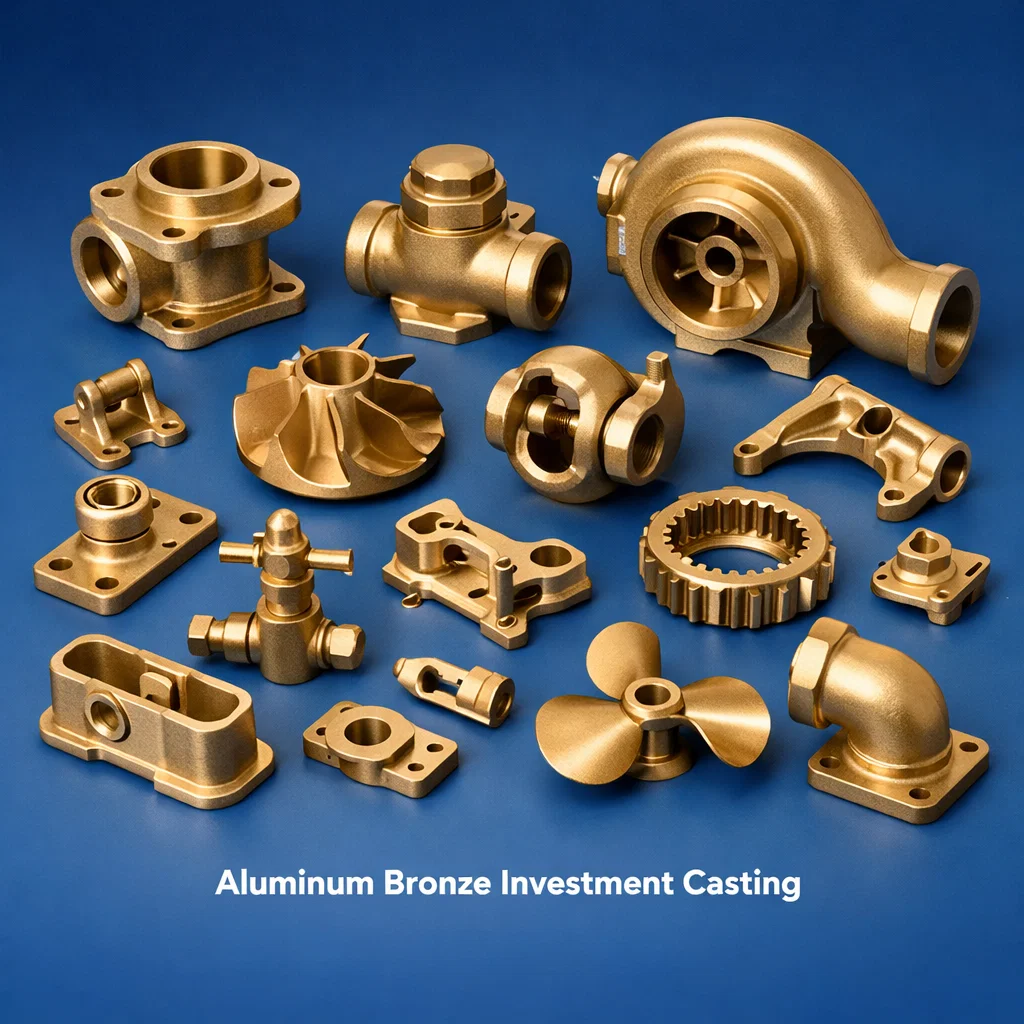
Aluminum bronze investment casting (lost wax casting) combines the outstanding mechanical and corrosion-resistant properties of aluminum bronze alloys with the dimensional precision, near-net-shape capability, and fine surface finish achievable only through the investment casting process. Aluminum bronze alloys — primarily C95400 (AB1), C95500 (AB2), and C95800 (nickel aluminum bronze) — are investment cast into complex-geometry components for marine, defense, aerospace, pump, valve, and oil and gas applications where sand casting tolerances are insufficient and CNC machining from bar stock is uneconomical. Brass & Copper Parts operates a dedicated investment casting facility for aluminum bronze, producing precision components from 5 grams to 5 kilograms with tolerances to CT5–CT7 and surface finish Ra 1.6–6.3 μm as standard.
Product Overview
Investment casting of aluminum bronze presents unique metallurgical and process challenges compared to gunmetal or brass investment casting. The high reactivity of aluminum with ceramic shell materials requires careful shell system selection — typically alumina-based or zirconia-based primary coat slurries rather than standard silica shells used for stainless steel or brass casting. Pouring temperature control is critical (1150–1200°C) to ensure complete mold filling in thin-walled sections while avoiding thermal shock to the shell. Brass & Copper Parts has developed proven shell system protocols for aluminum bronze investment casting, enabling production of components with wall thicknesses down to 2.5 mm and internal passages requiring soluble or ceramic cores. Alloy grades C95400, C95500, and C95800 are all routinely investment cast, with C95800 (nickel aluminum bronze) being the most commonly specified for marine and offshore precision components.
Key Features
- Near-net-shape precision – CT5–CT7 tolerance eliminates most secondary machining operations
- Fine surface finish – Ra 1.6–6.3 μm as-cast, suitable for many functional surfaces without grinding
- High-strength alloy properties – C95800 tensile strength 620+ MPa in investment cast form
- Complex geometry capability – Undercuts, thin walls, internal channels achievable in single casting
- No parting line constraints – 360° detail on all surfaces, no draft angle requirements on many features
- Non-sparking material option – Investment cast aluminum bronze for ATEX-rated components
- Marine grade quality – C95800 meets naval and offshore seawater service requirements
Technical Specifications
| Property | C95400 (AB1) | C95500 (AB2) | C95800 (NAB) |
|---|---|---|---|
| Aluminum (%) | 10.0–11.5 | 10.0–11.5 | 8.5–9.5 |
| Iron (%) | 3.0–5.0 | 3.0–5.0 | 3.5–4.5 |
| Nickel (%) | 1.5 max | 3.0–5.5 | 4.0–5.0 |
| Tensile Strength (MPa) | 586 min | 655 min | 620 min |
| Yield Strength (MPa) | 241 min | 276 min | 276 min |
| Elongation (%) | 12 min | 6 min | 15 min |
| Hardness (Brinell) | 150–200 HB | 170–230 HB | 140–190 HB |
| Investment Cast Tolerance | CT5–CT7 | CT5–CT7 | CT5–CT7 |
| Surface Finish (Ra μm) | 1.6–6.3 | 1.6–6.3 | 1.6–6.3 |
International Grade Equivalents
| ASTM/CDA | BS 1400 | DIN 1714 | EN 1982 | MIL-SPEC |
|---|---|---|---|---|
| C95400 | AB1 | CuAl10Fe3 | CC331G | MIL-B-24480 Cl.1 |
| C95500 | AB2 | CuAl10Fe5Ni5 | CC333G | MIL-B-24480 Cl.2 |
| C95800 | – | CuAl9Ni5Fe4Mn | CC334G | MIL-B-24480 Cl.3 |
Product Types and Variants
Investment Cast Aluminum Bronze Pump Components
Pump impellers, wear rings, diffusers, and volute inserts in aluminum bronze C95800 are investment cast for seawater service pumps where cavitation resistance and biofouling protection are critical. Investment casting allows the complex hydraulic passage geometry of centrifugal pump impellers to be produced with near-design-intent accuracy, improving hydraulic efficiency compared to sand cast or machined alternatives. C95800 investment cast pump components meet ASTM B148 requirements and are used in firewater pumps, desalination plant feed pumps, offshore seawater lift pumps, and naval vessel cooling water systems. Wall thickness in investment cast impeller vanes as thin as 2.5 mm is achievable, reducing weight while maintaining hydraulic performance.
Investment Cast Aluminum Bronze Valve Components
Valve seats, valve discs, check valve bodies, ball valve balls, and choke valve trim components in aluminum bronze C95400 and C95800 are investment cast for oil and gas, subsea, and high-pressure applications requiring the combination of high strength, corrosion resistance, and dimensional precision. Investment cast aluminum bronze valve components eliminate multiple machining setups required on sand castings of equivalent complexity, reducing total part cost on order quantities of 50–5,000 pieces. Brass & Copper Parts produces aluminum bronze valve component investment castings for API 6A, API 600, and ASME B16.34 valve service, with hydrostatic pressure testing and dimensional certification as standard.
Investment Cast Non-Sparking Aluminum Bronze Safety Components
ATEX-certified non-sparking tools, coupling components, valve handles, and structural fittings in investment cast aluminum bronze are produced for Zone 1 and Zone 2 hazardous area applications in petrochemical, pharmaceutical, grain handling, and underground mining environments. Investment casting enables complex geometry non-sparking components — including T-handles, spanner heads, wrench jaws, and cam-action locking elements — to be produced with precise dimensional tolerances and fine surface finish in a single casting operation. Alloy compliance with ASTM C95400 or C95800 non-sparking composition is certified by spectrometric analysis with each batch.
Marine and Naval Investment Cast Aluminum Bronze
Naval architect-specified aluminum bronze C95800 (nickel aluminum bronze) is investment cast for precision marine hardware including propeller shaft bearing inserts, waterjet pump nozzles, impeller hub components, sea valve internals, and ROV (remotely operated vehicle) structural components. Investment cast C95800 provides the dimensional accuracy required for interference-fit bearing installations and hydraulic seal groove dimensions that cannot be achieved in sand casting without extensive secondary machining. Classification society (DNV, Lloyd’s, BV) material certification is available for marine investment cast aluminum bronze components requiring vessel certification documentation.
Aerospace and Defense Investment Cast Aluminum Bronze
Aluminum bronze C95500 and C95800 are investment cast for aerospace hydraulic manifolds, actuator body components, structural brackets, and anti-friction bearing housings in defense platforms requiring the combination of high strength-to-weight ratio, corrosion resistance, and non-magnetic properties. Investment casting enables thin-wall structural components with integral stiffening ribs, boss features, and complex internal passageways that would require five-axis CNC machining from solid billet at prohibitive cost. Brass & Copper Parts produces defense-grade aluminum bronze investment castings to MIL-C-22229, DEF STAN, and AS9100 quality framework requirements upon customer request.
Investment Cast Aluminum Bronze Wear and Bearing Components
Wear-resistant bearing bushings, cam followers, guide pads, and slide components in aluminum bronze C95400 are investment cast when complex cross-section geometry, thin-wall requirements, or small-batch economics preclude centrifugal casting. Investment cast aluminum bronze wear components achieve CT5–CT7 dimensional accuracy, allowing direct assembly with minimal grinding — critical for bearing inserts in precision hydraulic cylinders, valve actuator guide bushings, and marine propulsion shaft alignment components. Graphite plug pockets and lubrication groove channels can be cast-in rather than machined post-casting, reducing secondary operation cost.
Applications by Industry
| Industry | Investment Cast Aluminum Bronze Components |
|---|---|
| Marine & Naval | Propeller shaft bearings, sea valve internals, ROV components, waterjet nozzles |
| Oil & Gas | Choke valve trim, check valve discs, non-sparking fittings, subsea connectors |
| Pump Manufacturing | Impellers, wear rings, diffusers, volute liners |
| Defense & Aerospace | Hydraulic manifolds, structural brackets, actuator housings, non-magnetic components |
| Chemical Processing | Corrosion-resistant valve bodies, pump casings, agitator impellers |
| Hazardous Area Equipment | Non-sparking tools, ATEX valve handles, Zone 1/2 structural fittings |
Manufacturing Process
Aluminum bronze investment casting at Brass & Copper Parts follows a dedicated process protocol to address the specific challenges of casting this alloy family. Wax patterns are injected in temperature-controlled dies, assembled on wax gating systems, and cleaned before ceramic shell building. Primary ceramic coats use alumina or zirconia slurry with fine refractory stucco to prevent alloy-shell reaction; backup coats use alumino-silicate. De-waxing in an autoclave at 150–170°C removes wax before high-temperature shell burnout at 900–950°C. Aluminum bronze is melted in argon-purged induction furnaces to minimize aluminum oxide dross formation; pouring is performed under shielded atmosphere where required for C95800. Post-casting operations include shell knockout, abrasive blasting, gate removal, dimensional inspection, OES spectrometric analysis, and heat treatment (annealing or quench-temper) per ASTM B148 or customer specification.
Quality Standards and Certifications
- ASTM B148 – Aluminum bronze sand and investment castings
- MIL-B-24480 – Military specification for aluminum bronze castings
- EN 1982 CC331G, CC333G, CC334G – European investment casting alloy standards
- ISO 8062-3 – Dimensional tolerances CT5–CT7 for investment castings
- ISO 9001:2015 – Quality management system
- DNV / Lloyd’s Register / BV – Marine material certification capability
- EN 10204 Type 3.1 – Material test certificate with every batch
Why Choose Brass & Copper Parts
Brass & Copper Parts has developed specialist expertise in aluminum bronze investment casting, addressing the specific alloy reactivity, shrinkage behavior, and mechanical property requirements that differentiate aluminum bronze from standard copper alloy investment casting. Our ceramic shell system is specifically formulated for aluminum bronze alloys, and our melt preparation protocols minimize oxide inclusions through careful charge sequencing and inert gas shielding. We provide dimensional first article inspection reports, EN 10204 Type 3.1 material certificates, and application-specific testing (hydrostatic pressure test, non-destructive test, hardness verification) with every production batch. Export to marine, defense, and petrochemical customers in 25+ countries is supported by full documentation packages.
Frequently Asked Questions
Why is aluminum bronze more challenging to investment cast than gunmetal or brass?
Aluminum bronze contains 8–12% aluminum, which has a very high affinity for oxygen. During melting and pouring, aluminum oxide (Al₂O₃) dross forms rapidly on the melt surface and can be entrained into the casting as non-metallic inclusions if not properly managed. The ceramic shell primary coat must also be aluminum-reactive-compatible (zirconia or alumina-based) to prevent silica shell reduction by molten aluminum bronze. These requirements demand more rigorous process control than standard brass or gunmetal investment casting.
What is the smallest wall thickness achievable in aluminum bronze investment casting?
Minimum wall thickness of 2.0–2.5 mm is achievable in aluminum bronze C95400 investment casting for sections up to 50 mm length. For longer thin sections, minimum wall increases to 3.0–3.5 mm due to the alloy’s relatively high viscosity compared to thin-brass alloys. Wall thickness below 2 mm requires investment casting simulation analysis and may require process modifications including ceramic shell preheating and controlled pour rate.
Can you investment cast C95800 (nickel aluminum bronze) for seawater service?
Yes. C95800 (nickel aluminum bronze) is regularly investment cast at Brass & Copper Parts for seawater service components including pump impellers, valve internals, and marine hardware. C95800 investment castings achieve the same corrosion resistance in seawater as sand cast C95800 per ASTM B148, with the additional benefit of near-net-shape precision. Material certification per ASTM B148 and classification society requirements (DNV, Lloyd’s) is provided for marine applications.
What heat treatment is applied to aluminum bronze investment castings?
Standard supply condition is as-cast for most applications. For C95400/C95500 castings requiring maximum mechanical properties, quench-temper heat treatment (900°C water quench followed by 650°C temper, air cool) is applied per ASTM B148. For applications requiring stress relief or improved ductility, annealing at 650–750°C (air cool) is performed. Heat treatment is specified at order placement and included in the material test certificate.
What NDT methods are available for aluminum bronze investment castings?
Standard: visual inspection (100%), dimensional inspection per drawing, spectrometric chemical analysis (per heat), hardness test (Brinell or Rockwell). Optional: liquid penetrant testing (LPT/FPI) for surface crack detection, radiographic testing (RT) for internal soundness, ultrasonic testing (UT) for wall thickness and flaw detection, hydrostatic pressure testing for pressure-retaining components. All NDT performed by qualified ASNT Level II technicians.
What is the typical tooling lead time for new aluminum bronze investment casting components?
Wax injection die tooling for a new component typically requires 3–5 weeks manufacture time. First sample castings are produced 1–2 weeks after tooling completion. Total lead time from drawing approval to first sample is 4–7 weeks. Production quantities typically start 2–3 weeks after sample approval. Brass & Copper Parts maintains wax die tooling for customer-specified components and provides storage and maintenance services for long-term repeat production commitments.
Can aluminum bronze investment castings be machined after casting?
Yes. Aluminum bronze investment castings are readily machinable using carbide tooling at moderate cutting speeds (50–80 m/min for C95400, 40–70 m/min for C95800). The near-net-shape investment casting minimizes stock removal, reducing machining cost. Critical dimensions such as bearing bores, valve seat diameters, and seal groove dimensions are typically finish-machined after casting to achieve tolerances tighter than CT5 (±0.05–0.10 mm on key features).
What is the typical weight range for aluminum bronze investment castings?
Brass & Copper Parts produces aluminum bronze investment castings from 5 grams (small valve trim components, non-sparking fittings) to 5 kilograms (pump impellers, valve bodies, structural brackets). For components above 5 kg, sand casting (ASTM B148) or centrifugal casting is more economical. Investment casting is most cost-effective for aluminum bronze components in the 20 gram to 2 kg range where complexity, precision, or surface finish requirements justify the process over sand casting alternatives.
Request a Quote
Brass & Copper Parts is a specialist aluminum bronze investment casting foundry supplying marine, defense, oil and gas, and engineering customers worldwide. Send us your component drawing, alloy grade, quantity, and quality requirements for a detailed technical and commercial proposal.
Contact us: sales@brass-copper-parts.com | +91-22-43449300
Product categories
Related Products
-

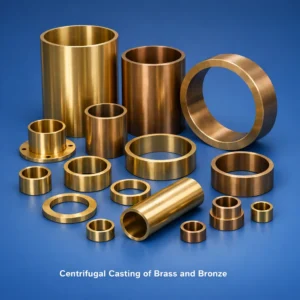
Centrifugal Casting of Brass and Bronze
₹13.40 Add to cart -
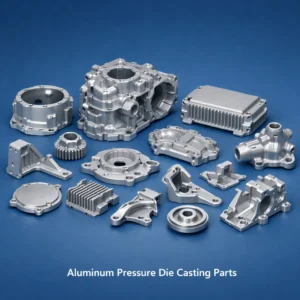
Aluminum Pressure Die Casting Parts
₹8.70 Add to cart -
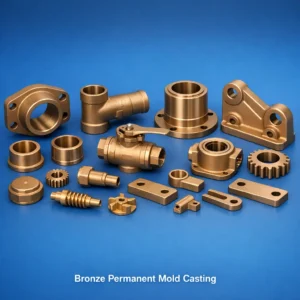
Bronze Permanent Mold Casting
₹13.40 Add to cart -
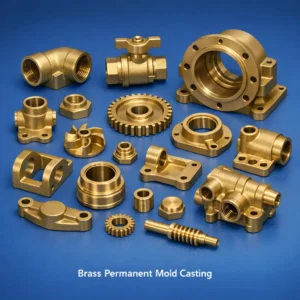
Brass Permanent Mold Casting
₹11.80 Add to cart -
Brass Gravity Die Casting GDC
₹11.80 Add to cart -
Stainless Steel 304 and 316 Sand Casting
₹8.90 Add to cart -
Stainless Steel Investment Casting
₹8.90 Add to cart -
Bronze Shell Molding, Shell Casting
₹13.40 Add to cart -
Gunmetal Casting Foundry
₹13.40 Add to cart -
83600 Bronze Casting, CDA 836 Bronze Casting
₹13.40 Add to cart -
LG2 Bronze Casting 85-5-5-5
₹13.40 Add to cart -
Phosphor Bronze Casting
₹13.40 Add to cart -
Lead Free Brass Casting
₹11.80 Add to cart -
Aluminum Bronze Casting
₹8.70 Add to cart