
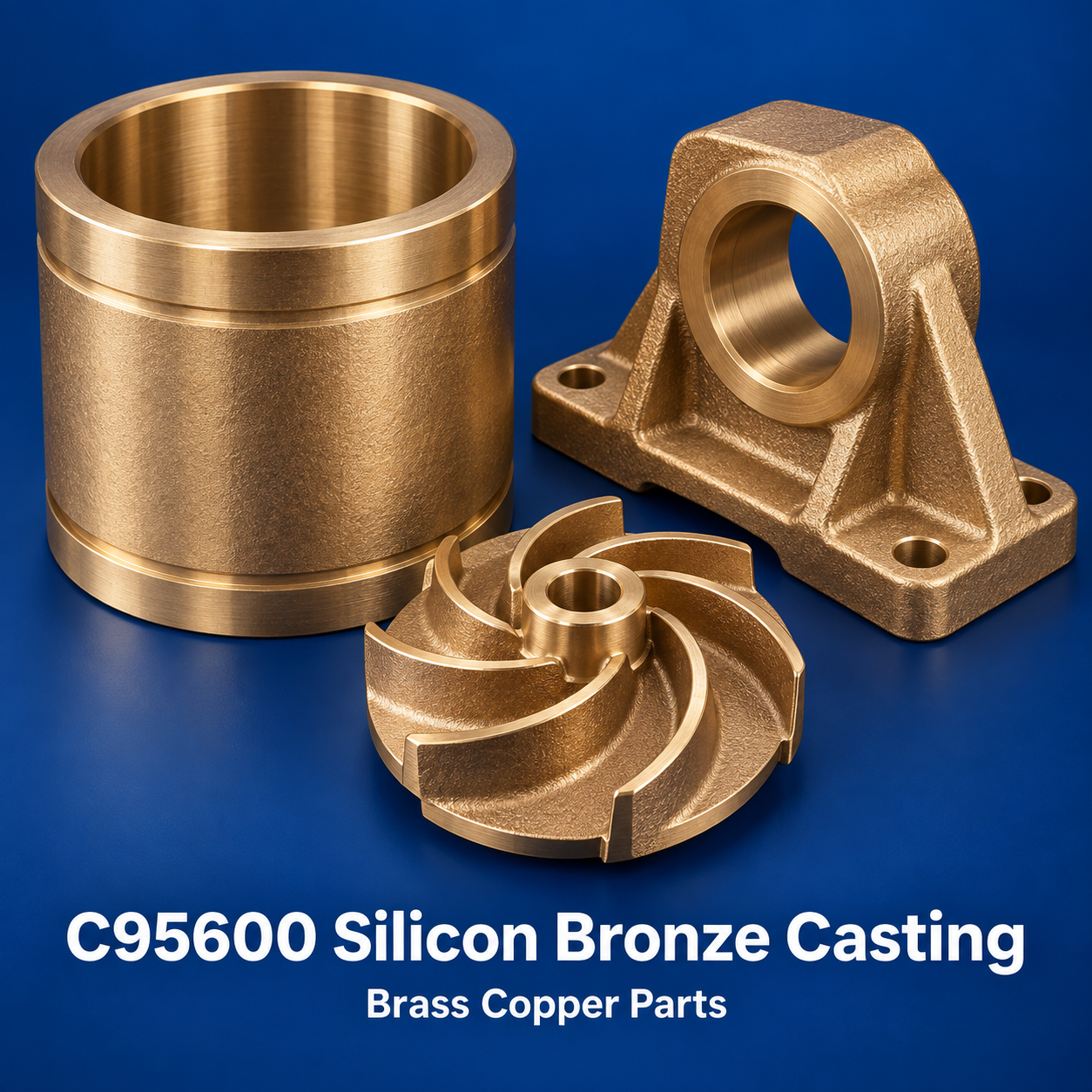
C95600 Silicon Bronze Casting — Silicon Aluminum Bronze Components
Brass Copper Parts supplies C95600 Silicon Bronze Casting to customer drawings for industrial components, valve stems, gear blanks and custom hardware. Although often requested using the phrase silicon bronze, UNS C95600 is a silicon-containing aluminum bronze. It is chemically distinct from C87300, C87500, C87600 and C87800.
Indicative price: US$ 17.80/kg. Castings are quoted to the specified drawing, material condition and finishing scope.
C95600 Chemical Composition
| Element | Mass percentage |
|---|---|
| Copper | 88.0% minimum |
| Aluminum | 6.0–8.0% |
| Silicon | 1.8–3.2% |
| Nickel, including cobalt | 0.25% maximum |
CDA lists sand-cast reference minima of 60 ksi tensile strength, 28 ksi yield strength at 0.5% extension and 10% elongation. Specific gravity is approximately 7.7. Mechanical values must be tied to the specified casting condition and testing requirements. CDA C95600 alloy reference.
C95600 International Equivalent Grades and Specifications
For international enquiries, use UNS C95600 / CDA 956 as the material identity. ASTM B148 identifies C95600 aluminum bronze castings; the historical designation Grade E also appears in ASTM valve-casting references. ASTM specification numbers describe supply requirements and are not separate alloy grades.
A direct EN, DIN, BS, JIS or GB equivalent has not been verified for this page. A proposed overseas alternative must match the specified aluminum-silicon chemistry, casting condition and mechanical requirements before substitution. C95600 should not be ordered as BS AB2 or a conventional nickel aluminum bronze solely because both contain aluminum. Reference: ASTM B763 historical alloy designations and CDA C95600 data.
Types of C95600 Silicon Bronze Casting
The following process options are reviewed against the drawing, production quantity and acceptance requirements. The material remains silicon aluminum bronze in every case; process availability and achievable features are confirmed with the quotation.
Silicon Bronze C95600 Investment Casting
Investment casting uses an expendable pattern and ceramic mold to reproduce intricate contours. For C95600 valve details, hardware and gear blanks, the review should cover shell compatibility, metal cleanliness, feeding and removal of gates. Identify bores and working faces that need finish machining, together with the required surface finish and inspection access.
Silicon Bronze C95600 Green Sand Casting
Green sand casting forms the component in a compacted, moisture-bonded sand mold. It can be considered for C95600 blanks with geometry that allows practical pattern withdrawal and core placement. Mold moisture, venting and filling require careful control. Include machining stock on hubs, mating faces and bores, and identify thick sections where shrinkage must be managed.
Silicon Bronze C95600 Permanent Mold Casting
Permanent mold casting uses a reusable metal mold, usually filled by gravity. A C95600 proposal requires a specific assessment of mold material, protective coating, thermal cycling, filling and ejection. Repeated production may justify tooling, but suitability cannot be inferred from sand-cast properties. Agree process-specific samples and acceptance criteria before committing production tooling.
Silicon Bronze C95600 Shell Molding – Resin Sand Casting
Shell molding uses resin-coated sand against a heated pattern to produce a relatively thin mold shell. Resin sand casting can also use a thicker chemically bonded mold; the two routes have different tooling needs. For C95600 parts, review binder gas, core support and feeding around section changes. Define parting lines, machining datums and the required condition of visible surfaces.
C95600 Silicon Bronze Die Casting
High-pressure die casting injects metal into a reusable die and is different from gravity permanent mold casting. C95600 is not presented here as a routine high-pressure die-casting alloy. Enquiries require foundry confirmation of alloy compatibility, die life, filling and porosity control. Where this route cannot meet the drawing, request a sand, shell or investment-casting proposal using the specified C95600 material.
Manufacturing and Machining Review
Aluminum bronze requires casting practice appropriate to its chemistry. The process plan should address metal cleanliness, mold filling and feeding around heavy sections. Do not carry over a silicon-brass casting procedure without reviewing the different alloy system.
- Identify heavy bosses, thin webs and transitions requiring feeding review.
- Provide machining allowances for bores, gear profiles and mating faces.
- Specify surface condition, dimensional tolerances and acceptance criteria.
- Agree any stress relief or other treatment against the material specification.
Applications and Material Substitution
Application enquiries include valve stems, gears, worms, cable connectors and terminals. For gears and sliding parts, define contact load, lubrication, speed and mating material. For electrical components, provide the conductivity and temperature-rise requirements; alloy strength alone does not establish electrical suitability.
C95600 is not automatically interchangeable with other silicon bronze or aluminum bronze grades. Send the original material callout and governing drawing so chemistry, mechanical performance and environment can be reviewed together. The product image illustrates representative cast forms rather than a certified standard geometry.
Drawing Review, Inspection and Quotation
Send your drawing or 3D model, alloy specification, quantity, finished part weight and delivery destination to Brass Copper Parts. Mark critical bores, threads, sealing faces, datum locations and surface finishes. Tooling cost and lead time are confirmed after review.
Specify heat traceability, chemical analysis, dimensional reporting and any mechanical or non-destructive testing in the enquiry. Sampling and acceptance criteria should be agreed before production. Certification, pressure ratings and service suitability depend on the specified component and inspection plan.
Price and Ordering Questions
How is the price calculated?
The indicative price is US$ 17.80/kg. The quotation defines billable weight and any tooling, machining, testing, packaging or freight charges.
Can castings be supplied machined?
Request the required bores, threads and finished faces on your drawing. Machining allowance and tolerances are agreed for each feature and casting route.
Define the Duty of C95600 Gear and Sliding Components
For a gear blank, worm or sliding component, describe the mating material, motion, load and lubrication. Provide the finished geometry or identify the machining that will be performed after delivery. A casting enquiry should distinguish the supplied blank from the finished working profile so that allowances and inspection responsibilities are clear.
Show the bores, hubs and faces that locate the part during machining and assembly. Identify heavy sections and transitions that require particular attention in the casting review. Include the material specification and required delivery condition in the same enquiry package.
Material Identity and Order Documentation
C95600 belongs to the aluminum bronze family even though the product is often searched for as silicon bronze. Use the complete UNS designation on drawings and orders to keep the material identity clear. For replacement parts, provide the original specification before considering a change of alloy.
Define the required chemical analysis, dimensional report and any additional testing with the order. If the component requires a particular treatment or material condition, state the governing requirement for review. Agree batch identification and protection of finished surfaces so receiving inspection can match the supplied parts to their documents.
More Questions and Answers About C95600 Castings
Is C95600 the same alloy family as C87300?
No. C95600 is an aluminum bronze containing silicon, while C87300 belongs to the copper-silicon group. Use the full material designation when requesting or approving a part.
What information is needed for a gear-blank quotation?
Provide blank and finished dimensions, machining allowances, quantity and material specification. Include the intended duty and any required inspection or treatment.
Can a finished gear profile be assumed from a casting drawing?
No. Specify whether the enquiry covers a blank or a finished component. Show the tooth geometry and machining requirements if they are part of the requested supply.
What should be provided for a sliding component?
Include contact load, speed, mating material, lubrication and operating environment. These details support an application review alongside the geometry and alloy specification.
Should heat treatment be specified automatically?
State any treatment or delivery condition required by your material specification. The proposed process and acceptance requirements should be reviewed for the actual component.
What helps avoid material mix-ups on repeat orders?
Use the full C95600 designation, drawing revision and order reference. State the batch marking and documentation needed to identify the parts during receipt and assembly.
Request a Quote for C95600 Castings
Ready to discuss your component? Send your drawing or model, material specification, quantity, required finish and delivery destination to Brass Copper Parts. Include your target delivery date and inspection requirements so the quotation can define tooling, machining and testing scope.
Email Your Drawing for a Quote | Request a Casting Review | Call +91-22-43449300
Explore Related Silicon Bronze Products
Compare alloy options within our Silicon Bronze Casting and Foundry range.