
Machined Parts | CNC Machined Parts | Precision Turned Components

We are one of the leading manufacturers and exporters of CNC Machined Parts, Precision Turned Components, Brass CNC Machined Parts, DZR Brass Fittings, Stainless Steel Precision Components and custom-engineered metal parts from India. We have been supplying high-quality precision machined components in Brass, Copper, Bronze, Stainless Steel, and Aluminum to the world market for many decades, serving diverse industries across North America, Europe, Australia, and Asia with unwavering commitment to quality and dimensional accuracy. Our advanced manufacturing facility combines state-of-the-art CNC machining technology with experienced craftsmanship to deliver components that consistently meet the most stringent international standards including ASTM, BS, DIN, IS, and JIS specifications. With over three decades of global exposure and manufacturing expertise in precision metal component production, we understand the critical requirements of OEM manufacturers, industrial equipment suppliers, automotive companies, and engineering firms demanding exceptional quality, tight tolerances, and reliable delivery schedules. Our engineering team collaborates closely with customers from initial design review through full-scale production, offering valuable insights for design optimization, material selection, and manufacturing process improvements that enhance product performance while maintaining competitive pricing. Whether your requirements involve prototype quantities for product development or large-scale production runs spanning multiple years, our flexible manufacturing capabilities, advanced quality control systems, and customer-centric approach position us as your trusted partner for all precision machined component requirements across diverse applications and industries worldwide.
Rate : US$ 12/kilogram
Comprehensive Product Overview
Our extensive manufacturing capabilities encompass a complete range of precision metal machining processes delivering components that meet exacting specifications across diverse material grades and complexity levels. CNC Machined Parts represent the core of our manufacturing portfolio, utilizing advanced computer-controlled machining centers with 3-axis, 4-axis, and 5-axis configurations that perform milling, drilling, tapping, boring, and complex contouring operations with positioning accuracy of ±0.003mm. These multi-axis capabilities enable production of complex prismatic components featuring intricate geometries, tight tolerance holes, precise thread specifications, and fine surface finishes in a single setup, eliminating repositioning errors while reducing production cycle times. Precision Turned Components manufactured on our CNC turning centers and Swiss-type automatic lathes include cylindrical parts, threaded shafts, precision bushings, valve stems, instrument housings, and custom rotational geometries with dimensional tolerances maintained at ±0.01mm on critical features. Our Brass CNC Machined Parts leverage free-cutting alloys like C36000 and CZ121 that offer superior machinability, enabling aggressive cutting parameters, extended tool life, and excellent surface finishes that often eliminate secondary polishing operations. The Brass Screw Machine Products portfolio includes high-volume turned parts produced on multi-spindle automatic screw machines achieving production rates exceeding 100,000 pieces weekly with exceptional dimensional consistency. DZR Brass Components (Dezincification Resistant Brass) are specifically engineered for water service applications where long-term corrosion resistance is paramount, meeting stringent international standards for plumbing fittings and potable water contact. Our Stainless Steel Machined Parts serve industries requiring superior corrosion resistance, high-temperature performance, or food-grade material specifications, manufactured from austenitic grades (304/316), martensitic grades (410/420), and precipitation hardening alloys selected for specific application requirements. Every component undergoes comprehensive quality inspection using calibrated measuring equipment including coordinate measuring machines, optical comparators, surface roughness testers, and hardness analyzers, ensuring complete conformance to customer specifications and international quality standards before shipment.
Brass Screw Machine Parts and Brass Screw Machine Products: Our screw machine department operates multi-spindle automatic lathes and CNC Swiss-type turning centers producing high-volume Brass components with exceptional dimensional consistency and minimal production cycle times. These specialized machines excel at manufacturing cylindrical parts from free-cutting Brass bar stock in grades C36000 (Free Cutting Brass), CZ121 (British Standard), and equivalent international specifications offering superior machinability characteristics with excellent surface finish directly from the machine without secondary operations. Typical screw machine products include precision threaded fasteners, terminal connectors, electrical contacts, valve stems, instrument fittings, pneumatic quick-couplers, automotive fuel system components, hydraulic adapters, and custom-designed turned parts for OEM applications across electronics, automotive, industrial equipment, and consumer product industries. Our screw machines accommodate bar diameters from 3mm to 65mm with production capabilities exceeding 100,000 pieces per week depending on component complexity and cycle time requirements. The automatic bar feeding systems and gang tooling arrangements enable completion of multiple operations including turning, facing, drilling, threading, knurling, grooving, and cross-hole drilling in single pass through the machine, dramatically reducing manufacturing costs while maintaining dimensional tolerances of ±0.02mm on critical diameters and lengths. Secondary operations including electroplating, heat treatment, deburring, and automated assembly are integrated within our facility to deliver completely finished components ready for immediate incorporation into customer assemblies without additional processing requirements.
Brass DZR Components, DZR Brass Parts, and DZR Brass Fittings: Dezincification Resistant Brass components represent a specialized material category engineered specifically to prevent selective corrosion of Zinc from Brass alloys when exposed to aggressive water conditions, particularly hot water systems and chloride-containing environments. Our DZR Brass fittings are manufactured from certified alloys including CW602N (European standard), CZ132 (British standard), and equivalent grades containing controlled additions of Arsenic (0.02-0.15%) or Aluminum that inhibit dezincification corrosion mechanisms. These components are essential for hot water plumbing systems, potable water installations, water meter assemblies, valve bodies, backflow preventers, and any application where long-term reliability in water service is critical to system integrity and safety. The manufacturing process combines precision hot forging for complex geometries followed by CNC machining operations achieving thread accuracy per ISO 228 parallel pipe thread standards or NPT tapered thread specifications per ASME B1.20.1. All DZR components undergo dezincification resistance testing per ISO 6509 or ASTM B858 standards, ensuring full compliance with international plumbing codes and potable water contact requirements mandated by regulatory authorities worldwide. Our comprehensive product range includes compression fittings, threaded pipe adapters, manifold blocks, meter tails, isolation valve bodies, union connectors, and custom-designed pressure-rated components for working pressures up to 16 bar. Surface treatments available include nickel plating for enhanced corrosion protection, chrome plating for decorative applications, or natural Brass finish maintaining the characteristic golden appearance while providing corrosion resistance through the inherent alloy composition and passivation treatments applied during manufacturing.
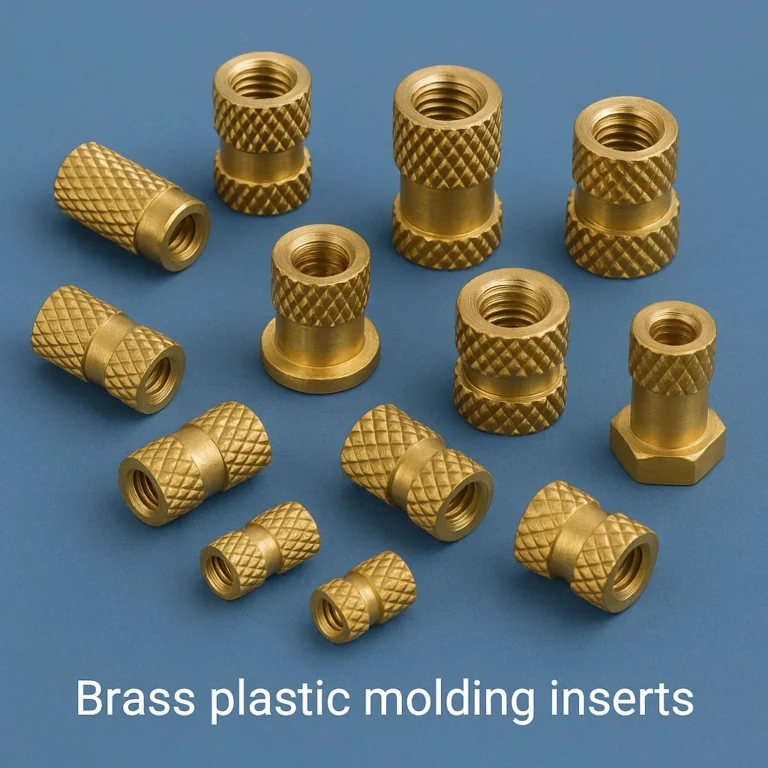
Dezincification Resistant Brass Machined Parts: Beyond standard plumbing fittings, we manufacture complex DZR Brass machined components for specialized industrial applications requiring both excellent machinability during manufacturing and superior long-term corrosion resistance in service. These precision-machined parts serve marine equipment manufacturers, desalination facilities, HVAC system producers, industrial process control companies, water treatment installations, and commercial building systems where component reliability directly impacts system performance and operational costs. Using advanced CNC machining centers equipped with live tooling, sub-spindles, and multi-axis capabilities, we produce intricate geometries including multi-port valve bodies with intersecting internal passages, manifold blocks distributing fluid flows, precision threaded inserts, flow control orifices, sensor housings with critical sealing surfaces, and custom mechanical assemblies requiring tight dimensional tolerances. Material selection considers operating pressure ranges, temperature extremes, water chemistry characteristics, expected service life requirements, and specific corrosion mechanisms to specify appropriate DZR alloy grades meeting performance objectives. Typical material specifications include DZR Brass compositions with minimum 57% Copper content, controlled Arsenic additions between 0.02-0.15%, and mechanical properties conforming to EN 12164 or ASTM B124 standards ensuring adequate strength and ductility for pressure applications. Critical dimensions are maintained to tolerances of ±0.03mm while thread accuracy conforms to ISO 965 standards ensuring perfect assembly fit and leak-free performance. Each production batch undergoes spectroscopic analysis verifying alloy composition compliance and dezincification testing confirming corrosion resistance, with certifications meeting WRAS (Water Regulations Advisory Scheme) approval requirements for UK markets or NSF/ANSI 61 certification for North American potable water applications.
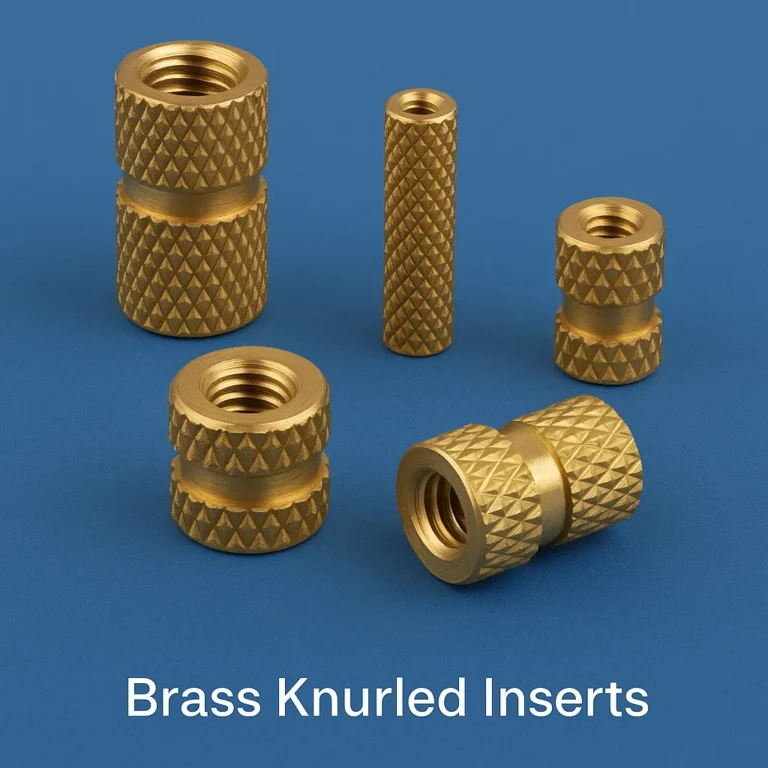
Brass CZ121 Machined Parts and Brass CZ121 CNC Turned Components: CZ121 represents the British Standard designation for free-cutting Brass (equivalent to C36000 in US standards, CuZn39Pb3 in European designations, and IS 319 Type 1 in Indian specifications), offering exceptional machinability characteristics that result in superior surface finishes, reduced tooling costs, and increased production efficiency compared to other Brass alloys. Our CZ121 machined parts serve applications across automotive electrical systems, instrumentation assemblies, precision mechanical components, decorative hardware, architectural fittings, and electronic device housings where both functional performance and aesthetic appearance are important considerations. The alloy composition typically contains 58-60% Copper, 37-40% Zinc, and 2.5-3.5% Lead, providing excellent chip-breaking properties during high-speed machining operations that enable aggressive cutting parameters and extended tool life. Using CNC turning centers with automatic bar feeding systems, we produce complex rotational geometries including stepped shafts with multiple diameter changes, internally threaded blind holes, hexagonal features for wrench engagement, diamond-pattern knurling for grip surfaces, precision bearing journals requiring tight roundness tolerances, and intricate contoured profiles following customer CAD models. Our CNC Swiss turning capabilities enable manufacturing of miniature components as small as 0.5mm diameter with length-to-diameter ratios exceeding 10:1 while maintaining positional tolerances of ±0.015mm and concentricity within 0.01mm total indicator runout. The natural golden Brass appearance makes these components ideal for visible applications in consumer products, lighting fixtures, plumbing trim, and decorative hardware, while electroplating options including nickel, chrome, tin, or silver provide enhanced corrosion protection, modified electrical conductivity characteristics, or alternative aesthetic appearances for specific application requirements. Complete material certifications documenting chemical composition and mechanical properties including tensile strength (typically 370-450 MPa), yield strength, elongation percentage, and hardness values (85-100 HB) accompany component shipments when specified by customer quality systems or regulatory compliance requirements.
Free Cutting Brass CNC Machined Parts: Our expertise in precision machining of free-cutting Brass alloys extends across multiple material grades optimized for different manufacturing approaches, production volumes, and performance specifications. Free-cutting Brass alloys contain controlled additions of Lead, Bismuth, or Silicon that dramatically improve chip formation characteristics and reduce cutting forces during machining operations, enabling higher spindle speeds, aggressive feed rates, and superior surface finishes without requiring secondary polishing or finishing operations. These materials are particularly well-suited for high-volume production using CNC turning centers, multi-axis machining centers, Swiss-type automatic lathes, and screw machines operating in automated manufacturing cells with minimal operator intervention. Component applications span automotive fuel delivery systems, natural gas distribution fittings, compressed air quick-couplers, electronic terminal blocks, precision instrument components, watch mechanism parts, medical device housings, and measurement equipment assemblies where dimensional accuracy and surface quality are critical to proper function. Our material inventory includes C36000 (highest machinability rating, 3% Lead content), C37700 (forging grade with good machining characteristics), C35300 (medium Lead content for moderate machinability), and C33200 (Lead-free alternative using Bismuth for environmentally-sensitive applications). Advanced CNC programming utilizing sophisticated CAM software optimizes tool paths, minimizes air-cutting time, manages chip evacuation, and ensures repeatable dimensional accuracy across production runs spanning months or years. Surface roughness values of Ra 0.8 to 1.6 microns are routinely achieved directly from machining operations, with optional polishing, tumbling, or vibratory finishing available for applications requiring enhanced aesthetic appearance or ultra-smooth surfaces. Our comprehensive quality management systems ensure complete batch traceability, dimensional inspection documentation, material test certificates with heat number identification, and compliance certifications supporting customer requirements for ISO 9001, IATF 16949 automotive quality standards, or AS9100 aerospace quality management systems.
Brass Stamped Parts: Progressive die stamping and precision metal stamping technologies enable cost-effective manufacturing of flat Brass components and formed parts in medium to high production volumes where stamping economics outperform machining alternatives. Our stamping capabilities process Brass sheet and strip materials from 0.15mm to 3.0mm thickness in various alloy grades including C26000 (Cartridge Brass – 70% Copper), C27000 (Yellow Brass), and C28000 (Muntz Metal) selected for specific combinations of formability, strength, and corrosion resistance. The progressive die stamping process performs multiple sequential operations including blanking, piercing, forming, bending, embossing, coining, and lancing in precisely aligned stations, producing finished components at production rates exceeding 300 strokes per minute for simple geometries. Typical stamped Brass parts include electrical contact springs, terminal clips, decorative grilles and panels, retaining clips, precision shims and spacers, gaskets, washers in non-standard configurations, connector housings, ornamental hardware, and specialty brackets requiring formed three-dimensional shapes. Our tool and die making department designs and manufactures custom progressive dies using hardened tool steels including D2, A2, and carbide inserts for extended die life, ensuring consistent part quality across production runs spanning millions of cycles without dimensional drift or surface quality degradation. Forming operations create complex three-dimensional geometries with minimum bend radii as tight as 0.5 times material thickness while maintaining material integrity without cracking, tearing, or excessive work-hardening that could compromise subsequent assembly operations. Secondary operations including tapping threaded holes, inserting press-fit studs, resistance spot welding of assemblies, and automated vision inspection are integrated into stamping production lines for complete component manufacturing. Quality control procedures include first-piece dimensional inspection using optical comparators, in-process statistical process control monitoring critical dimensions, and final verification using coordinate measuring machines, maintaining dimensional tolerances of ±0.05mm on stamped features and ±0.02mm on coined or restruck details requiring exceptional precision.
Brass Forging and Forged Components of Brass: Hot forging and warm forging processes produce Brass components exhibiting superior grain structure alignment, enhanced mechanical properties including impact resistance and fatigue strength, and significant material savings compared to machined-from-solid manufacturing alternatives. Our forging capabilities encompass closed-die forging (impression die forging) for complex three-dimensional shapes requiring near-net-shape accuracy and open-die forging for simpler geometries, handling component weights from 50 grams to 25 kilograms across diverse material grades. Forged Brass components offer substantial advantages in applications subjected to high stress levels, impact loads, or cyclic fatigue conditions including valve bodies for industrial process control, pump housings for fluid handling systems, marine hardware for shipboard applications, heavy-duty plumbing components for commercial installations, and industrial fittings requiring pressure containment without leakage risk. The forging process begins with induction heating of Brass billets or bar stock to optimal forging temperatures (typically 700-850°C depending on alloy composition and Zinc content), followed by forming operations in precision steel dies under hydraulic press forces up to 1000 tons creating permanent deformation while maintaining controlled material flow. Materials commonly forged include Naval Brass (C46400 – contains 1% tin for seawater resistance), Admiralty Brass (C44300 – inhibited with arsenic or phosphorus), Manganese Bronze (C86300 – high strength alloy), and Aluminum Bronze (C95400 – exceptional strength and corrosion resistance) selected for specific combinations of forgeability, mechanical properties, and service environment compatibility. Post-forging operations include trimming flash material in secondary dies, heat treatment for stress relief and property optimization, shot blasting for surface cleaning and uniform matte appearance, and precision CNC machining achieving final dimensions, threaded features, sealing surfaces, and critical tolerances that forging alone cannot maintain. The resulting forged components exhibit continuous grain flow aligned with component stress patterns, providing superior fatigue resistance, impact toughness, and mechanical strength exceeding cast or machined alternatives by 20-40% depending on specific alloy and geometry. Quality certifications include hydrostatic pressure testing for fluid-handling components, non-destructive testing using ultrasonic inspection or magnetic particle methods detecting internal defects, and complete material certifications documenting chemical composition and mechanical properties per customer specifications and international standards.
Brass Turned Parts and Brass CNC Turned Parts: Precision turning operations form the foundation of our manufacturing capabilities, producing cylindrical and rotational Brass components with exceptional dimensional accuracy, superior surface finish quality, and cost-effective production efficiency. Our CNC turning department operates advanced multi-axis lathes ranging from compact machines for small precision parts measuring just a few millimeters to large turning centers accommodating components up to 400mm diameter and 1000mm length, equipped with live tooling capabilities, sub-spindles for complete machining in single setup, and automatic bar feeding systems for lights-out manufacturing operations. Brass turned parts manufactured in our facility span diverse applications including threaded shafts for mechanical assemblies, precision bushings for bearing applications, valve stems for fluid control systems, nozzles for spray applications, flanges for piping connections, couplings for shaft assemblies, instrumentation housings protecting sensitive electronics, automotive powertrain components, and custom-designed mechanical parts engineered to customer specifications. The CNC programming process optimizes cutting parameters including spindle speeds up to 5000 RPM for small-diameter parts, rapid traverse rates minimizing non-cutting time, and precision tool paths maintaining dimensional accuracy while maximizing material removal rates and productivity. Multi-axis turning capabilities with up to 12 axes of simultaneous control enable complete machining of complex parts incorporating radial drilling operations, cross-milling of flats or slots, polygon turning creating hexagonal or square profiles, helical interpolation for thread milling, and off-center boring operations, all performed in single setup without component repositioning that could introduce tolerance stack-up errors. Surface finish specifications ranging from Ra 0.4 to Ra 3.2 microns are achieved through appropriate insert geometry selection, cutting fluid application, optimized cutting speed and feed rate parameters, and post-machining operations including burnishing or polishing when ultra-smooth surfaces are required for sealing applications or aesthetic considerations. Dimensional tolerances meet ISO 2768 fine grade standards as baseline, with critical features held to ±0.01mm using precision measuring instruments including micrometers accurate to 0.001mm, bore gauges for internal diameter verification, and optical comparators for profile inspection. Material options encompass all common Brass alloys from free-cutting grades optimizing machinability to high-strength compositions providing enhanced mechanical properties, with complete material certifications and dimensional inspection reports provided per customer requirements supporting their quality management systems and product liability documentation.
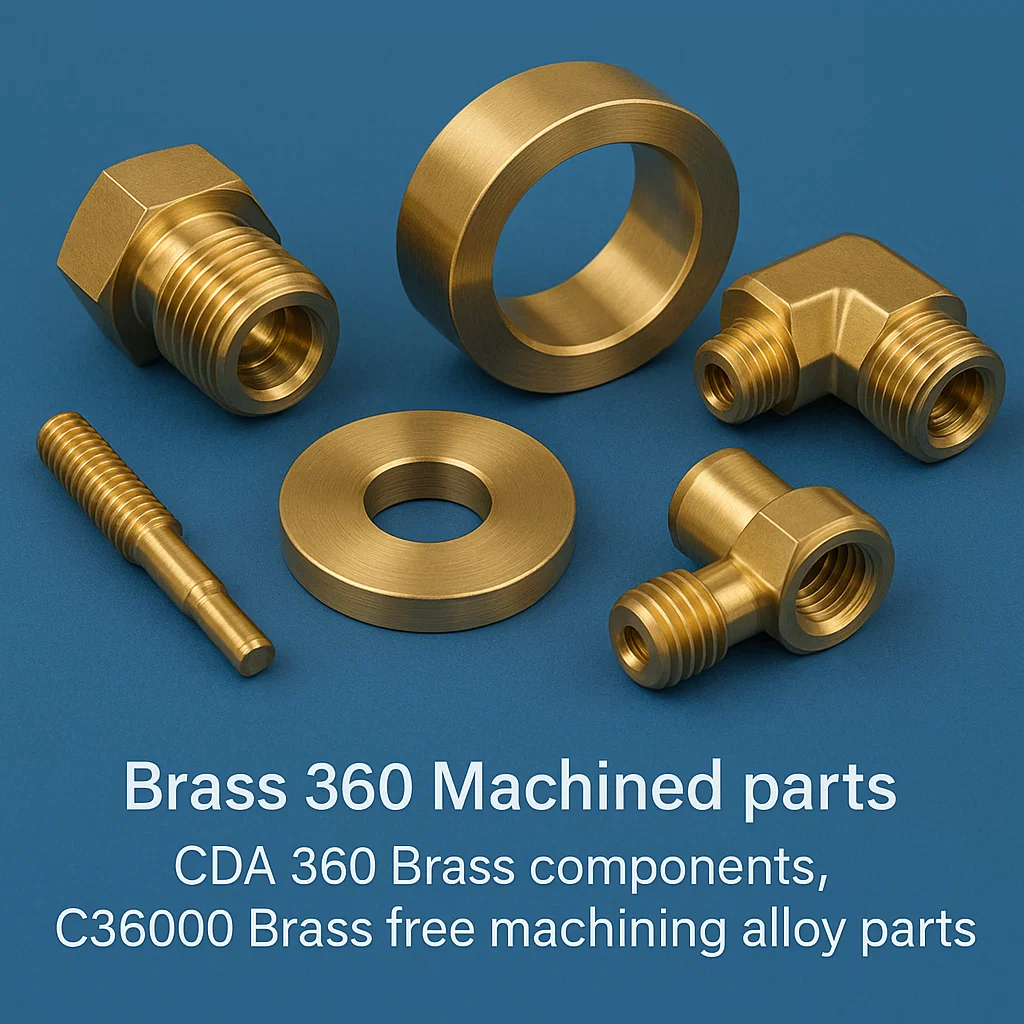
CDA 360 Brass Parts, C36000 Brass Alloy Components, and Machined C360 Brass Components: CDA 360 (also designated C36000) represents the industry-standard free-cutting Brass alloy universally specified for high-volume precision machining operations across virtually all manufacturing industries. This alloy’s carefully optimized composition of 61.5% Copper, 35.5% Zinc, and 3% Lead provides the highest machinability rating (100% reference standard) among all Copper-based alloys, enabling aggressive cutting parameters, extended cutting tool life, excellent chip breaking characteristics, and superior surface finishes achieved directly from machining without secondary polishing operations required. Our C36000 machined components serve applications spanning automotive fuel injection systems, plumbing fixture trim, electrical connection terminals, industrial valve assemblies, hydraulic system fittings, precision instrumentation housings, and consumer product components where dimensional accuracy and cost-effective manufacturing are equally critical to commercial success. The material’s mechanical properties include tensile strength ranging from 338 to 469 MPa depending on temper condition, yield strength of 124 to 317 MPa, and elongation of 18 to 53% providing adequate ductility for forming operations and sufficient strength for most mechanical load-bearing applications. Using C36000 alloy, we manufacture highly complex geometries including components with internal thread forms requiring precise pitch and thread profile accuracy, multi-diameter shafts with tight concentricity requirements, hexagonal or square drive features, precisely located cross-holes for fluid passage or fastener installation, circumferential grooves for O-ring seals or retaining rings, and intricate contoured surfaces following complex CAD-defined profiles. The Lead content provides natural lubricity during machining operations while producing short, easily-managed chips that break cleanly without tangling around cutting tools or workpiece surfaces, eliminating the stringy chip problems encountered with lower-Lead or Lead-free alloys that can scratch finished surfaces or cause machine downtime for chip clearing. However, for applications requiring Lead-free materials due to environmental regulations, potable water contact restrictions, or electronics RoHS compliance, we offer alternative alloys including C35300 (low-Lead composition), C69300 (Silicon Brass), or proprietary Bismuth-containing formulations providing similar machinability characteristics without Lead-related health or environmental concerns. All C36000 components can receive various surface treatments including electroplating in nickel, chrome, tin, or zinc for enhanced corrosion protection, chemical conversion coatings providing paint adhesion or moderate corrosion resistance, lacquer finishes preventing tarnishing during storage and service, or maintained in natural Brass appearance showcasing the characteristic golden color valued in decorative applications and visible hardware installations.
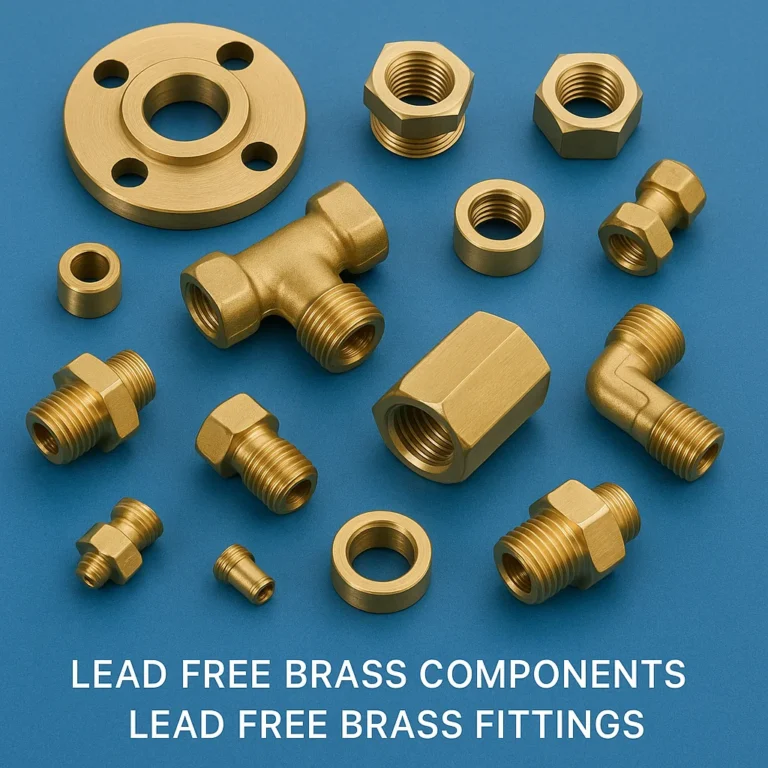
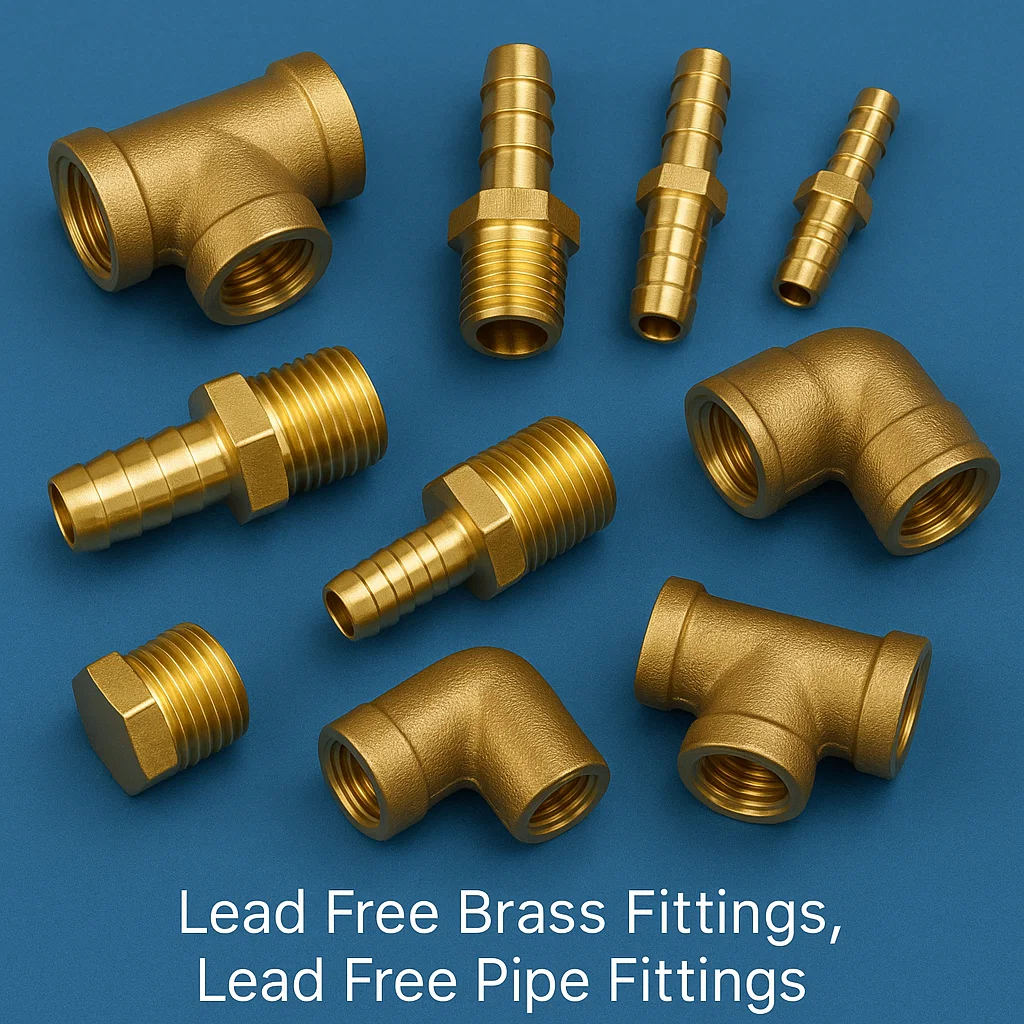
Lead Free Brass Components and Brass Lead Free Pipe Fittings-Components: Responding to increasingly stringent environmental regulations and public health concerns regarding Lead exposure through potable water systems, we specialize in manufacturing Lead-free Brass components fully compliant with requirements of the US Safe Drinking Water Act (SDWA), California AB1953, Vermont Act 193, Maryland HB372, and European Union directives restricting Lead content in consumer products. Our Lead-free Brass alloys include C46500 (Naval Brass – Lead free formulation), proprietary Bismuth-containing alloys replacing Lead with non-toxic alternatives, Silicon Brass (C69300), and specially developed Lead-free formulations achieving weighted average Lead content below 0.25% as mandated by US federal regulations and below 0.2% meeting California’s stricter requirements. These advanced materials maintain excellent machinability approaching traditional leaded Brass alloys while completely eliminating Lead exposure risks in drinking water distribution systems, food processing equipment, and consumer products requiring environmental compliance certifications. Lead-free pipe fittings manufactured in our facility include compression fittings for copper pipe connections, push-fit connectors for PEX tubing installations, threaded pipe adapters in NPT and BSP configurations, manifold distribution blocks, valve bodies for shut-off and control applications, water meter housings and internal components, backflow prevention device bodies, and specialty fittings for commercial plumbing installations. The manufacturing process combines precision CNC machining maintaining critical thread accuracy and sealing surface flatness with comprehensive quality controls including optical emission spectroscopy verifying Lead content compliance on every production batch and hydrostatic pressure testing ensuring structural integrity under rated working pressures. Surface finishes include natural Brass appearance showcasing the material’s inherent corrosion resistance, nickel plating providing enhanced protection and wear resistance, or chrome plating for decorative applications in visible plumbing installations. All Lead-free components are certified compliant with NSF/ANSI Standard 61 for drinking water system components and NSF/ANSI Standard 372 for Lead content certification, with third-party laboratory testing documentation available demonstrating compliance with all applicable regulations. Thread accuracy meets ASME B1.20.1 standards for NPT tapered pipe threads or ISO 228 for parallel pipe threads, ensuring leak-free assembly performance and compatibility with standard plumbing systems installed worldwide across residential, commercial, and industrial applications.
Precision Stainless Steel Components: Our Stainless Steel component manufacturing expertise addresses applications requiring superior corrosion resistance beyond Brass or Bronze capabilities, high-temperature performance exceeding 400°C, non-magnetic properties for electronic applications, or food-grade material specifications meeting FDA and 3-A sanitary standards. Precision Stainless Steel components are manufactured from diverse grade families including austenitic grades (304, 304L, 316, 316L, 321) offering excellent corrosion resistance and non-magnetic properties, ferritic grades (430, 439) providing magnetic characteristics and lower cost alternatives, martensitic grades (410, 420, 440C) offering heat-treatable hardening for wear resistance, precipitation hardening grades (17-4 PH, 15-5 PH) combining high strength with moderate corrosion resistance, and duplex stainless steels (2205, 2507) providing exceptional strength and pitting corrosion resistance. These components serve pharmaceutical manufacturing equipment, food processing machinery, chemical processing plants, marine hardware installations, medical surgical instruments, aerospace structural components, and architectural hardware applications where material purity, corrosion resistance, and long-term reliability are absolutely critical to successful operation. Manufacturing challenges associated with Stainless Steel’s tendency to work-harden during cutting operations and its abrasive nature causing rapid tool wear are overcome through specialized machining strategies including carbide or ceramic cutting tool materials, controlled cutting speeds balancing productivity with tool life, high-pressure coolant delivery systems removing heat from cutting zones, and multiple light passes rather than heavy cuts preventing work-hardening and maintaining dimensional accuracy. Our CNC machining centers handle complex Stainless Steel geometries including thin-walled tubular sections, precision internal and external threads meeting Class 2A/2B or finer tolerances, deep cavities requiring long-reach tooling, tight-tolerance bearing surfaces for rotating assemblies, and intricate contoured surfaces following complex three-dimensional CAD models. Surface finish specifications range from standard machined finishes (Ra 3.2 to 6.3 microns) suitable for structural components to electropolished mirror finishes (Ra 0.2 to 0.4 microns) required for pharmaceutical process equipment and food contact surfaces where bacteria colonization prevention is essential. Passivation treatment per ASTM A967 or ASTM A380 standards is performed on all Stainless Steel components, chemically removing free iron contamination from machining operations and restoring the protective chromium oxide layer, maximizing inherent corrosion resistance ensuring decades of reliable service in aggressive chemical environments, saltwater exposure, or high-humidity conditions.
Stainless Steel Machined Parts and Stainless Steel CNC Turned Components: Precision turning and multi-axis machining of Stainless Steel alloys requires specialized manufacturing expertise, robust machine tool construction capable of high cutting forces, and advanced cutting strategies managing heat generation while controlling work-hardening tendencies characteristic of these challenging materials. Our Stainless Steel turned components include precision shafts for rotating equipment, valve stems for high-pressure fluid control, pump spindles for chemical handling, threaded fasteners in non-standard configurations, couplings for power transmission, flanges for piping systems, instrument housings protecting sensitive sensors, and custom mechanical assemblies engineered to customer specifications. The machining process utilizes positive rake carbide inserts with specialized chip-breaker geometries, high-pressure coolant delivery systems (up to 70 bar pressure) directing cutting fluid precisely at the cutting edge, and optimized cutting parameters balancing material removal rates with tool life economics and surface finish quality requirements. Grade selection considers specific corrosion environments and mechanical requirements including 304/304L for general-purpose corrosion resistance and excellent weldability, 316/316L for superior pitting corrosion resistance in chloride-containing environments including marine and coastal applications, 303 for free-machining characteristics (contains Sulfur improving chip formation at slight expense of corrosion resistance), 410/420 for martensitic stainless requiring heat treatment to achieve hardness for wear-resistant applications, and 17-4PH for precipitation hardening achieving high strength levels (up to 1300 MPa tensile strength) while maintaining moderate corrosion resistance. Dimensional tolerances of ±0.02mm are routinely maintained on critical diameters with thread accuracy meeting ISO tolerance class 6g for external threads and 6H for internal threads, or tighter tolerances when specified for precision assemblies requiring selective fitting. Surface treatments beyond passivation include electropolishing for ultra-clean pharmaceutical and food contact surfaces, PVD (Physical Vapor Deposition) coatings applying titanium nitride or other hard coatings for extreme wear resistance, or protective films applied during shipment preventing handling scratches and fingerprint contamination. Complete material certifications documenting chemical composition per ASTM specifications, mechanical property test results including tensile strength and hardness, and corrosion testing data accompany component shipments, supporting customer quality systems and regulatory compliance requirements for FDA, ASPE, or industry-specific standards governing material specifications and traceability documentation.
Brass Machined Washers: Precision-machined Brass washers serve multiple critical functions in mechanical assemblies including load distribution preventing bearing surface damage, precise spacing maintaining component clearances, sealing when compressed against mating surfaces, vibration damping reducing assembly loosening, and electrical insulation when using non-conductive coatings. Our Brass washer manufacturing capabilities produce flat washers, spring washers, wave washers, Belleville washers, cupped washers, finishing washers, and custom-designed specialty configurations in sizes from 2mm to 200mm outside diameter with thickness ranging from 0.15mm to 10mm accommodating diverse application requirements. Manufacturing processes include high-speed stamping from Brass strip for high-volume standard sizes offering lowest per-piece costs, CNC turning from bar stock for precision tolerance applications requiring dimensional accuracy exceeding stamping capabilities, and wire EDM (Electrical Discharge Machining) for intricate internal cutouts, slots, or non-circular geometries when specified by customer designs. Material grades include C26000 (Cartridge Brass – 70% Copper) for general-purpose applications offering excellent formability, C27000 for superior corrosion resistance in outdoor or marine environments, and Lead-free alloys when required for environmental compliance or potable water contact applications. Dimensional tolerances meet international standards including DIN 125, ISO 7089, or ASME B18.22.1 with critical dimensions held to ±0.05mm and flatness specifications controlled to 0.02mm ensuring proper load distribution across bolt head or nut bearing surfaces without inducing bending moments. Surface treatments include natural Brass finish for aesthetic applications showcasing the golden metallic appearance, nickel plating or zinc plating providing enhanced corrosion protection for outdoor installations, tin plating for electrical applications, and clear lacquer coatings preventing tarnishing during extended storage periods or service in humid environments. Custom washer designs are fully supported by our engineering team who optimize configurations considering bolt size, clamping loads, material compatibility with mating components, environmental exposure conditions, and assembly sequence requirements. Packaging options range from bulk packaging in polyethylene bags for standard washers to precision counting with individual compartmented packaging for critical applications requiring exact quantities and protection during shipping and storage.
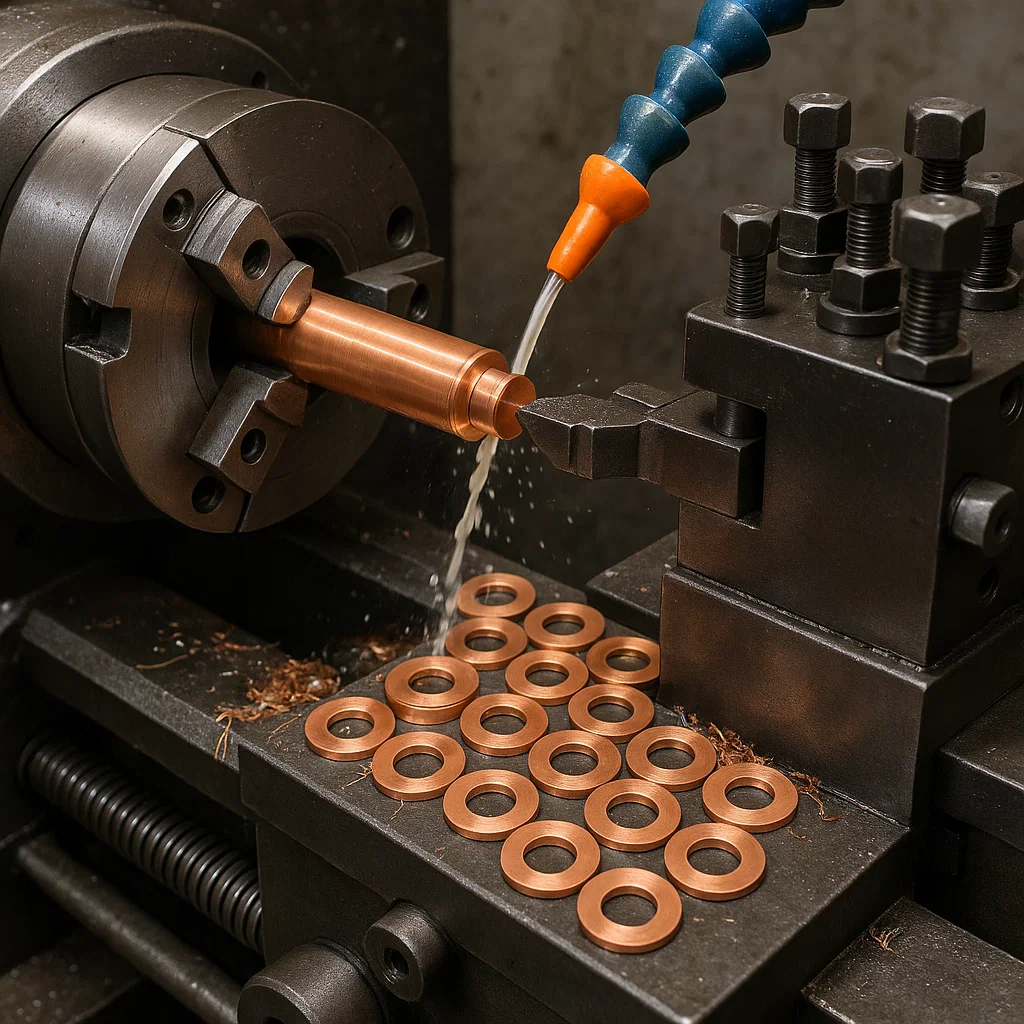
Copper Machined Washers: Pure Copper and Copper alloy washers provide unique property combinations including superior electrical conductivity (essential for grounding applications), excellent thermal conductivity (critical for heat dissipation), electromagnetic shielding characteristics, and gasket-forming capabilities through controlled plastic deformation under clamping loads. Our Copper washer manufacturing utilizes high-purity electrolytic Copper grades including C10100 and C11000 containing minimum 99.9% Copper for applications requiring maximum electrical or thermal conductivity, or specialized Copper alloys like Beryllium Copper (C17200) for spring washer applications combining excellent conductivity with high strength and spring characteristics. Manufacturing processes include precision stamping from Copper strip materials for high-volume production maintaining tight dimensional tolerances, CNC machining for small quantities or non-standard configurations requiring custom dimensions, and specialized annealing heat treatments achieving specific temper conditions ranging from soft annealed (O temper) for gasket applications requiring maximum deformability to spring-hard (H08 temper) for locking washers requiring elastic recovery. Typical applications include electrical connection washers ensuring reliable current flow in power distribution systems, grounding washers bonding metal enclosures to earth ground, transformer terminal washers handling high current loads, electric motor connection points, heat sink attachment washers facilitating thermal transfer, sealing washers for hydraulic systems where controlled deformation creates leak-proof seals, and crush washers for automotive oil drain plugs designed for single-use applications. Dimensional specifications meet international standards including DIN 7603 for copper sealing washers with tolerances maintained at ±0.03mm on critical outside and inside diameters affecting sealing performance. Surface treatments are selected based on application-specific requirements including tin plating enhancing solderability and corrosion protection, silver plating maximizing electrical conductivity and oxidation resistance, nickel plating providing wear resistance and preventing copper oxidation, or natural Copper finish with anti-tarnish coating protecting appearance while maintaining inherent electrical conductivity. The soft, malleable nature of annealed Copper washers enables them to conform precisely to surface irregularities and micro-roughness patterns, providing excellent sealing capabilities in fluid containment systems and optimal electrical contact in grounding applications, while the material’s corrosion resistance ensures decades of reliable performance across diverse environmental conditions from indoor electronics to outdoor power distribution installations.
Material Grades and International Standards
| Material Type | USA Standard | British Standard | European Standard | Indian Standard | Japanese Standard | Chinese Standard | Key Properties |
|---|---|---|---|---|---|---|---|
| Free Cutting Brass | C36000, C36500 | CZ121, CZ122 | CuZn39Pb3, CW614N | IS 319 Type 1 | JIS C3604, C3771 | GB HPb59-1 | Best machinability, 61% Cu |
| DZR Brass | C28000 Modified | CZ132 | CW602N, CW626N | IS 319 Type 2 | JIS C6872, C6782 | GB HSn62-1 | Dezincification resistant |
| Lead Free Brass | C46500, C69300 | CZ110 | CW724R, CW511L | IS 6912 | JIS C6801 | GB HPb57-3 | <0.25% weighted Lead |
| Cartridge Brass | C26000, C26800 | CZ106, CZ107 | CuZn30, CW505L | IS 410 Grade 1 | JIS C2600, C2680 | GB H70, H68 | 70% Cu, excellent forming |
| Naval Brass | C46400, C46500 | CZ112 | CuZn39Sn1, CW719R | IS 319 Type 4 | JIS C4621, C4641 | GB HMn58-2 | 60% Cu, 1% Sn, marine |
| Aluminum Bronze | C95400, C95500 | AB1, AB2 | CuAl10Fe5Ni5 | IS 305 Grade 2 | JIS CAC703 | GB ZCuAl10Fe3 | High strength, seawater use |
| Phosphor Bronze | C51000, C52100 | PB102, PB104 | CuSn8, CW453K | IS 28 Grade 1 | JIS C5191, C5210 | GB QSn6.5-0.1 | Excellent wear resistance |
| Pure Copper | C11000, C10100 | C101, C103 | CW004A, Cu-ETP | IS 191 | JIS C1100, C1020 | GB T2, TP2 | 99.9% Cu, high conductivity |
| SS Austenitic | 304, 316, 316L | 304S31, 316S31 | 1.4301, 1.4401 | IS 1570 Grade 1 | JIS SUS304, 316 | GB 0Cr18Ni9 | Non-magnetic, corrosion resistant |
| SS Free Machining | 303, 303Se | 303S31, 303S42 | 1.4305 | IS 1570 Grade 4 | JIS SUS303 | GB Y1Cr18Ni9 | Sulfur added for machining |
| SS Martensitic | 410, 420, 440C | 410S21, 420S37 | 1.4006, 1.4021 | IS 1570 Grade 6 | JIS SUS410, 420 | GB 1Cr13, 3Cr13 | Hardenable, magnetic |
| SS Precipitation | 17-4PH, 15-5PH | – | 1.4542, 1.4545 | – | JIS SUS630 | GB 0Cr17Ni4Cu4Nb | High strength after aging |
Manufacturing Processes and Advanced Machining Technology
Our integrated manufacturing facility employs comprehensive precision metal forming and machining technologies delivering components meeting demanding specifications across diverse industries. CNC Multi-Axis Turning Centers with live tooling, Y-axis capabilities, and sub-spindle configurations enable complete machining of complex rotational parts in single setups, incorporating turning, milling, drilling, and threading operations without repositioning that could introduce tolerance accumulation errors. CNC Vertical and Horizontal Machining Centers with 3-axis, 4-axis, and 5-axis simultaneous control perform milling, drilling, tapping, boring, and complex contouring operations with positioning accuracy of ±0.003mm and repeatability within ±0.001mm. Swiss-Type CNC Automatic Lathes specialize in high-precision, small-diameter components with length-to-diameter ratios exceeding 10:1, utilizing guide bush support maintaining workpiece rigidity near the cutting zone for exceptional accuracy on miniature turned parts. Multi-Spindle Automatic Screw Machines provide unmatched production efficiency for high-volume manufacturing, with 4-spindle, 6-spindle, and 8-spindle configurations performing simultaneous operations on multiple workpieces, achieving production rates exceeding 100,000 pieces weekly depending on component complexity. High-Speed Progressive Die Stamping Presses ranging from 50-ton to 400-ton capacities produce flat and formed components from sheet materials at rates exceeding 300 parts per minute for simple geometries. Hot Forging Hydraulic Presses with capacities up to 1000 tons create near-net-shape components with superior grain structure and mechanical properties compared to casting or machining alternatives. Wire EDM (Electrical Discharge Machining) cuts intricate profiles in hardened materials and produces precision tooling with accuracy to ±0.005mm. Heat Treatment Furnaces including controlled atmosphere annealing ovens, stress-relief equipment, and induction hardening systems control material properties and relieve residual stresses. Surface Treatment Facilities for electroplating, passivation, electropolishing, and coating application provide comprehensive finishing capabilities. Dimensional Inspection Equipment including CMM with laser scanning capability, optical comparators, surface roughness testers, hardness testers, and spectroscopic analyzers ensure every component meets specified requirements before shipment.
Typical Components Manufactured and Application Examples
| Component Category | Typical Applications | Size Range | Common Materials | Typical Tolerances |
|---|---|---|---|---|
| Threaded Components | Fasteners, adapters, connectors, studs | M3 – M48 | Brass, SS 303, SS 316 | ±0.02mm, 6g/6H threads |
| Precision Bushings | Bearings, guides, spacers, sleeves | 3mm – 100mm OD | C36000, Bronze, SS 304 | ±0.01mm on critical dims |
| Valve Components | Stems, bodies, seats, bonnets | DN10 – DN150 | DZR Brass, SS 316, Bronze | ±0.03mm, Ra 1.6 finish |
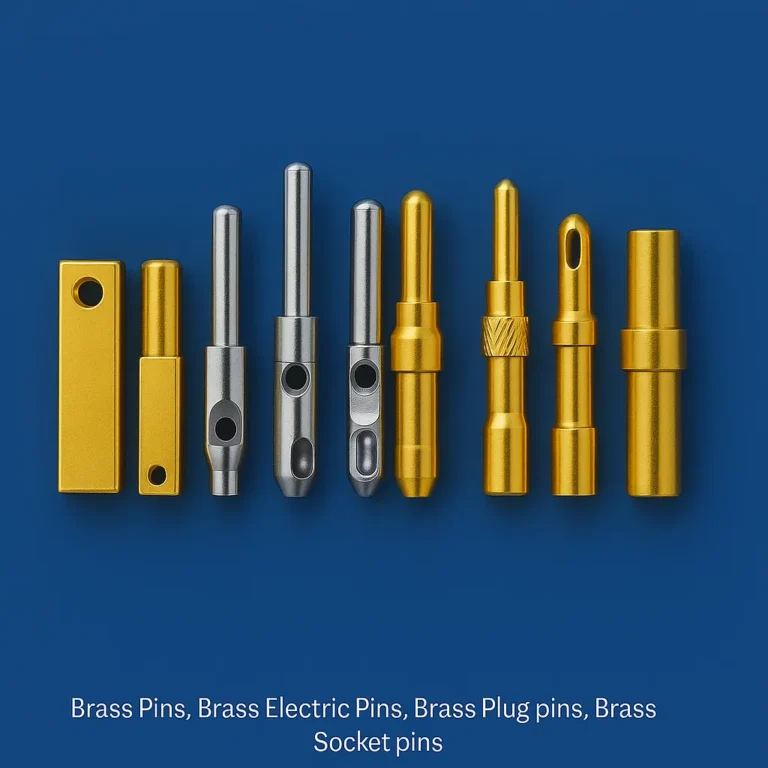
| Electrical Terminals | Connectors, contacts, pins, sockets | 2mm – 50mm | C36000, Copper, Phosphor Bronze | ±0.02mm |
| Instrument Housings | Sensors, gauges, meters, controls | 10mm – 200mm | Brass, Aluminum, SS 304 | ±0.05mm |
| Hydraulic Fittings | Couplings, adapters, manifolds, ports | 1/8″ – 2″ ports | C36000, SS 316, Steel | ±0.03mm, leak-free assembly |
| Automotive Parts | Fuel system, brake, transmission parts | 5mm – 150mm | Brass, Lead-free Brass, SS | ±0.02mm per IATF 16949 |
| Precision Shafts | Motors, pumps, instruments, machines | 3mm – 150mm diameter | SS 303, SS 416, Brass | ±0.01mm, 0.01mm runout |
| Washers & Spacers | Load distribution, spacing, sealing | 2mm – 200mm OD | Brass, Copper, SS, Steel | ±0.05mm, 0.02mm flatness |
| Custom Assemblies | Multi-component assemblies, sub-systems | Varies by design | Mixed materials as required | Per customer specification |
Dimensional Tolerances and Quality Standards
| Dimension Type | Standard Tolerance | Precision Tolerance | Measurement Method | Standard Reference |
|---|---|---|---|---|
| External Diameters | ±0.03mm to ±0.05mm | ±0.01mm | Micrometer, CMM | ISO 2768-f, ISO 2768-m |
| Internal Diameters | ±0.05mm to ±0.08mm | ±0.02mm | Bore gauge, CMM | ISO 286-2 |
| Length Dimensions | ±0.10mm to ±0.15mm | ±0.05mm | Vernier caliper, CMM | ISO 2768-m |
| Thread Accuracy | Class 6g/6H (ISO) | Class 4g/4H | Thread gauges, optical | ISO 965, ASME B1.1 |
| Surface Roughness | Ra 1.6 to Ra 3.2 μm | Ra 0.4 to Ra 0.8 μm | Surface roughness tester | ISO 4287, ISO 1302 |
| Concentricity | 0.03mm to 0.05mm TIR | 0.01mm TIR | Dial indicator, CMM | ISO 1101 |
| Perpendicularity | 0.05mm to 0.10mm | 0.02mm | Height gauge, CMM | ISO 1101 (GD&T) |
| Parallelism | 0.05mm to 0.10mm | 0.02mm | Surface plate, CMM | ISO 1101 (GD&T) |
| Flatness | 0.03mm to 0.05mm | 0.01mm | Surface plate, CMM | ISO 1101 |
Surface Finishing and Plating Capabilities
We provide comprehensive surface finishing services enhancing corrosion resistance, improving wear characteristics, modifying electrical properties, and meeting aesthetic requirements across all component types. Electroplating Services include nickel plating (bright, satin, or black nickel) with thickness from 3 to 25 microns providing excellent corrosion protection, chrome plating (decorative or hard chrome) for maximum wear resistance and bright appearance, tin plating for solderability in electronic assemblies, zinc plating with yellow, clear, or black chromate conversion coatings, silver plating for maximum electrical conductivity, and gold plating for premium electronic applications. Electroless Nickel Plating provides uniform coating thickness on complex geometries with inherent hardness and corrosion resistance, available in low, medium, and high phosphorus formulations. Passivation Treatment per ASTM A967 for Stainless Steel removes free iron contamination and restores chromium oxide protective layer. Electropolishing creates ultra-smooth mirror finishes on Stainless Steel with surface roughness below Ra 0.3 microns for pharmaceutical and food processing applications. Powder Coating offers durable organic finish in various colors for industrial and outdoor applications. Anodizing for Aluminum components provides corrosion protection and decorative color options. Chemical Conversion Coatings including chromate conversion and phosphate coating. Lacquer Coating prevents tarnishing of Brass and Copper. Tumbling and Vibratory Finishing deburr sharp edges and improve surface appearance. All finishing processes meet international standards including ASTM B633, ASTM B456, ISO 2081 with thickness verification and adhesion testing ensuring coating quality.
Industries Served and Global Applications
Our precision machined components serve diverse industries worldwide. Automotive Industry incorporates our components in fuel injection systems, brake assemblies, transmission parts, electrical connectors, and sensor housings. Plumbing and Sanitary Ware manufacturers specify our DZR Brass fittings and Lead-free components for residential and commercial installations. Industrial Equipment manufacturers utilize our precision turned parts in hydraulic systems, pneumatic controls, and mechanical assemblies. Electronics and Electrical industries rely on our Brass and Copper terminals, connectors, and precision stampings. HVAC Systems incorporate our manifolds, adapters, and threaded fittings. Marine Equipment applications include corrosion-resistant Bronze and Naval Brass components. Medical Devices require our precision Stainless Steel components meeting biocompatibility standards. Instrumentation and Controls utilize our precision housings and sensor components. Aerospace Applications demand our high-tolerance components with AS9100 quality documentation. Food Processing Equipment specifies our food-grade Stainless Steel parts. Pharmaceutical Manufacturing requires our electropolished Stainless Steel components. Water Treatment Facilities depend on our corrosion-resistant DZR and Bronze components. Oil and Gas Industry utilizes our high-pressure rated components. Agricultural Equipment manufacturers incorporate our Brass and Bronze parts in irrigation systems. Renewable Energy installations including solar and geothermal systems use our corrosion-resistant components. Architectural Hardware applications showcase our decorative Brass components with polished finishes.
Quality Assurance, Testing, and Turnaround Time
Quality assurance underpins our manufacturing operations through ISO 9001:2015 certified quality management systems and comprehensive inspection protocols. Our inspection capabilities include coordinate measuring machines (CMM) with measurement uncertainty of ±0.002mm, optical comparators for profile verification, surface roughness testers calibrated to ISO 4287, hardness testers, and spectroscopic analyzers. Standard dimensional tolerances follow ISO 2768 medium grade with tighter tolerances achievable through precision grinding. Thread accuracy meets ISO 965 tolerance class 6g/6H or ASME B1.20.1 for NPT threads with gauge verification. Surface finish specifications from Ra 3.2 microns standard to Ra 0.4 microns precision verified using calibrated testers. Geometric tolerances per ISO 1101 GD&T standards verified through CMM measurement. Material certifications document chemical composition, mechanical properties, and heat number traceability. Non-destructive testing including pressure testing, ultrasonic inspection, and magnetic particle inspection when specified. First article inspection reports document complete dimensional verification per AS9102 standards. Our typical turnaround time is 4 to 6 weeks from confirmed purchase order to shipment for standard production runs. Small prototype quantities can be completed in 2 to 3 weeks while large production runs requiring specialized tooling may extend to 8 to 10 weeks depending on quantity and complexity. Expedited production available for urgent requirements. Our production planning system provides realistic delivery commitments with regular progress updates throughout the manufacturing cycle ensuring on-time delivery performance exceeding 95% across all customer orders.
Material Properties – Technical Reference Data
| Material | Tensile Strength (MPa) | Yield Strength (MPa) | Elongation (%) | Hardness (HB) | Density (g/cm³) | Conductivity (%IACS) |
|---|---|---|---|---|---|---|
| C36000 Brass | 338-469 | 124-317 | 18-53 | 85-100 | 8.50 | 26% |
| DZR Brass CW602N | 400-540 | 190-280 | 15-40 | 110-140 | 8.45 | 28% |
| Naval Brass C46400 | 380-540 | 172-345 | 20-50 | 95-120 | 8.41 | 26% |
| Phosphor Bronze C51000 | 338-483 | 138-414 | 8-48 | 75-110 | 8.80 | 15% |
| Copper C11000 | 220-290 | 69-275 | 25-55 | 40-75 | 8.94 | 101% |
| SS 304 | 515-620 | 205-310 | 40-60 | 170-200 | 7.93 | – |
| SS 316 | 515-655 | 205-310 | 40-60 | 170-210 | 8.00 | – |
| SS 303 | 515-620 | 240-380 | 35-50 | 160-190 | 7.93 | – |
| SS 17-4PH | 930-1310 | 655-1170 | 10-16 | 290-390 | 7.75 | – |
Why Choose Our CNC Machining Services
Selecting the optimal manufacturing partner requires evaluating capabilities beyond pricing, and our organization delivers exceptional value through comprehensive expertise and customer-focused service excellence. Three Decades of Precision Manufacturing Experience provides deep understanding of international quality standards, material specifications, and application requirements enabling us to deliver solutions exceeding expectations. Our Advanced CNC Machining Technology portfolio combining multi-axis turning, 5-axis machining, Swiss turning, and automated inspection ensures production efficiency and dimensional consistency. Complete In-House Capabilities from material sourcing through surface treatment eliminate subcontractor dependencies, reducing lead times while maintaining quality control. The Experienced Engineering Team collaborates during design phase offering value engineering suggestions, manufacturability improvements, and cost optimization based on decades of practical experience. Our Flexibility in Production Quantities accommodates prototype quantities through high-volume production without arbitrary minimum order restrictions. Rapid Turnaround Capabilities deliver standard orders within 4-6 weeks with expedited 2-3 week production when needed. Customized Packaging Solutions include bulk packaging, precision counting, customer branding with logos, and barcoding for inventory management. Comprehensive Quality Documentation accompanies every shipment including material certifications, dimensional inspection reports, and compliance certifications for RoHS, REACH, and conflict minerals. Our Excellent Communication Skills ensure responsive customer service through English-speaking technical staff and proactive production updates. Competitive Pricing Structure leverages India’s cost-effective manufacturing environment and efficient production methods delivering exceptional value. Established Export Infrastructure provides seamless international shipping with comprehensive export documentation. Proven Global Track Record serving customers across USA, Canada, UK, Germany, Australia demonstrates our capability to meet diverse international requirements. Technical Support Services extend beyond component delivery providing application assistance, failure analysis, and ongoing engineering support. Our commitment to Continuous Improvement drives investment in new technology, operator training, and process optimization translating into improved quality and delivery performance with each order.
Packaging, Shipping, and International Logistics
Understanding that product protection during transportation is critical, we implement comprehensive packaging strategies tailored to component characteristics and shipping distances. Standard packaging includes high-density polyethylene bags with desiccant packets for moisture protection, corrugated cartons with internal dividers preventing component contact, wooden pallets for heavy shipments with stretch wrap securing loads, and returnable containers for ongoing supply arrangements. Small precision components receive partitioned tray packaging with foam cushioning. Threaded components receive protective caps preventing thread damage. Plated components are wrapped in anti-tarnish paper or VCI (vapor corrosion inhibitor) packaging. Custom packaging incorporating customer logos, part numbers, barcodes, and handling instructions available without setup charges. Export packaging meets ISPM 15 international standards for wood materials with heat-treated certification. Our logistics team coordinates international shipping through established freight forwarders offering competitive rates for air freight, ocean freight, and express courier services. We provide complete export documentation including commercial invoices, packing lists, certificates of origin, material certifications, and country-specific declarations. Incoterms options include EXW, FOB, CIF, and DDP providing complete door-to-door service. Shipment tracking information provided upon dispatch. Insurance coverage options protect against transportation damage. Consolidated shipping arrangements optimize freight costs. Our experience with international trade regulations ensures smooth delivery to destinations worldwide minimizing delays and clearance complications.
Technical Questions and Expert Answers
Q1: What is the difference between CNC turning and CNC milling, and when is each process most appropriate?
CNC turning machines rotate the workpiece while cutting tools remain stationary, making them ideal for cylindrical parts, shafts, bushings, and threaded components. CNC milling machines rotate cutting tools while the workpiece remains stationary, suited for prismatic parts, flat surfaces, pockets, and complex 3D contours. For rotational symmetry choose turning; for flat or irregular shapes choose milling.
Q2: How does Swiss-type CNC machining differ from conventional CNC turning for small precision parts?
Swiss-type machines use guide bushes supporting the workpiece near the cutting zone, enabling extremely tight tolerances on long, slender parts with length-to-diameter ratios exceeding 10:1. Conventional turning lacks this support, causing deflection on long parts. Swiss machines also feature live tooling for milling and drilling operations completing complex parts in single setup with superior precision on miniature components.
Q3: What tolerances can be realistically achieved on CNC machined Brass components without secondary grinding operations?
Standard CNC machining of Brass achieves ±0.02 to ±0.03mm on diameters and ±0.05mm on length dimensions. With optimized tooling, cutting parameters, and thermal compensation, precision turning can maintain ±0.01mm on critical diameters. Tighter tolerances like ±0.005mm require precision grinding or specialized techniques. Surface finish of Ra 0.8 to 1.6 microns achievable directly from machining.
Q4: How do you ensure consistent quality across large production runs spanning several months?
We implement statistical process control monitoring critical dimensions during production, first piece inspection verifying setup accuracy, periodic in-process inspections, tool wear compensation adjustments, material lot control ensuring consistent properties, and calibrated measuring equipment traceable to national standards. Our quality management system maintains complete traceability linking components to production dates, operators, machines, and material lots enabling root cause analysis if issues emerge.
Q5: Can you manufacture components from customer-supplied materials or must materials be purchased through your company?
We can machine components from customer-supplied materials provided they meet minimum quantity requirements for setup efficiency and arrive with material certifications documenting composition and properties. However, we typically recommend our material sourcing leveraging established supplier relationships, volume purchasing power, and material expertise ensuring optimal alloy selection, consistent quality, and competitive pricing while maintaining complete supply chain traceability and eliminating procurement complexity for customers.
Q6: What design features increase manufacturing costs, and how can components be designed for cost-effective production?
Cost drivers include excessive tolerance specifications beyond functional requirements, non-standard material sizes causing waste, features requiring special tooling, deep internal cavities needing long-reach tools, extremely thin walls risking deformation, and hard-to-access surfaces. Cost optimization strategies include specifying standard materials, relaxing non-critical tolerances to ±0.05mm, designing features accessible with standard tooling, incorporating generous fillet radii, and consolidating multiple parts into single-piece designs. Our engineering team reviews designs offering value engineering suggestions maintaining functionality while reducing costs.
Q7: How do multi-spindle screw machines achieve higher production rates compared to single-spindle CNC lathes?
Multi-spindle machines operate 4, 6, or 8 spindles simultaneously performing identical operations on different workpieces, multiplying output by the spindle count. While one spindle cuts threads, another faces ends, another drills holes, etc., achieving production rates 4-8 times higher than single-spindle machines. They’re ideal for high-volume simple parts while CNC lathes suit complex geometries requiring live tooling and multi-axis capabilities.
Q8: What documentation and certifications can you provide supporting aerospace or medical device quality requirements?
We provide comprehensive documentation including material certifications with full chemical composition and mechanical property testing, dimensional inspection reports documenting all critical features, first article inspection reports per AS9102 format, process traveler documentation tracking manufacturing sequence, calibration certificates for measuring equipment traceable to NIST or NPL, RoHS and REACH compliance declarations, and third-party inspection reports when specified. For aerospace applications meeting AS9100 standards, we coordinate with customer-approved third-party inspectors providing source inspection and witness testing services.
Q9: How does material selection affect surface finish quality in CNC machined parts?
Free-cutting Brass alloys like C36000 with Lead additions achieve superior surface finishes (Ra 0.8 to 1.6 microns) directly from machining due to excellent chip formation. Lead-free Brass requires modified cutting parameters achieving Ra 1.6 to 3.2 microns. Stainless Steel’s work-hardening tendency makes achieving smooth finishes more challenging, typically requiring multiple light finishing passes. Copper’s ductility can cause tearing if cutting parameters aren’t optimized. Material selection significantly impacts both achievable surface finish and manufacturing cost.
Q10: Can you handle prototype quantities before committing to production, and what are typical prototype lead times?
We actively encourage prototype orders allowing design validation before volume production. Prototype quantities from 10 to 100 pieces can be manufactured with typical turnaround of 2-3 weeks. Prototype pricing reflects setup costs amortized over small quantities, typically 2-4 times expected production unit cost. We often suggest design modifications during prototype review based on manufacturing optimization, potentially reducing production costs. Addressing issues during prototyping is far more cost-effective than discovering problems after committing to large production quantities.
Q11: What thread standards and tolerances do you typically work with for threaded components?
We manufacture metric threads per ISO 965 standards (tolerance classes 6g/6H most common, tighter 4g/4H for precision applications), NPT tapered pipe threads per ASME B1.20.1, BSPP parallel pipe threads per ISO 228, UN unified threads per ASME B1.1, and custom thread profiles per customer specifications. Thread accuracy is verified using precision thread ring and plug gauges calibrated to national standards, with optical comparator inspection of thread profiles when tighter tolerances are specified.
Q12: How do you manage thermal expansion effects when machining precision components with tight tolerances?
We implement multiple strategies including temperature-controlled manufacturing environment maintaining 20°C ±2°C, adequate thermal stabilization time for workpieces and cutting tools, coolant temperature control preventing thermal gradients, tool offset compensation adjusting for thermal growth during extended production runs, and dimensional inspection performed at standardized temperature conditions. For ultra-precision work requiring tolerances below ±0.01mm, we monitor and compensate for thermal effects throughout the manufacturing process using thermal modeling and real-time measurement feedback systems.
Q13: What surface treatments are recommended for Brass components used in outdoor or marine environments?
For outdoor applications, nickel-chrome plating provides excellent corrosion barrier protection, though it changes natural Brass appearance. Electroless nickel offers uniform coverage with inherent corrosion resistance. For maintaining Brass aesthetics, protective lacquer coatings prevent tarnishing with moderate environmental protection. In marine environments, components made from inherently corrosion-resistant Naval Brass or Aluminum Bronze may eliminate plating requirements while providing superior long-term performance with natural appearance.
Q14: How do you ensure DZR Brass components meet international standards for potable water contact?
All DZR Brass components undergo dezincification testing per ISO 6509 or ASTM B858 standards, spectroscopic analysis verifying Arsenic content between 0.02-0.15%, and Lead content testing ensuring compliance with potable water regulations. Material certifications document compliance with European EN standards, British WRAS approval requirements, and North American NSF/ANSI 61 and 372 standards. Third-party laboratory testing documentation is available confirming regulatory compliance for all jurisdictions where components will be installed.
Q15: What factors determine whether stamping, machining, or forging is the optimal manufacturing process for Brass components?
Process selection depends on component geometry, production volume, tolerance requirements, and mechanical property needs. Stamping suits flat or shallow-formed parts in volumes exceeding 10,000 pieces offering lowest per-piece costs. Machining handles complex 3D geometries with tight tolerances across all volume ranges. Forging provides superior strength and grain structure for high-stress applications requiring mechanical performance beyond machining capabilities. Our engineering team analyzes each project recommending optimal processes balancing quality, cost, and delivery requirements while meeting all functional specifications.
Customer Testimonials – Real Experiences from Satisfied Clients
— David Thompson, Senior Procurement Engineer, Massachusetts, USA
— Robert Wilson, Technical Procurement Manager, Manchester, UK
Our Unique Value Proposition and Manufacturing Excellence
Beyond manufacturing capabilities, our organization delivers distinctive value through customer-focused service excellence and operational flexibility. Our Rapid Response Engineering Team provides detailed quotations within 24-48 hours including technical review and manufacturing recommendations. Prototype-to-Production Continuity ensures the same engineering team and manufacturing processes used for prototypes carry forward into volume production eliminating transition issues. Our Flexible Minimum Order Quantities accommodate customers from startups needing 50 pieces to established manufacturers requiring millions annually. Custom Packaging with Customer Branding allows components to arrive ready for distribution without additional handling. Technical Drawing Optimization Services leverage manufacturing experience suggesting modifications reducing costs by 15-30% before production begins. Our Global Export Experience spanning three decades eliminates documentation complications and shipping uncertainties. Material Source Flexibility maintains inventory of common materials while sourcing specialized alloys from certified mills worldwide. Our Quality Assurance Proactivity includes photographic documentation of first articles and dimensional reports before shipment. Long-Term Partnership Philosophy focuses on sustainable relationships rather than transactional profit maximization through fair pricing, honest communication, and continuous improvement initiatives benefiting customers with enhanced quality and improved delivery performance each year.
Glossary of Technical Terms
CNC (Computer Numerical Control): Automated machine tool technology where computer programs control machine movements, tool selection, and cutting parameters enabling precise, repeatable manufacture of complex components with minimal operator intervention and superior dimensional consistency across production runs.
Swiss-Type Machining: Specialized CNC turning technology utilizing guide bush support near the cutting zone enabling precision machining of small-diameter, long components with exceptional accuracy even with high length-to-diameter ratios exceeding 10:1 that would deflect on conventional lathes.
Machinability Rating: Numerical index comparing ease of machining different materials, with C36000 free-cutting Brass assigned benchmark rating of 100%. Materials with higher ratings machine more easily while lower ratings indicate greater difficulty requiring reduced speeds or specialized tooling.
Dezincification: Corrosion process affecting Brass alloys where Zinc is selectively leached from alloy matrix leaving porous, weakened Copper-rich structure with reduced mechanical properties. DZR Brass alloys contain inhibitors preventing this degradation in water service applications.
Lead Free Brass: Brass alloys formulated to contain less than 0.25% weighted average Lead content per US Safe Drinking Water Act requirements for components contacting potable water. Alternative elements like Bismuth or Silicon maintain machinability while eliminating Lead health concerns.
GD&T (Geometric Dimensioning and Tolerancing): Advanced system for defining and communicating engineering tolerances using symbols per ISO 1101 or ASME Y14.5 standards, precisely controlling geometric relationships, form, orientation, location, and runout characteristics beyond simple dimensional tolerances.
Surface Roughness (Ra): Numerical measure of surface texture quality expressed in micrometers (microns), with lower values indicating smoother surfaces. Ra represents arithmetic average of surface height deviations measured over specified sampling length per ISO 4287 standards.
Passivation: Chemical treatment applied to Stainless Steel components removing free iron contamination and enhancing natural chromium oxide protective layer, maximizing corrosion resistance and surface cleanliness essential for pharmaceutical, food, and medical applications.
Electroplating: Surface finishing process using electrical current to deposit metallic coatings (nickel, chrome, tin, zinc, etc.) onto component surfaces providing corrosion protection, wear resistance, electrical conductivity, or decorative appearance as required by application specifications.
First Article Inspection (FAI): Comprehensive verification process documenting that initial production samples meet all engineering requirements before full-scale manufacturing proceeds, including dimensional measurements, material certifications, and functional testing per AS9102 or customer-specified protocols.
Runout (TIR): Variation in surface position as part rotates about an axis indicating concentricity or cylindricity errors. Total Indicator Runout measures total variation observed on dial indicator as part completes one full rotation, critical for rotating components requiring balance and smooth operation.
Annealing: Heat treatment process involving heating material to specific temperature followed by controlled cooling, reducing hardness and internal stresses while improving ductility and machinability. Different annealing types (full anneal, stress relief, solution anneal) achieve specific metallurgical objectives.
Progressive Die Stamping: Metal forming process where sheet material advances through multiple sequential stations in single die, with each station performing operations like blanking, piercing, forming, or bending, producing finished components at high production rates with consistent quality.
Related Parts:
Brass CZ121 Machined Parts, Brass CZ121 CNC Components, Free Cutting Brass CNC Machined Parts Lead Free Brass Components, Brass Lead Free Fittings-Components CDA 360 Brass Parts | C36000 Brass Machined Components Brass Turned Parts, Brass CNC Turned Parts Brass Stamped Parts, Brass Forging, Forged Components Of Brass Brass Screw Machine Parts, Brass Screw Machine Products Brass Machined Washers, Copper Machined Washers Brass DZR Components, DZR Brass Parts, DZR Brass Fittings, Dezincification Resistant Brass Precision Stainless Steel Components And Stainless Steel Machined Parts Stainless Steel Machined Parts -Stainless Steel CNC Turned Components Precision CNC machining services India, custom CNC turned parts manufacturer, Brass CNC machined components, DZR Brass fittings supplier, Lead-free Brass parts exporter, Stainless Steel precision machining, Swiss turned components India, multi-spindle screw machine parts, CNC milling services, 5-axis CNC machining, precision turned shafts, custom Brass bushings, threaded Brass fittings, automotive CNC parts, instrumentation components manufacturer, hydraulic fitting machining, pneumatic connector parts,
Precision Machining Process Flow
: 1) Design Review & Material Selection → 2) CNC Programming & Setup → 3) Precision Machining Operations → 4) In-Process Quality Inspection → 5) Surface Treatment & Finishing → 6) Final Dimensional Verification → 7) Custom Packaging → 8) Global Shipping & Logistics, with icons representing each stage and brief descriptions of quality checkpoints]
Partner with Precision Manufacturing Experts
Request a detailed quotation for your CNC machined parts, precision turned components, or custom Brass, Stainless Steel, and Copper component requirements today.
📧 Email: Request technical brochure, capability presentation, and sample components: sales@brass-copper-parts.com
📞 Phone/WhatsApp: +91-22-43449300 (Technical Support Available 24/7 for Global Customers)
💬 Instant Quote System: Upload technical drawings, specifications, and quantity requirements for fast response
🔧 Engineering Consultation: Schedule a call with our technical team to discuss design optimization and manufacturability
Experience manufacturing excellence backed by three decades of precision machining expertise. Let’s discuss how our capabilities can support your component requirements and quality expectations while delivering competitive pricing and reliable delivery performance.
USA Sales:We supply precision brass and copper electrical components to America’s industry leaders—Fortune 500 manufacturers and cutting-edge technology companies alike. Our globally sourced products consistently exceed U.S. quality and safety standards while helping you simplify supply chains, control costs, and accelerate innovation in electrical systems, renewable energy, and smart grid technologies. With DDP pricing to all 50 states and a dedicated U.S. sales team, we make procurement seamless. Request your quote today.