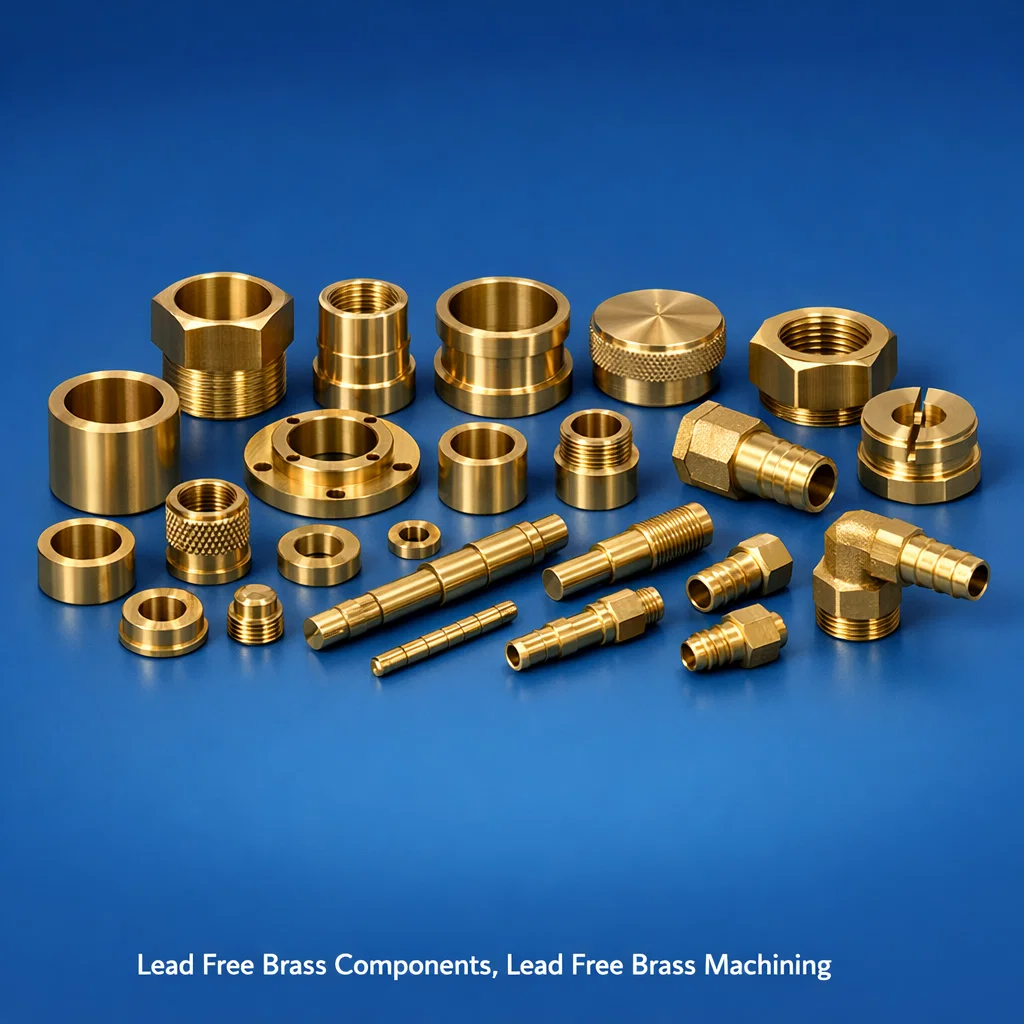
Overview: Lead Free Brass Components and Lead Free Brass Machining
Brass & Copper Parts manufactures precision Lead Free Brass Components from its ISO 9001:2015 certified facility in Jamnagar, India. As environmental and health regulations governing lead content in potable water contact materials, consumer products, and electronic assemblies have tightened globally—driven by the US Safe Drinking Water Act (2014 amendments), California Proposition 65, EU RoHS 2 Directive, and NSF/ANSI 61 Standard—demand for certified lead-free brass machined parts has grown substantially. We produce lead-free brass components in alloys including C69300 (ECO Brass), CW511L (CuZn28Sn), C87850, and bismuth-free silicon brass (C69300) grades with Pb content ≤ 0.25% (or ≤ 0.09% for NSF/ANSI 61 Section 9 compliance), supplying OEM buyers in the USA, Canada, UK, Europe, and Australia across plumbing, HVAC, medical device, food processing, and electronics sectors.
Why Lead-Free Brass? Regulatory and Technical Context
Traditional free-machining brass (C36000 / CW614N) contains 2.5–3.7% lead as a machinability enhancer. In potable water applications, lead can leach into drinking water, particularly at low flow rates and elevated temperatures. Key regulations driving the transition to lead-free brass include: the US Reduction of Lead in Drinking Water Act (effective January 2014), requiring ≤ 0.25% weighted average lead for wetted surfaces of plumbing products; NSF/ANSI 61 Section 9 (lead leach testing for plumbing components); California Proposition 65 (≤ 0.09% Pb for California compliance); EU Drinking Water Directive 2020/2184; and Australian WELS and WaterMark requirements. Lead-free brass alloys—designed to provide adequate machinability without lead—achieve machinability indices of 70–85 through alternative mechanisms: bismuth (Bi), silicon (Si), and tellurium (Te) additions that control chip formation without health-hazardous leaching.
Key Features of Lead Free Brass Components
- NSF/ANSI 61 and 372 Compliant: Lead-free brass alloys (C69300, C87850) with Pb ≤ 0.25% meet NSF 61 Section 9 and NSF 372 “lead-free” definition for plumbing products sold in the USA.
- California Prop. 65 Compliant: Alloys with Pb ≤ 0.09% (C69300 ECO Brass, C87850) satisfy California’s stricter lead threshold for plumbing components.
- RoHS 2 Compliant: Lead content below 0.1% threshold in homogeneous material eliminates the need for RoHS Annex III exemptions for electronics and consumer product applications.
- Good Machinability: Silicon and bismuth additions in C69300, C87850, and CW511L achieve machinability indices of 70–85, enabling CNC turning, milling, and threading operations comparable to standard brass.
- Dezincification Resistance (Grade-Dependent): C69300 (ECO Brass, CuZn21Si3P) has a monophase alpha structure with high Cu content (75–77%), inherently resistant to dezincification without arsenic addition.
- Pressure Rating: Lead-free brass fittings and valve bodies are typically rated PN 25 (25 bar) for water service.
- Broad Compatibility: Compatible with soldering, brazing, oxygen-acetylene welding, silver brazing, and PTFE/hemp thread sealants used in standard plumbing practice.
Technical Specifications: Lead-Free Brass Alloys
| Property | C69300 / ECO Brass | CW511L (CuZn28Sn) | C87850 (Si-Brass) |
|---|---|---|---|
| Cu % | 75.0 – 77.0 | 71.0 – 74.0 | 87.0 (approx.) |
| Zn % | Balance | Balance | Balance |
| Si % | 2.7 – 3.4 | — | 3.8 – 4.4 |
| Sn % | — | 0.8 – 1.2 | — |
| Pb % (max) | 0.09 | 0.09 | 0.09 |
| P % (max) | 0.04 – 0.15 | — | — |
| Density | 8.33 g/cm³ | 8.60 g/cm³ | 8.28 g/cm³ |
| Tensile Strength | 360 – 490 MPa | 350 – 430 MPa | 380 – 480 MPa |
| Yield Strength (0.2%) | 120 – 270 MPa | 100 – 210 MPa | 130 – 280 MPa |
| Elongation | 20 – 50% | 25 – 50% | 18 – 40% |
| Hardness (HV) | 85 – 130 HV | 80 – 120 HV | 90 – 140 HV |
| Machinability Index | ~80 | ~70 | ~75 |
| Electrical Conductivity | 15–18% IACS | 22% IACS | 12–15% IACS |
| NSF 61/372 Compliant | Yes (Pb ≤ 0.09%) | Yes (Pb ≤ 0.09%) | Yes (Pb ≤ 0.09%) |
International Lead-Free Brass Grade Equivalents
| Standard | Grade | Specification | Pb % | Notes |
|---|---|---|---|---|
| ASTM (USA) | C69300 (ECO Brass) | ASTM B16, B505 | ≤ 0.09 | Silicon brass; NSF 372 “lead-free” |
| ASTM (USA) | C87850 | ASTM B505 | ≤ 0.09 | Silicon bronze alloy; California compliant |
| EN / CEN (Europe) | CW511L (CuZn28Sn) | EN 12164, EN 12165 | ≤ 0.09 | Tin brass; lead-free rod and bar |
| EN / CEN (Europe) | CW702R (CuZn28Sn1) | EN 12164 | ≤ 0.09 | Admiralty-type lead-free brass |
| EN / CEN (Europe) | CW625N (CuZn33Pb0.5) | EN 12164 | ≤ 0.5 | Low-lead (not fully lead-free per NSF 372) |
| BS (UK) | CZ110 / CZ132 Low-Pb | BS 2874 (now EN) | ≤ 0.25 | UK legacy designation; superseded by EN |
| IS (India) | IS 319 Type-III (low Pb) | BIS IS 319 | ≤ 0.5 | Indian low-lead grade; not fully NSF 372 |
| JIS (Japan) | C3771 / C2200 | JIS H3250 | ≤ 0.05 | Japanese lead-free equivalent grades |
Product Types and Variants
Lead Free Brass Plumbing Fittings and Valves
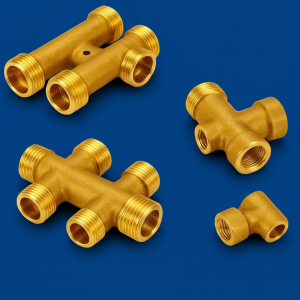
The largest demand for lead-free brass components comes from the US, Canadian, and Australian plumbing markets requiring NSF 372 and NSF 61 Annex G certified fittings. We produce lead-free ball valve bodies, gate valve bodies, compression fitting bodies, push-fit connectors, elbow and tee fittings, and meter bodies in C69300 (ECO Brass) and CW511L alloys. These components are dimensionally compliant with ASME B16.18/B16.22 (copper fittings), AWWA C800 (underground service fittings), and ASSE 1061 (push-fit fittings). Full NSF/ANSI 61 documentation and Pb ≤ 0.25% material certification accompany each order.
Lead Free Brass CNC Turned Parts
Precision CNC turned components in C69300 or CW511L lead-free brass are produced for applications where RoHS 2 compliance or potable water contact is required. These include sensor bodies, flow control inserts, medical instrument fittings, food processing machine components, and HVAC actuator parts. The reduced machinability index (70–80 vs. 100 for C36000) requires optimized cutting parameters—reduced feed rates, sharper tool geometries, and flood coolant—to maintain surface finish (Ra 0.8–1.6 µm) and dimensional accuracy (±0.01 mm) comparable to leaded brass production. Each batch includes Pb content certification from XRF analysis.
Lead Free Brass Screw Machine Parts
High-volume screw machine production of lead-free brass components in CW511L or C69300 is possible on both multi-spindle and Swiss-type automatics, though at 15–25% lower production rates than equivalent C36000 parts due to lower machinability index. Applications include electrical connector pins (RoHS 2 compliant), food-grade machine fittings, and pharmaceutical equipment components. Tooling geometry is optimised for lead-free alloys with positive rake angles and TiAlN-coated carbide inserts. SPC-controlled production with Cpk data is provided per lot.
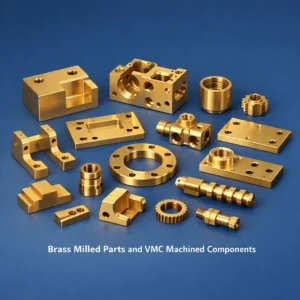
Lead Free Brass VMC Milled Components
Valve manifold blocks, instrument housings, filter bodies, and bracket components in lead-free brass are VMC machined from C69300 bar or plate on 3-axis and 4-axis machining centres. Silicon-brass (C69300) machines with more work-hardening than leaded brass, requiring rigid fixturing, sharp end mills with positive rake, and adequate chip clearing to prevent built-up edge formation. Tolerances of ±0.01 mm on critical dimensions and Ra 1.6 µm surface finish are routinely achieved. Complex internal passages are air-pressure leak-tested post-machining.
Lead Free Brass Forged Components
Hot-press forging of lead-free brass alloys (CW511L, C69300) is more demanding than leaded brass forging due to higher flow stress and narrower forging temperature windows (620–700°C vs. 650–750°C for leaded grades). However, forged lead-free brass valve bodies, coupling bodies, and fitting blanks achieve superior mechanical properties (higher tensile and fatigue strength) compared to machined bar stock. We coordinate hot-press forging through accredited Indian forgeries and provide 100% dimensional inspection of forging blanks before machining.
Lead Free Brass Electronic and Electrical Components
RoHS 2 compliance (EU Directive 2011/65/EU) restricts lead to ≤ 0.1% in homogeneous materials for most electrical and electronic equipment (EEE). Lead-free brass connector pins, relay housings, switch bodies, and PCB terminal blocks in C69300 or CW511L comply without requiring RoHS Annex III exemptions. Tin (Sn) and nickel (Ni) plating for contact protection are applied using lead-free plating baths (RoHS-compliant). Solderability is verified per IEC 60068-2-58 (solderability of component leads and terminations).
Lead Free Brass Medical and Food Grade Components
Fittings, connectors, and valve components for medical device fluid systems, dental equipment, and food-processing machinery are produced from C69300 lead-free brass meeting both RoHS 2 and FDA 21 CFR requirements for direct food contact materials. Surface finish Ra ≤ 0.8 µm is maintained to minimise bacterial adhesion in food-contact surfaces. Ultrasonic cleaning and passivation are standard final process steps. EN 10204 Type 3.1 MTC with Pb content ≤ 0.09% stated is supplied with each delivery.
Applications by Industry
| Industry | Lead-Free Brass Component Types |
|---|---|
| Potable Water Plumbing (USA/CA/AU) | Ball valves, gate valves, compression fittings, service saddles |
| Electronics and EEE (RoHS 2) | Connector pins, terminal blocks, relay housings, PCB standoffs |
| Medical Devices | Instrument fittings, dental handpiece components, anaesthetic equipment |
| Food Processing | Machine fittings, valve bodies, pump housings, nozzle bodies |
| HVAC and Solar Thermal | Zone valves, actuator bodies, manifold inserts |
| Automotive (ELV Directive) | Electrical connector bodies, sensor housings, fluid fittings |
| Gas and LPG Distribution | Meter fittings, regulator bodies (where lead-free mandated) |
Manufacturing Process for Lead-Free Brass Components
Step 1 – Material Sourcing and Lead Verification: C69300 or CW511L bar stock is sourced from certified mills. XRF spectrometry verifies Pb content at ≤ 0.09% (NSF 372 / California Prop. 65) or ≤ 0.25% (US Federal “lead-free” definition). Dedicated storage prevents contamination of lead-free stock with leaded brass material.
Step 2 – Optimized CNC Programming: Tool paths for lead-free brass use positive rake angles (8–15°), higher clearance angles, and reduced depth-of-cut to compensate for the absence of lead as an internal lubricant. Flood coolant (water-soluble emulsion) is mandatory for thermal management and chip clearing.
Step 3 – Machining with Lead-Free Optimised Tooling: TiAlN or TiN coated carbide inserts with sharp cutting edges are used. Tool life for lead-free brass is approximately 50–70% of equivalent leaded brass operations, requiring more frequent insert changes and tool offset adjustments.
Step 4 – In-Process Inspection: Dimensional SPC is maintained throughout production. Surface finish is verified with profilometer readings after first-off and periodically during production. Thread gauging per applicable standard is performed on 100% of threaded features.
Step 5 – Deburring and Cleaning: Vibratory tumbling in non-ferrous ceramic media, followed by ultrasonic alkaline cleaning, passivation (citric acid passivation for food/medical grade), and drying.
Step 6 – XRF Lead Content Verification: Finished parts from each production lot are XRF-tested to confirm Pb content ≤ 0.09% (or ≤ 0.25%). XRF test results are included in the batch quality certificate.
Step 7 – Surface Treatment: Lead-free plating baths (tin, nickel, chrome) are used. Silver plating for medical or electrical contact applications uses lead-free silver-alloy baths. Plating thickness is verified by XRF coating gauge.
Step 8 – Compliance Documentation and Export: NSF/ANSI 61 declaration, NSF 372 lead-free certification, RoHS 2 Declaration of Conformity, EN 10204 3.1 MTC with Pb content stated, and California Prop. 65 compliance letter accompany each shipment.
Quality Standards and Certifications
- ISO 9001:2015 Certified Quality Management System
- Pb content ≤ 0.09% verified by XRF spectrometry (NSF 372 / California Prop. 65 compliant)
- NSF/ANSI 61 (Section 9 – leach testing for plumbing products) documentation support
- NSF/ANSI 372 “lead-free” product certification documentation
- EU RoHS 2 (Directive 2011/65/EU) Declaration of Conformity (Pb ≤ 0.1%)
- REACH SVHC declaration (lead listed as SVHC above 0.1%; confirmation of below-threshold content)
- EN 10204 Type 3.1 MTC with stated Pb content from mill analysis
- California AB 1953 / SB 694 “no lead” compliance documentation
- PPAP Level 1–3 available for automotive/OEM supply chains
Why Choose Brass & Copper Parts for Lead-Free Brass Machining
- Dedicated Lead-Free Production: Segregated storage, tooling, and production scheduling ensures no cross-contamination of lead-free and leaded brass materials.
- XRF Verification Standard: Every lead-free production lot is XRF tested and certified with Pb content stated on the batch quality certificate.
- Regulatory Documentation Expertise: Experienced in producing NSF 61, NSF 372, RoHS 2, REACH, and California Prop. 65 compliance documentation required by US, Canadian, and European OEM customers.
- Multi-Alloy Capability: C69300, CW511L, C87850, and custom low-lead alloys are available to match specific regulatory requirements and application environments.
- Engineering Support: DFM review identifies C36000-to-lead-free alloy conversion considerations including tooling changes, tolerance impacts, and process adjustments before production commitment.
- Competitive Cost: India’s manufacturing cost advantage plus in-house compliance documentation reduces total landed cost for US and European lead-free brass OEM buyers.
Frequently Asked Questions
What defines “lead-free” brass under US law?
Under the US Safe Drinking Water Act (SDWA) as amended by the Reduction of Lead in Drinking Water Act (effective January 2014), “lead-free” for pipes, pipe fittings, plumbing fittings, and fixtures means weighted average lead content of all wetted surfaces ≤ 0.25%. NSF 372 further defines “lead-free” as Pb ≤ 0.25% in the entire product. California AB 1953 / SB 694 requires ≤ 0.09% Pb in potable water contact components.
What is C69300 (ECO Brass) and why is it preferred?
C69300 (ECO Brass or CuZn21Si3P) is a silicon-brass alloy with 75–77% Cu, 3% Si, and ≤ 0.09% Pb. Its alpha-phase microstructure provides inherent dezincification resistance without arsenic additions. The silicon addition promotes chip breaking comparable to leaded brass at a machinability index of ~80. It is NSF 61, NSF 372, and California Prop. 65 compliant and is the leading replacement alloy for C36000 in US potable water plumbing.
Is lead-free brass harder to machine than standard brass?
Yes. Lead-free brass alloys (C69300, CW511L) have machinability indices of 70–80 versus 100 for C36000. They exhibit more work-hardening, higher cutting forces, and greater tendency to produce long, stringy chips compared to leaded brass. Optimised tooling (positive rake, sharp edge, TiAlN coating), reduced cutting speeds, and higher coolant flow overcome these challenges. Cycle times are typically 15–25% longer than equivalent leaded brass operations.
What alloy do you recommend for RoHS 2 compliant brass parts?
For EU RoHS 2 compliance (Pb ≤ 0.1% homogeneous material), we recommend C69300 (Pb ≤ 0.09%) or CW511L (Pb ≤ 0.09%). Both alloys qualify without requiring RoHS Annex III exemptions and provide good machinability for precision CNC turned, milled, or screw machine components.
Can lead-free brass be welded or soldered?
C69300 and CW511L are compatible with silver brazing (BAg series filler alloys), soft soldering (Sn-Ag, Sn-Cu lead-free solders per IPC J-STD-006), and MIG/TIG welding using matching copper-silicon or copper-zinc filler wire. They are NOT suitable for lead-containing soft solder (Sn-Pb), which would re-introduce lead at the joint.
Do you supply NSF 61 test reports for lead-free brass fittings?
We supply material certifications and XRF Pb content test reports supporting NSF 61 and NSF 372 documentation. Formal NSF 61 product listing (a separately certified product approval) is held by the customer as the product brand owner and requires third-party testing by an NSF-accredited laboratory on the completed product.
What is the minimum order quantity for lead-free brass components?
Prototypes and first articles: 50–100 pieces. Production: 500–1,000 pieces minimum. High-volume screw machine parts: 5,000 pieces minimum for economical lead-free alloy multi-spindle production.
Can you supply lead-free brass with California Prop. 65 compliance certification?
Yes. We supply XRF-verified material certificates confirming Pb ≤ 0.09% per homogeneous material unit, which satisfies the California AB 1953 “no lead” threshold. Prop. 65 compliance letters for the finished product are available for standard alloy types.
Is DZR brass also lead-free?
Standard DZR brass (CW602N, CW724R) is NOT lead-free—it contains 0.9–2.5% Pb. Low-lead DZR grades with As and Pb ≤ 0.25% exist and provide both dezincification resistance and reduced lead content. For applications requiring both DZR performance and NSF 372 lead-free compliance, C69300 (which is inherently dezincification resistant due to its high Cu content) is the preferred solution.
What surface finishes are available for lead-free brass parts?
As-machined, barrel-polished, electroless nickel (lead-free bath), bright tin (lead-free SnAg bath), matte tin, chrome, silver, and lacquered finishes are available. All plating baths used for lead-free brass components are RoHS 2 compliant with no lead-containing anode materials or brighteners.
Request a Quote for Lead Free Brass Components
Specify your required alloy (C69300, CW511L, or other), applicable regulation (NSF 372, RoHS 2, California Prop. 65), component drawings (STEP, DXF, PDF), and quantity. Our technical team will respond within 24–48 hours with a quotation and compliance documentation plan.
Email: sales@brass-copper-parts.com | Phone/WhatsApp: +91-22-43449300
Brass & Copper Parts (India) – Plot 10-B, GIDC Industrial Estate, Shankar Tekri, Jamnagar 361004, Gujarat, India.
Product categories
Related Products
-

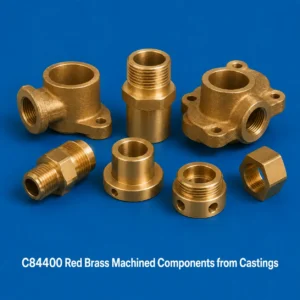
C84400 Red Brass Machined Components from Castings
₹11.80 Add to cart -
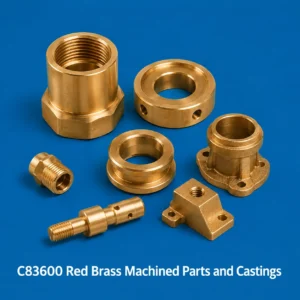
C83600 Red Brass Machined Parts and Castings
₹11.80 Add to cart -
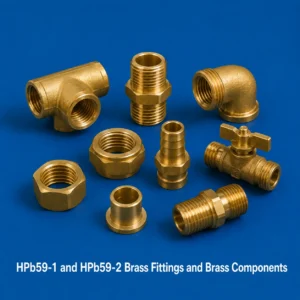
HPb59-1 and HPb59-2 Brass Fittings and Brass Components
₹11.80 Add to cart -
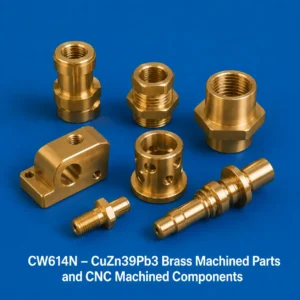
CW614N – CuZn39Pb3 Brass Machined Parts and CNC Machined Components
₹11.80 Add to cart -
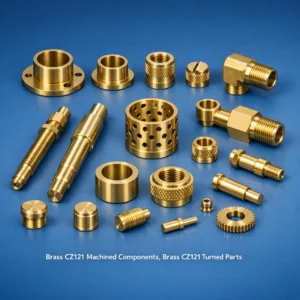
Brass CZ 121 Machined Components, Brass CZ 121 Turned Parts
₹11.80 Add to cart -
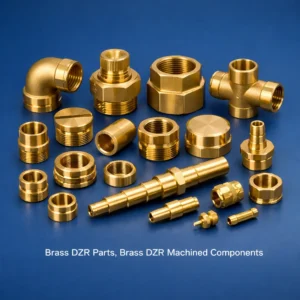
Brass DZR Parts, Brass DZR Machined Components
₹11.80 Add to cart -
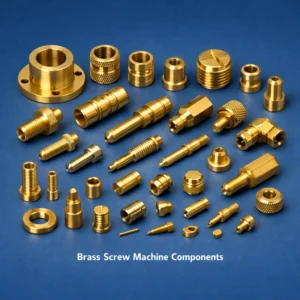
Brass Screw Machine Components
₹11.80 Add to cart -
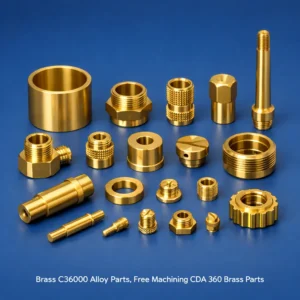
Brass C36000 Alloy Parts, Free Machining CDA 360 Brass Parts
₹11.80 Add to cart -
Brass Milled Parts and VMC Machined Components
₹11.80 Add to cart -
Brass Fasteners
₹11.80 Add to cart -
Brass Forging
₹11.80 Add to cart -
Brass CNC Parts
₹11.80 Add to cart